Why Would a 35 Year Old Man Have Low Testosterone? 5 Leaks
Why would a 35 year old man have low testosterone? It's rarely one cause. Here are the five leaks draining your energy, drive, and edge, and how to plug them.


You're 35 and something is off.
You slept six hours, you drank coffee, and by 2:30pm you're staring at the same email you opened ten minutes ago. Your patience with your kids is shorter than it was two years ago. In the mirror after a shower there's a softness in the middle that showed up quietly and never left.
You've Googled it at 11pm. The top results told you either "you're fine, that's normal" or "click here for a telehealth TRT consult." Neither one sounds right. You feel that too?
Here's the honest answer nobody asking why would a 35 year old man have low testosterone gets told: you're not broken. You're leaking.
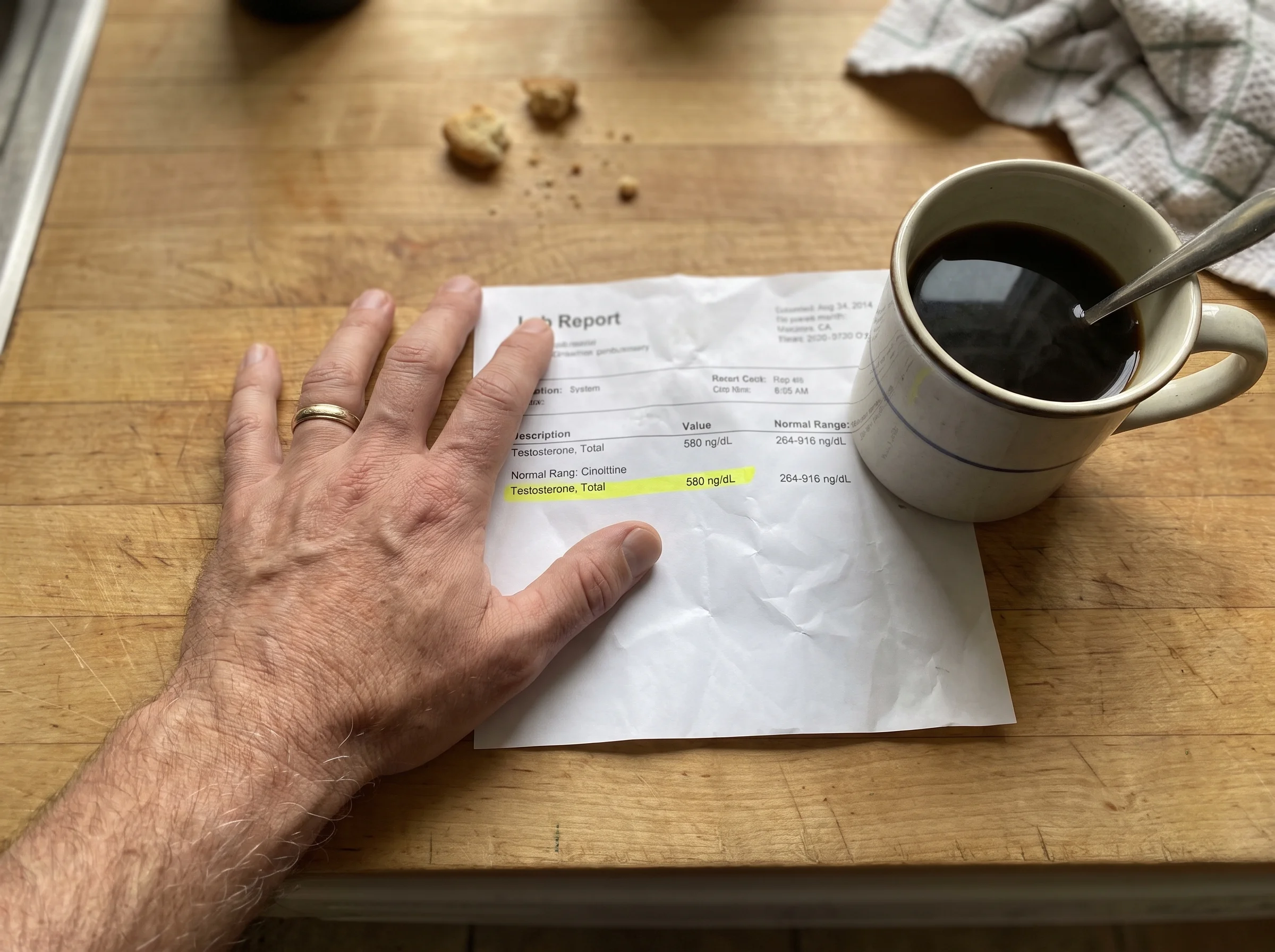
Your Labs Say "Normal." Your Body Says Otherwise.
The "normal range" for testosterone was built by averaging modern American men. Tired, overweight, undertrained, running on drive-thru food and five hours of sleep. That's the pool. That's the average.
Being told your T is "in range" at 35 is like being told your gas mileage is "average" while your car is dragging a boat down the highway. Technically true. Also not the answer.
Testosterone does drift down with age in healthy men, gradually and progressively, in a well-documented curve [2]. That's real. But the slow drift at 35 doesn't explain why you feel like you got hit by a bus every afternoon. Something else is stacking on top of it.
The Real Answer: Why a 35 Year Old Man Has Low Testosterone Is a Stack of Five Leaks
Here's what nobody frames correctly on this question. At 35, low testosterone almost never has one dramatic cause. There's no tumor, no rare disorder, no single villain to point at.
There are five small leaks. Each one gets shrugged off as "normal adult life." None of them alone would sink you. All five together, running for three to five years, absolutely will.
Leak 1: Sleep debt. Six hours a night is not neutral. When researchers restricted healthy young men to about five hours a night for a single week, their daytime testosterone dropped 10 to 15 percent [1]. One week. And poor sleep also cranks up baseline cortisol and the cortisol spike you get from any stressor during the day [3]. Cortisol up, testosterone drift down. Not a metaphor, a documented axis.
Leak 2: A nutrient-poor plate. Hormones are physical objects your body has to build. Zinc, vitamin A, choline, selenium, B12, cholesterol. These are the raw materials. Zinc deficiency alone can cause hypogonadism [4]. Vitamin A is directly involved in male reproduction [5]. If you've eaten out of boxes and drive-thrus for a decade, the shipping manifest is thin.
Leak 3: No barbell in the week. Heavy resistance training acutely raises testosterone in men, and testosterone is a major driver of muscle growth and strength [6]. No lifting means no acute stimulus and no muscle mass to hold your metabolic health up. Cardio doesn't count here. I mean loaded, heavy, uncomfortable.
Leak 4: Chronic stress you never came down from. Work, mortgage, kids, phone. Cortisol elevated for months on end doesn't help testosterone. Poor sleep makes it worse [3]. It loops.
Leak 5: Alcohol as the daily off switch. Two beers or a couple glasses of wine to fall asleep. It works to knock you out. It also fragments the sleep you're already short on. Which loops back to leak one.
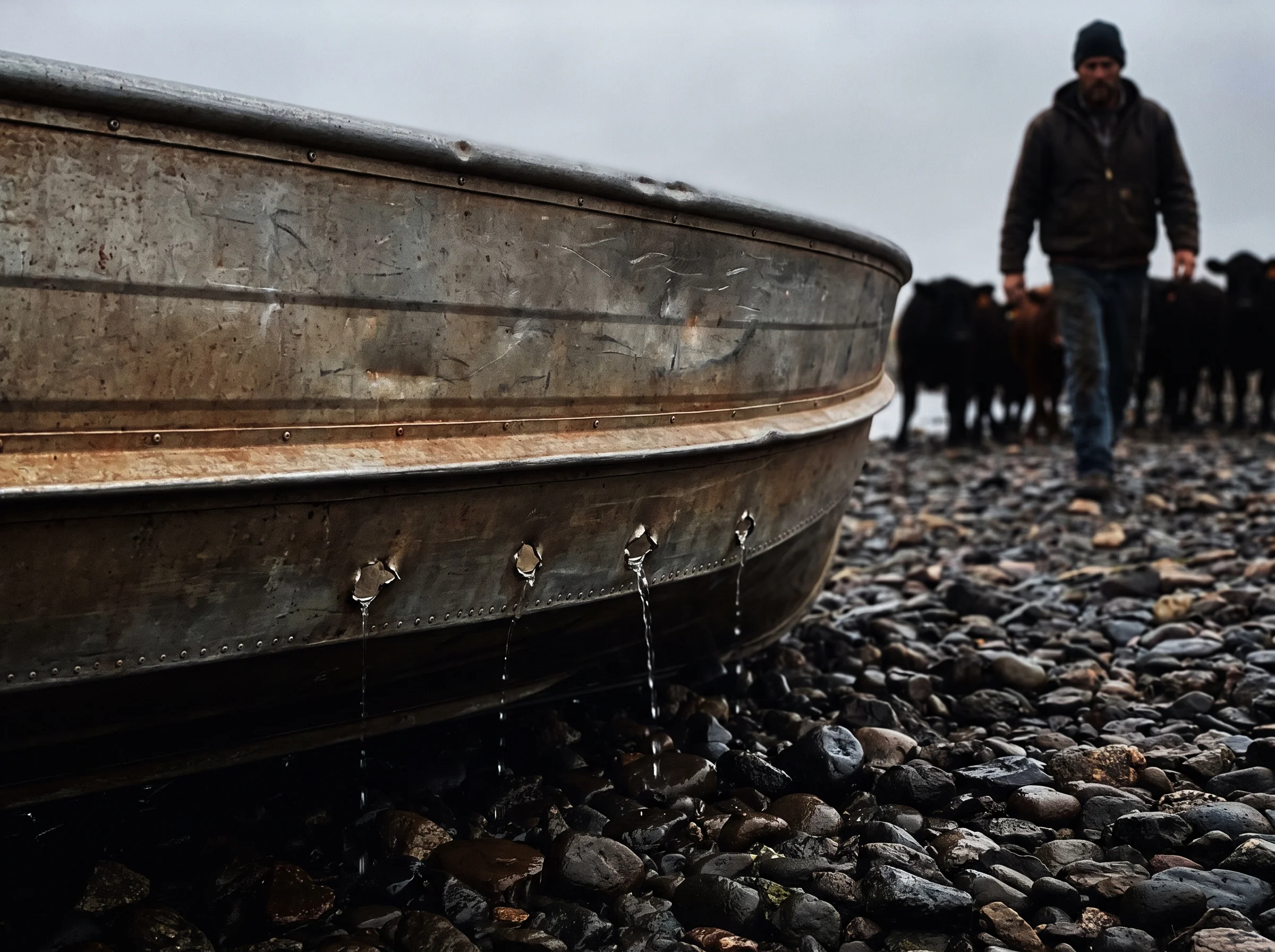
Think of it like a boat with five small holes below the waterline. One hole and the bilge pump keeps up. You'd never notice. Five holes running at once and you're bailing water at 3pm every day, wondering why you can't get ahead.
That's the picture. Not a disease. A supply problem and a demand problem, stacked.
Why 35 Is Actually The Best Age To Catch This
Here's the part I wish somebody had walked into my kitchen and told me at your age.
The cellular machinery that makes your energy, the mitochondria in your muscle, measurably declines with age. About 8 percent per decade in skeletal muscle ATP production, in one well-run study of adults from 18 to 89 [7]. At 35 you still have most of it. At 55 you don't.
The natural testosterone slope is still a slope at 35, not a cliff [2]. Muscle you build now sits with you for decades. Sleep habits you fix at 35 compound. Food you eat at 35 rebuilds the raw materials.
I didn't fall off a cliff at 40. I leaked through my 30s and paid for it in my 40s. Every year the leaks compound. One Tuesday at 3pm in my mid 40s I put my head on my desk and couldn't remember the last time I felt like myself. Every man I've coached who fits your description tells me the same story, just from a different decade.
Fixing this at 35 is a different game than fixing it at 51. Not harder. Not easier. Different. You have more runway. Use it.
The trap at 35 is either "wait and see," which lets three more years of leaks compound, or jump straight to a lifelong prescription you never get off. Both hand your body to somebody else. There's a third option.
What Your Body Actually Needs to Build Hormones
Testosterone doesn't get manufactured out of thin air. It gets built from cholesterol, assembled with cofactors like zinc and vitamin A, in a body that has to be nourished enough to prioritize hormone production over just staying alive.
Zinc, essential for reproductive function, deficiency causes hypogonadism [4]. Vitamin A, directly involved in male reproduction, and the richest food source of the preformed kind (retinol) is beef liver, which skips the very inefficient conversion your body has to do with plant beta-carotene [5][8].
Your cells run on CoQ10, which sits inside mitochondria helping produce ATP, concentrates heavily in heart muscle, and declines in some tissues with age [9]. Beef heart is one of the highest natural sources on the planet, and ordinary cooking degrades a chunk of it [10].
Choline is essential. Men are especially vulnerable to inadequate intake, and beef liver is one of the richest whole-food sources going, at roughly 330 mg per 100 grams [11][12].
You cannot ask the factory to build the product if you stopped shipping the parts. Most 35 year old men in America have not shipped these parts in a decade.
The Organ Meat Problem (And Why I Take a Stack)
Your grandfather ate liver, heart, and kidney. He didn't do it because he read a wellness blog. He did it because that's what was on the table and you didn't waste the animal.
We threw those organs in the trash and ate the muscle. And on paper, a modern nutrient analysis of raw United States beef offal confirms these organs carry distinct, concentrated micronutrient loads. Liver especially in vitamin A, B12, riboflavin, copper, and iron. Heart and kidney adding their own [13][14].
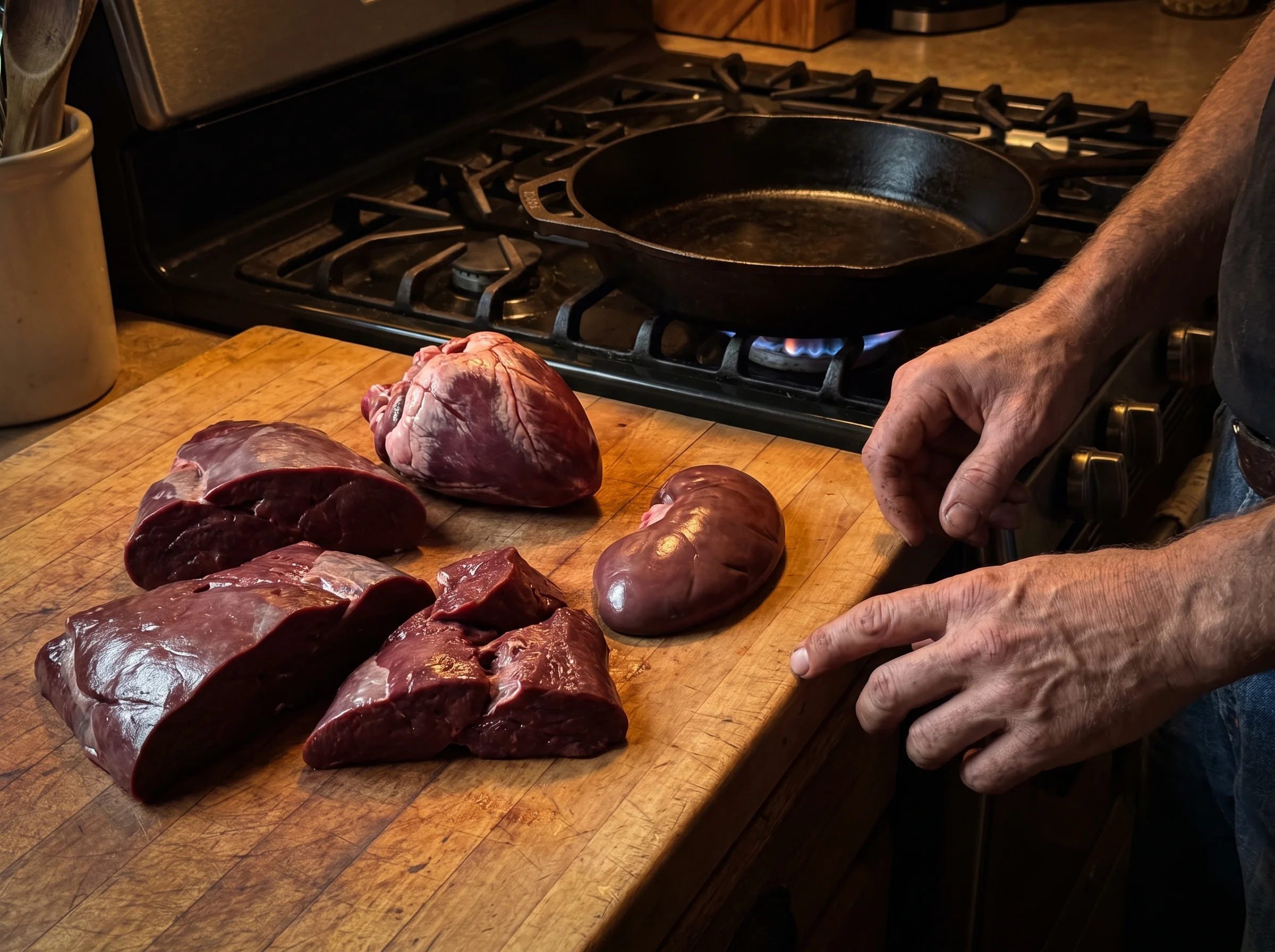
I tried, for one month, to eat liver every morning. Two weeks in I couldn't do it. Liver is nature's multivitamin and it also tastes like it lost a fight. There is not enough ketchup in the world.
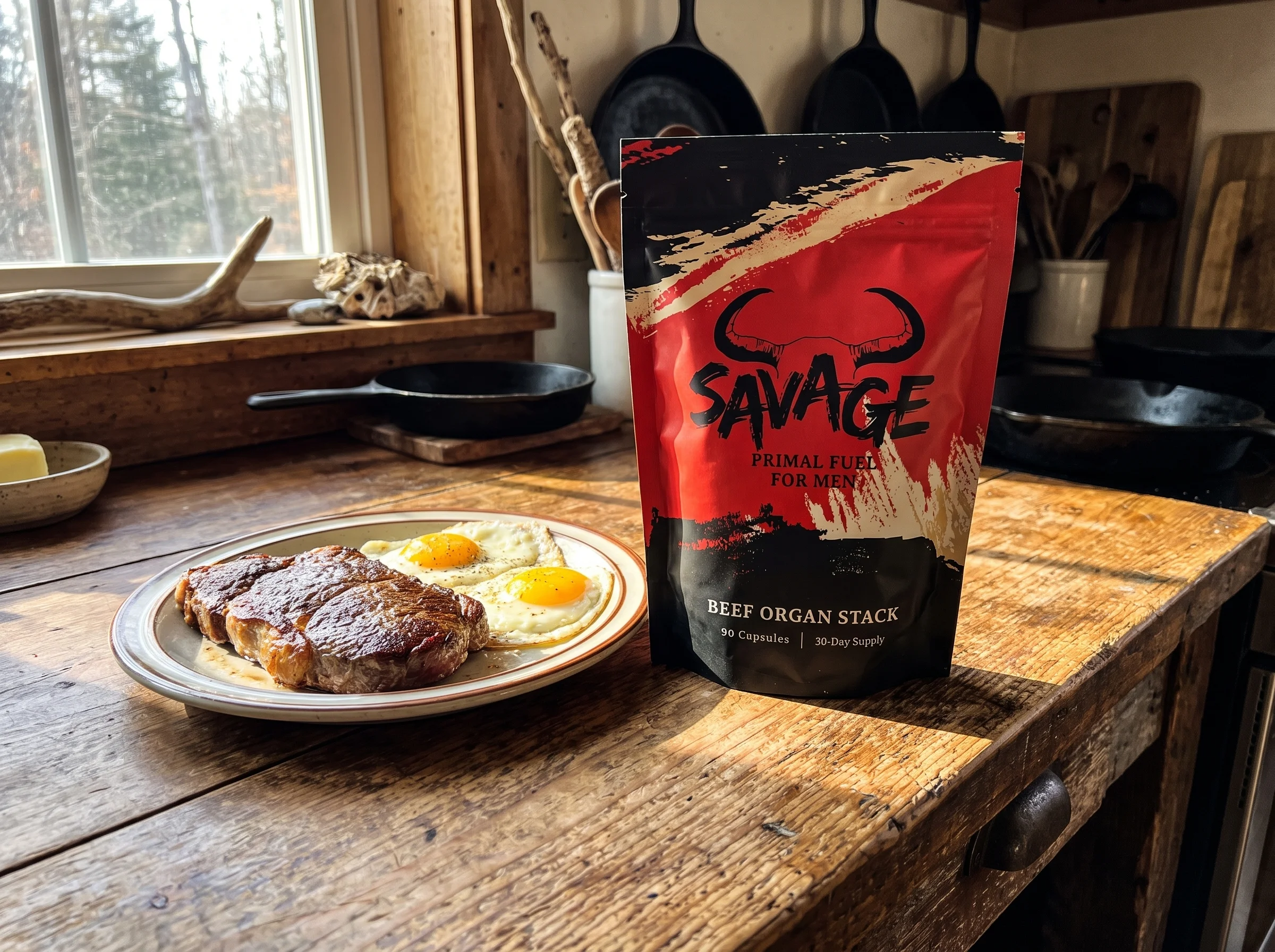
That's the gap the Savage Beef Organ Stack fills for me. Six freeze-dried organs, three capsules with food, no gag reflex. Freeze-drying preserves heat-sensitive compounds better than hot-air drying [15], which matters because cooking cuts folate in beef liver by 41 to 50 percent [16] and cuts recoverable CoQ10 in heart [10]. It's not a testosterone booster. Nothing on a shelf is a testosterone booster in a healthy man, no matter what the ad says. It's a supply line for raw materials your body has been running short on. It supports the food side of the equation. It doesn't touch sleep, lifting, or stress. Those are your job.
What To Do Monday Morning
Not a twenty item list. Three moves, in order.
1. Fix the sleep floor. Seven hours minimum for the next 30 days. Not six. Not "I do fine on six." Seven. Non-negotiable. This is the single biggest leak most 35 year olds have and the one they defend the hardest [1][3].
2. Put the barbell back in the week. Two to three heavy sessions. Squat, deadlift, press, row. That's it. You don't need a program off Instagram. You need to move heavy things twice a week [6]. Pair it with real protein at every meal, aiming toward roughly 1.6 g/kg body weight per day, which is the plateau where extra protein stops adding much [17].
3. Feed the raw materials. Eat the animal your grandfather ate, organs included. Or take a stack that gets them in without the gag reflex. Either works. Doing neither doesn't.
Do those three for 90 days before you do anything else. That's the play.
When To Get Actual Bloodwork
Not every 35 year old with fatigue needs a prescription. But he does need data.
Ask your doctor for total testosterone, free testosterone, SHBG, LH, FSH, estradiol, a thyroid panel, ferritin, and vitamin D. If your doctor won't run those, find one who will.
Run them at day zero. Plug the five leaks for 90 days. Run them again. If your numbers are truly low after all that, you have real data to bring to a real conversation about treatment. If they climb on their own, and they often do at 35, you just saved yourself a lifetime subscription and got your body back.
Own the process. Don't outsource it on day one. Don't ignore it either.

The One Thing I Want You To Leave With
You're not broken at 35. You're leaking.
That's the whole reframe. It's not a disease. It's not "just aging." It's a supply chain problem stacked on top of a demand problem, and both are fixable in a way they won't be in fifteen years. You're not too late. You're early enough that this is a warning shot, not a diagnosis.
Pick up the sleep. Pick up the barbell. Feed the raw materials. In six weeks the boat rides higher.
If you want the fuller playbook, the pillar piece on testosterone recovery for men over 35 walks through the whole thing.
References
[1] Leproult R, Van Cauter E. Effect of 1 Week of Sleep Restriction on Testosterone Levels in Young Healthy Men. JAMA. 2011;305(21):2173-2174. https://jamanetwork.com/journals/jama/fullarticle/1029127
[2] Harman SM, et al. Longitudinal Effects of Aging on Serum Total and Free Testosterone Levels in Healthy Men (Baltimore Longitudinal Study of Aging). J Clin Endocrinol Metab. 2001;86(2):724-731. https://academic.oup.com/jcem/article/86/2/724/2841070
[3] Minkel J, et al. Sleep deprivation and stressor-evoked changes in cortisol. Health Psychol. 2014;33(11):1430-1434. https://pubmed.ncbi.nlm.nih.gov/24818608/
[4] NIH Office of Dietary Supplements. Zinc Fact Sheet for Health Professionals. https://ods.od.nih.gov/factsheets/Zinc-HealthProfessional/
[5] NIH Office of Dietary Supplements. Vitamin A and Carotenoids Fact Sheet for Health Professionals. https://ods.od.nih.gov/factsheets/VitaminA-HealthProfessional/
[6] Vingren JL, et al. Testosterone Physiology in Resistance Exercise and Training. Sports Med. 2010;40(12):1037-1053. https://link.springer.com/article/10.2165/11536910-000000000-00000
[7] Short KR, et al. Decline in skeletal muscle mitochondrial function with aging in humans. PNAS. 2005;102(15):5618-5623. https://pubmed.ncbi.nlm.nih.gov/15800038/
[8] Tang G. Bioconversion of dietary provitamin A carotenoids to vitamin A in humans. Am J Clin Nutr. 2010;91(5):1468S-1473S. https://pubmed.ncbi.nlm.nih.gov/20200262/
[9] Diaz-Casado ME, et al. The Paradox of Coenzyme Q10 in Aging. Nutrients. 2019;11(9):2221. https://pmc.ncbi.nlm.nih.gov/articles/PMC6770889/
[10] Ercan P, El SN. Changes in CoQ10 in beef muscle, liver and heart with cooking. J Food Compost Anal. 2011;24(8):1136-1140. https://www.sciencedirect.com/science/article/pii/S0889157511001517
[11] Fischer LM, et al. Sex and menopausal status influence human dietary requirements for the nutrient choline. Am J Clin Nutr. 2007;85(5):1275-1285. https://pubmed.ncbi.nlm.nih.gov/17490963/
[12] USDA Database for the Choline Content of Common Foods, Release 2 (2008). https://www.ars.usda.gov/ARSUserFiles/80400525/data/choline/choln02.pdf
[13] Fuerniss HF, et al. Nutrient Analysis of Raw United States Beef Offal Items. Nutrients. 2024;16(18):3104. https://pubmed.ncbi.nlm.nih.gov/39339704/
[14] USDA FoodData Central, beef liver 169451 / heart 168625 / kidney 169449. https://fdc.nal.usda.gov/food-details/169451/nutrients
[15] Ratti C. Hot air and freeze-drying of high-value foods: a review. J Food Eng. 2001;49(4):311-319. https://www.sciencedirect.com/science/article/pii/S0260877400002284
[16] Aramouni FM, Godber JS. Folate losses in beef liver due to cooking and frozen storage. J Food Qual. 1991;14(5):357-365. https://onlinelibrary.wiley.com/doi/10.1111/j.1745-4557.1991.tb00077.x
[17] Morton RW, et al. A systematic review, meta-analysis and meta-regression of the effect of protein supplementation on resistance training-induced gains in muscle mass and strength in healthy adults. Br J Sports Med. 2018;52(6):376-384. https://pubmed.ncbi.nlm.nih.gov/28698222/