Why Can't I Keep Up With Younger Guys at the Gym? (At 51)
Why can't I keep up with younger guys at the gym? It's not willpower. It's your cellular power supply. Here's the honest answer, and how to close the gap.

Last Tuesday you racked the bar after your second working set of squats and had to sit down. Across the gym, some kid with a backwards hat was on his fifth. Same weight. He was texting between sets. You were counting ceiling tiles trying to get your heart rate under 120.
That is the moment. That is why you typed "why can't I keep up with younger guys at the gym" into your phone in the parking lot on the way home.
I want to answer it honestly, because every article I read on this topic answers a different question than the one you actually asked.
It Is Not Effort. It Is Power Supply.
Here is the reframe, and it is the whole article in one line: you are not weaker in willpower. You are producing less usable energy per breath than he is.
The little engines inside every one of your cells are called mitochondria. They take food and oxygen and turn them into ATP, which is the currency your muscles actually spend when they contract. Every rep, every stride, every heartbeat costs ATP. The more you make, the more you can do before the wheels come off.
Here is where it gets interesting. In a study of adults aged 18 to 89, skeletal-muscle ATP production dropped roughly 8 percent per decade [1]. Do the math out loud. From 27 to 51 is more than two decades. That is not nothing. That is a measured, documented, real gap in the fuel line, and it happened while you were paying a mortgage.
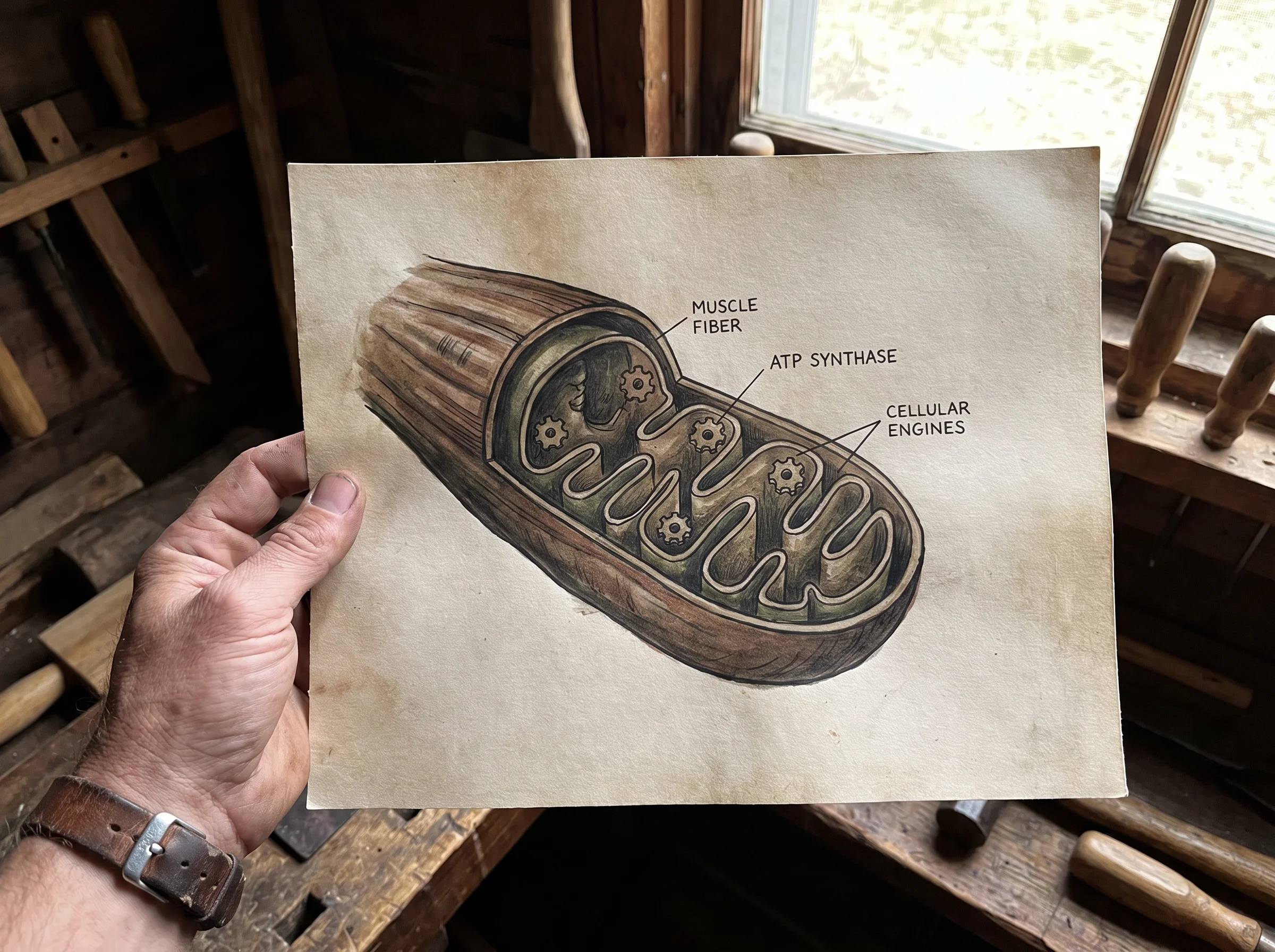
Inside those engines sits a compound called CoQ10. It is part of how mitochondria actually make ATP, and its levels decline in some tissues with age [2]. Your heart holds among the highest concentrations of CoQ10 in your body, for the same reason a race car has the best spark plug in the engine.
The analogy: your engine block is the same size as his. His spark plugs are newer. That is it. That is the entire gap in cellular terms.
Feel that? That is your suspicion getting confirmed. Something did change. It is not in your head.
Sleep Is Why You Can't Keep Up With Younger Guys at the Gym
Now, before you go buy CoQ10 on Amazon and call it done, we have to talk about the pipe above the fuel line.
Most of the men I coach who ask this question are sleeping 5 to 6 hours. That is the audience. That is probably you.
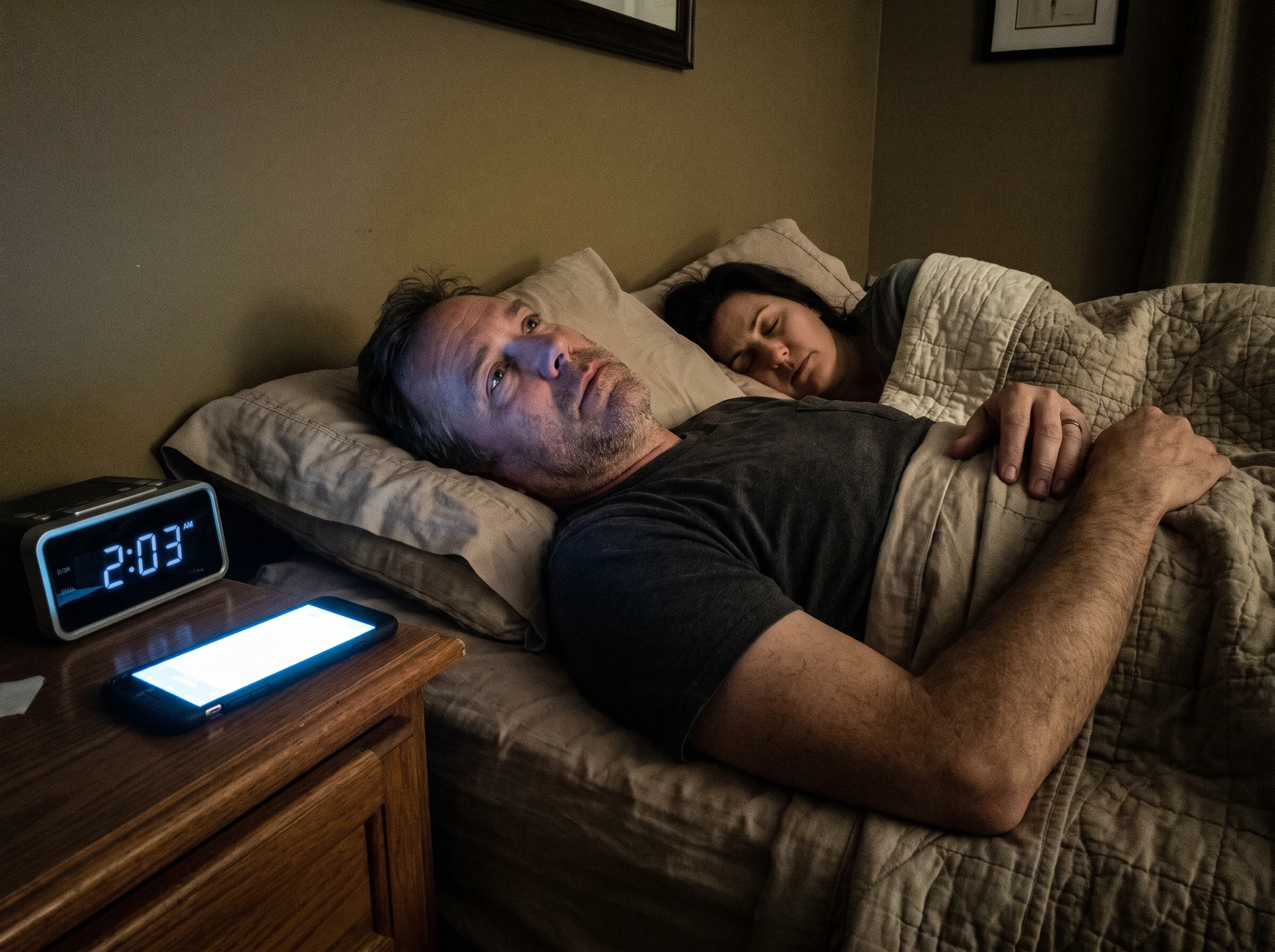
In a JAMA study, one week of 5-hour sleep dropped daytime testosterone 10 to 15 percent in young, healthy men [3]. Young men. Not 51 year olds. If a 25 year old's system takes that hit from a bad week, use your imagination on what happens to yours after a year of bad weeks.
And it gets worse. Sleep-deprived adults show higher baseline cortisol and a bigger cortisol response when life stresses them [4]. Cortisol is the hormone that tells your body to break things down. You are lifting to build muscle and then sleeping in a chemical state that tells your body to burn muscle for parts.
Kitchen-table logic: that is not a gym problem. That is a recovery pipe clogged at the top.
Here is the part guys do not want to hear. The 27 year old across the rack from you is not sleeping better on paper. He is sleeping better on hormones. His HPA axis has not been under 25 years of career, kids, and cortisol. His body still assumes he is safe. Yours has been on low-grade alert since 2009.
Your Fuel Is Missing The Parts You Need Most
You cannot run performance machinery on 87 octane and wonder why the timing feels off.
Modern convenience food is calorie-rich and micronutrient-poor. It fills you up. It does not feed the machinery. Let me walk you through the parts your engine actually needs, one at a time.
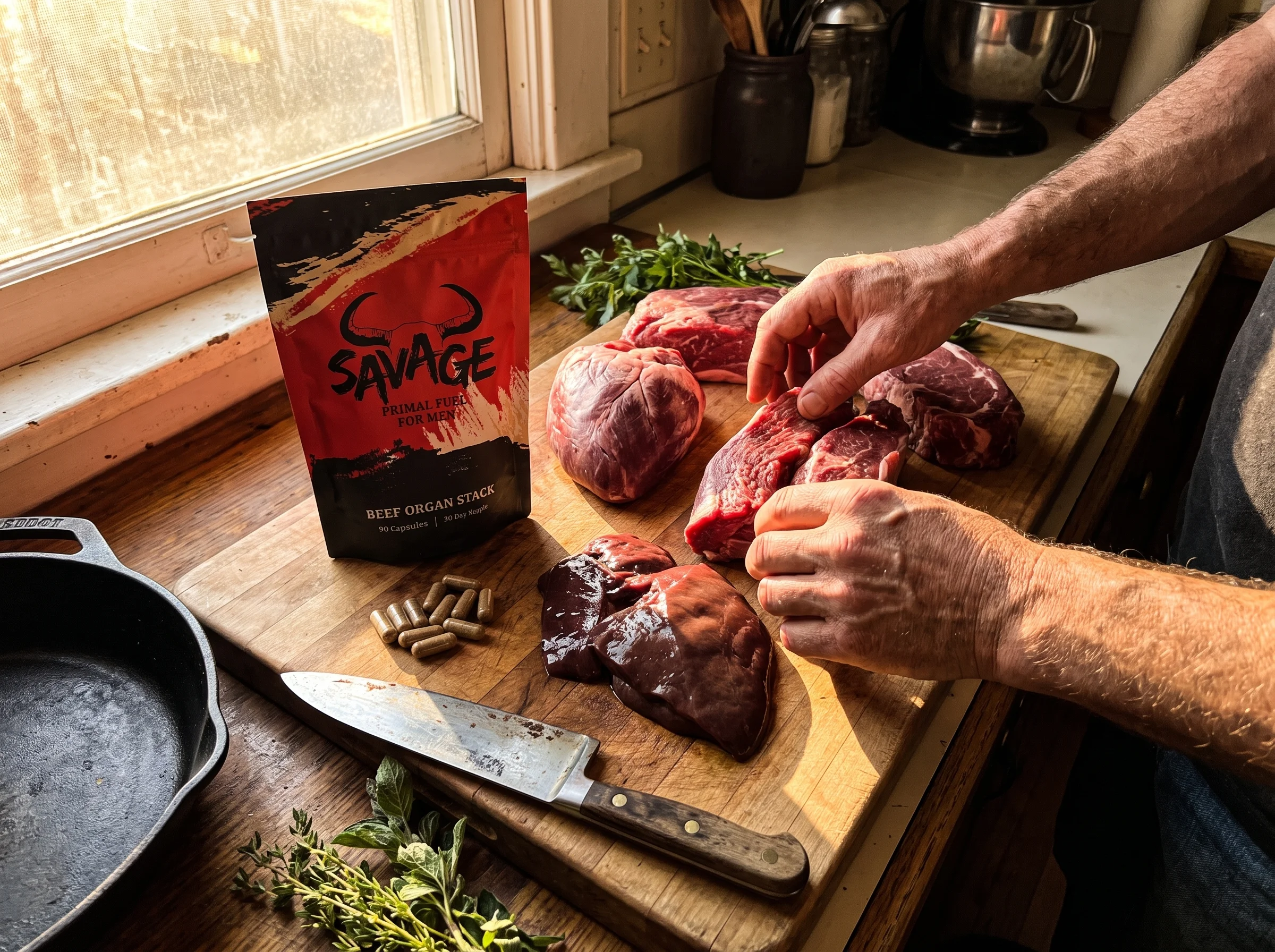
CoQ10 concentrates in mitochondria and is highest in heart muscle tissue. In raw beef heart, researchers measured about 11 mg per 100g, and frying cut recoverable CoQ10 to roughly 69 percent [5]. Heat wrecks it. Your grandmother used to cook beef heart. Your mom probably did not. You definitely do not.
B12 is required for energy metabolism at the cellular level [6]. Fair caveat, and I will always give you the fair caveat: B12 does not add energy in men who are already replete. The point is adequacy, not megadose. If you are running on drive-thru breakfast, your adequacy is a question worth asking.
Preformed vitamin A, the retinol form, comes from animal foods like liver and skips the conversion step. When you eat plants, your body has to convert beta-carotene to retinol, and that conversion ratio ranges from about 4:1 to 28:1 by weight depending on the person [7]. Some guys are terrible converters and never know it.
Choline is essential, and men are the demographic most likely to fall short. Under severe restriction, 77 percent of men developed reversible signs of dysfunction [8]. That is not a statistic to scare you. That is a statistic that says: this nutrient matters, and you are the guy most likely to be missing it.
You are a smart man. Look at that list. Look at what you actually ate this week. Connect your own dots.
What I Do, Because I Am Not Eating Liver On A Tuesday
I coach men in their 40s and 50s. Lawyers, contractors, one guy who took ten years off from lifting to raise kids and came back convinced he was broken. Not one of them is going to eat beef liver on a Tuesday night after a 10-hour day. Neither am I.
Liver is nature's multivitamin. It also tastes like it lost a fight. There is not enough ketchup in the world.
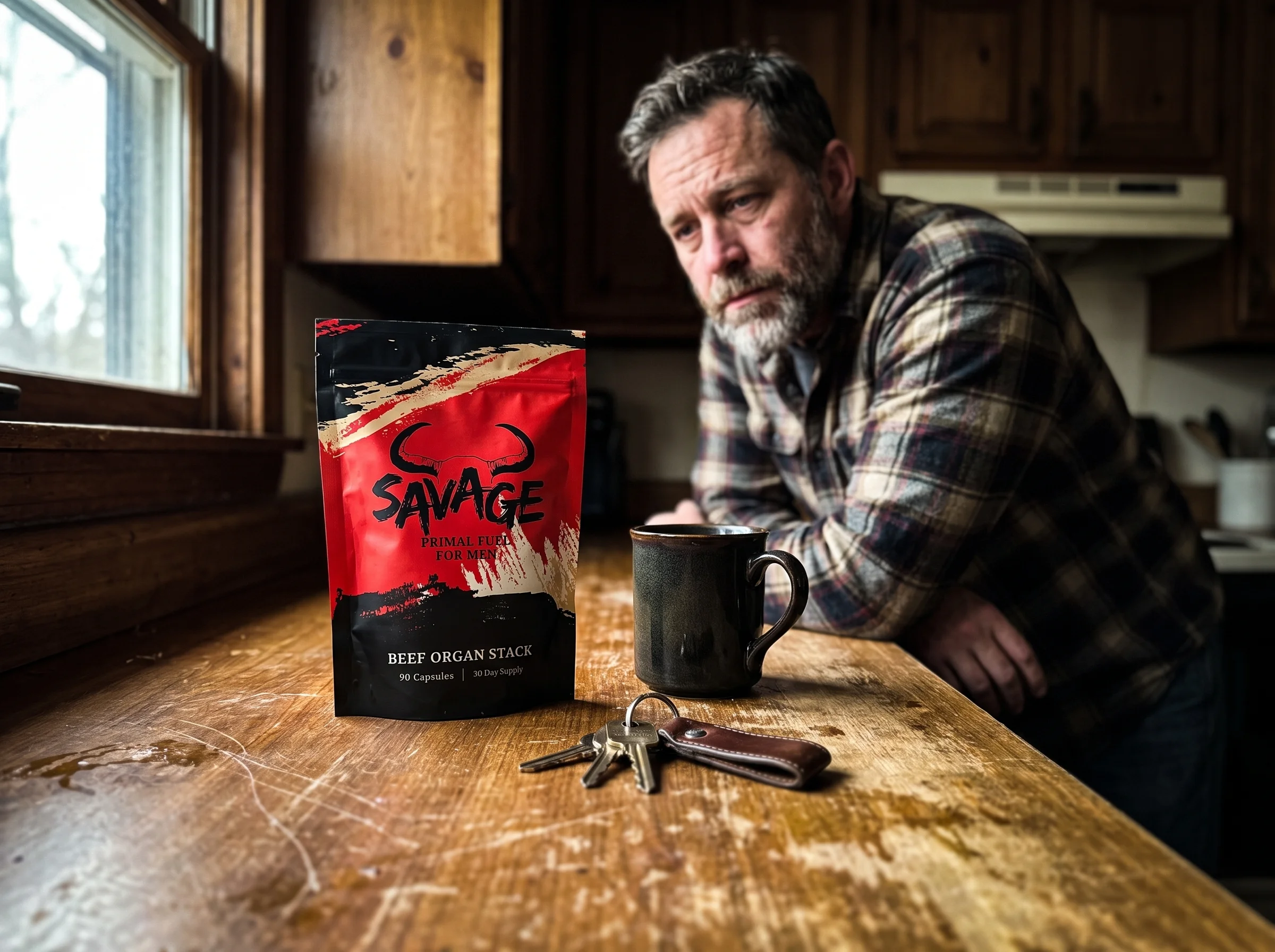
That gap between "great for you" and "hard to stomach" is the whole reason the Savage Beef Organ Stack exists. Three capsules with food, freeze-dried raw, all six organs including heart and liver, and I do not have to argue with the smell. It supports the machinery we just talked about. I take it. The men I coach take it. That is all I will say about it in this article.
Train For The Body You Have Now, Not The One He Has
Now the training piece, because you still have to lift.
Heavy compound work still matters at 51. Testosterone is a major promoter of muscle growth, and it rises acutely after heavy resistance exercise in men [9]. Do not abandon the squat. Do not abandon the deadlift. Get under the bar.
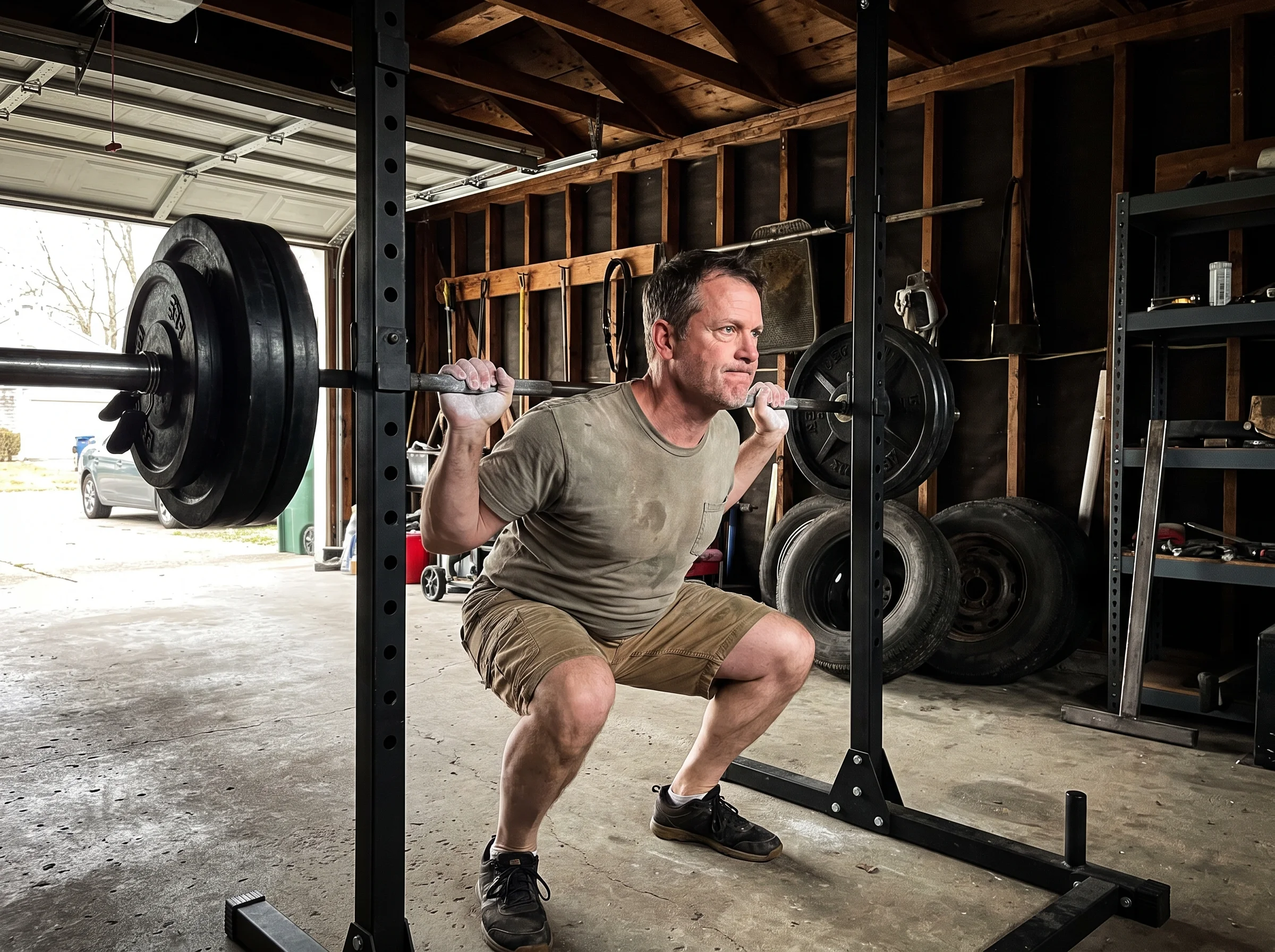
But volume is your enemy now. The 27 year old can absorb 20 sets of squats a week and come back Monday. You cannot. That is not defeat. That is intelligence. His recovery pipe is bigger. Yours is a garden hose right now. Try to run his volume through your hose and you will burst it.
Also this, and it is the part guys hate: you need MORE protein per pound of bodyweight than he does, not less. Older adults do well on 1.0 to 1.2 g/kg/day, higher if you are training [10]. Protein plus resistance training drives muscle in midlife, and the benefit plateaus somewhere around 1.6 g/kg [11]. Capsules do not replace steak. Nothing does.
The Practical Order Of Operations To Keep Up With Younger Guys at the Gym
If you try to fix everything at once, you will fix nothing. Here is the order.
- Sleep 7 hours minimum. Non-negotiable. Everything else is downstream of this. If you skip this step, the rest is decoration.
- Hit your protein number every day. Weigh yourself. Multiply by 0.7 to 0.8. Eat that many grams.
- Fill the micronutrient gap the modern plate leaves. Whole animal, whole food, the organs your grandfather ate. Or a stack that does the work when you will not.
- Train heavy, but roughly half the volume he does. Recover harder than you train.
The Close
You are not chasing that 27 year old. You are running your own race, with a power supply you have to maintain now instead of take for granted.
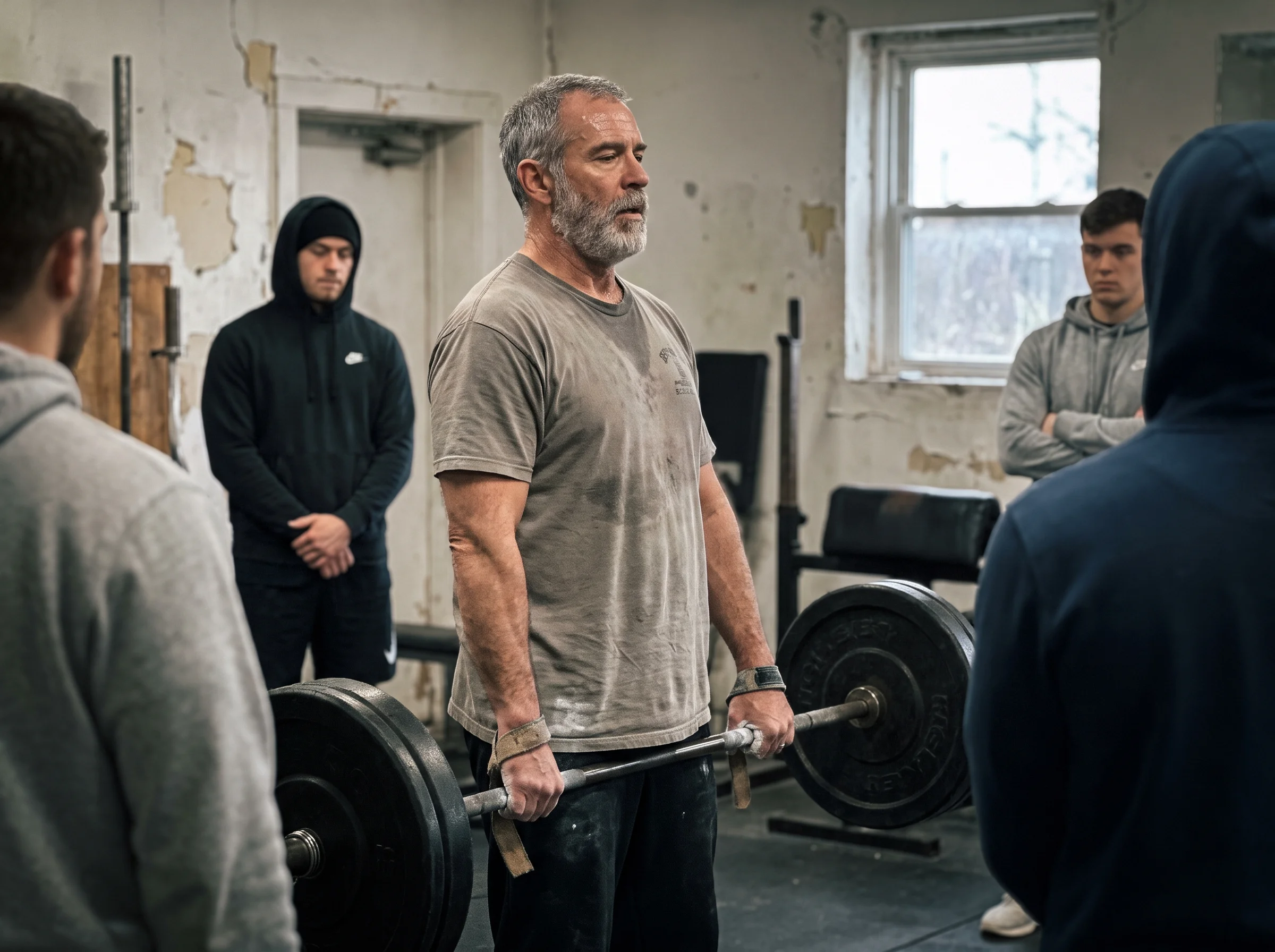
Here is the thing nobody says out loud. That kid across the rack will be 51 one day. The men who still squat heavy at 60 are not the ones who out-worked their body. They are the ones who figured out the power supply problem 15 years earlier. That is the club you are trying to join, and the entry fee is paying attention to your machinery instead of pretending it is the same one you had at 27.
The gap closes. Not to his level. To a version of you that walks into that gym owning the bench you sit on and the bar you load. That is the win. That is the control coming back.
Fix sleep first. Feed the machinery second. Train smart third. In that order, or nothing sticks.
References
- Short KR, et al. Decline in skeletal muscle mitochondrial function with aging in humans. PNAS. 2005;102(15):5618-5623. https://pubmed.ncbi.nlm.nih.gov/15800038/
- Diaz-Casado ME, et al. The Paradox of Coenzyme Q10 in Aging. Nutrients. 2019;11(9):2221. https://pmc.ncbi.nlm.nih.gov/articles/PMC6770889/
- Leproult R, Van Cauter E. Effect of 1 Week of Sleep Restriction on Testosterone Levels in Young Healthy Men. JAMA. 2011;305(21):2173-2174. https://jamanetwork.com/journals/jama/fullarticle/1029127
- Minkel J, et al. Sleep deprivation potentiates HPA axis stress reactivity. Health Psychol. 2014;33(11):1430-1434. https://pubmed.ncbi.nlm.nih.gov/24818608/
- Ercan P, El SN. Changes in content of coenzyme Q10 in beef muscle, beef liver and beef heart with cooking and in vitro digestion. J Food Compost Anal. 2011;24(8):1136-1140. https://www.sciencedirect.com/science/article/pii/S0889157511001517
- NIH Office of Dietary Supplements, Vitamin B12 Fact Sheet for Health Professionals. https://ods.od.nih.gov/factsheets/VitaminB12-HealthProfessional/
- Tang G. Bioconversion of dietary provitamin A carotenoids to vitamin A in humans. Am J Clin Nutr. 2010;91(5):1468S-1473S. https://pubmed.ncbi.nlm.nih.gov/20200262/
- Fischer LM, et al. Sex and menopausal status influence human dietary requirements for the nutrient choline. Am J Clin Nutr. 2007;85(5):1275-1285. https://pubmed.ncbi.nlm.nih.gov/17490963/
- Vingren JL, et al. Testosterone Physiology in Resistance Exercise and Training. Sports Med. 2010;40(12):1037-1053. https://link.springer.com/article/10.2165/11536910-000000000-00000
- Bauer J, et al. Evidence-based recommendations for optimal dietary protein intake in older people (PROT-AGE). J Am Med Dir Assoc. 2013;14(8):542-559. https://pubmed.ncbi.nlm.nih.gov/23867520/
- Morton RW, et al. A systematic review, meta-analysis and meta-regression of the effect of protein supplementation on resistance training-induced gains in muscle mass and strength. Br J Sports Med. 2018;52(6):376-384. https://pubmed.ncbi.nlm.nih.gov/28698222/