Which Exercise Takes 20 Years Off Your Life? The Real Answer
Which exercise takes 20 years off your life? Discover which common workout ages you faster after 40 and learn the science-backed fix to reverse the damage today.


You finished the workout. Showered. Ate. And by 2:47pm you are staring at the same email for the third time, jaw tight, coffee cold, wondering when a 45 minute session started feeling like a shift at the docks.
You used to bounce back by dinner. Now you are still fried at bedtime and awake at 2am anyway.
So you Google "which exercise takes 20 years off your life," half expecting somebody to hand you the villain. Running. CrossFit. Heavy squats. Pick one, cross it off the list, feel better.
I am going to save you the click on the next ten articles. It is not a movement. It is a dose. And you are almost certainly living inside it right now.
Which Exercise Takes 20 Years Off Your Life? The Question Is Wrong
The exercise that takes 20 years off your life is any exercise you keep doing after your recovery has quit.
At 30, "hard" meant a rough Monday and you were fine by Wednesday. At 50, "hard" on 5 hours of sleep and gas station food is a slow leak you cannot feel until the tire is flat.
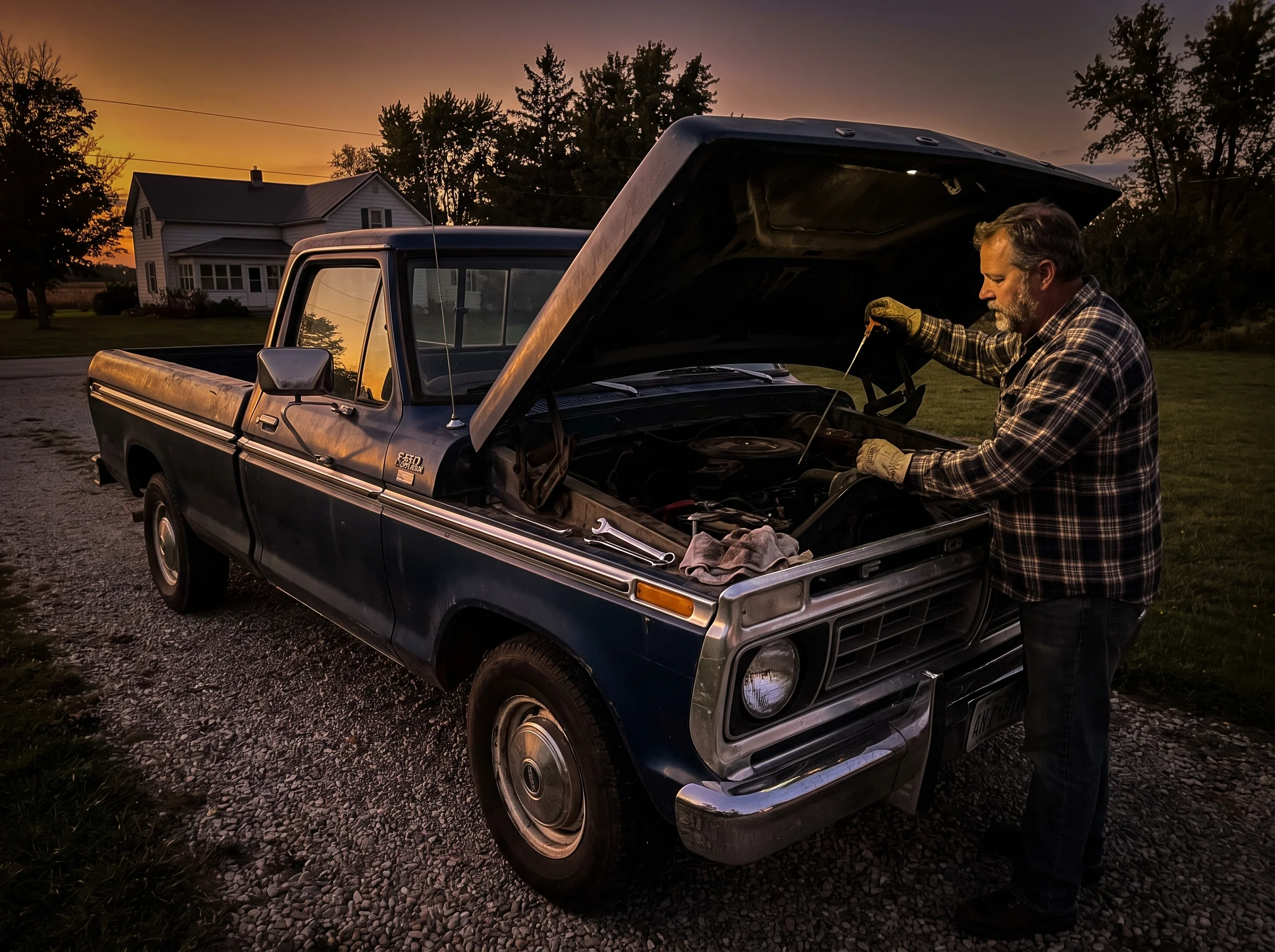
Think of it like a truck. You can put 100,000 miles a year on a good truck if you change the oil, rotate the tires, listen to it. Skip the maintenance for two years, same truck, same miles, blown engine in the driveway. The miles did not kill it. The neglect did.
Same rig, same road, different outcome. That is the whole game after 40.
The Gray Zone That Is Eating Your 40s Alive
Here is where it gets interesting.
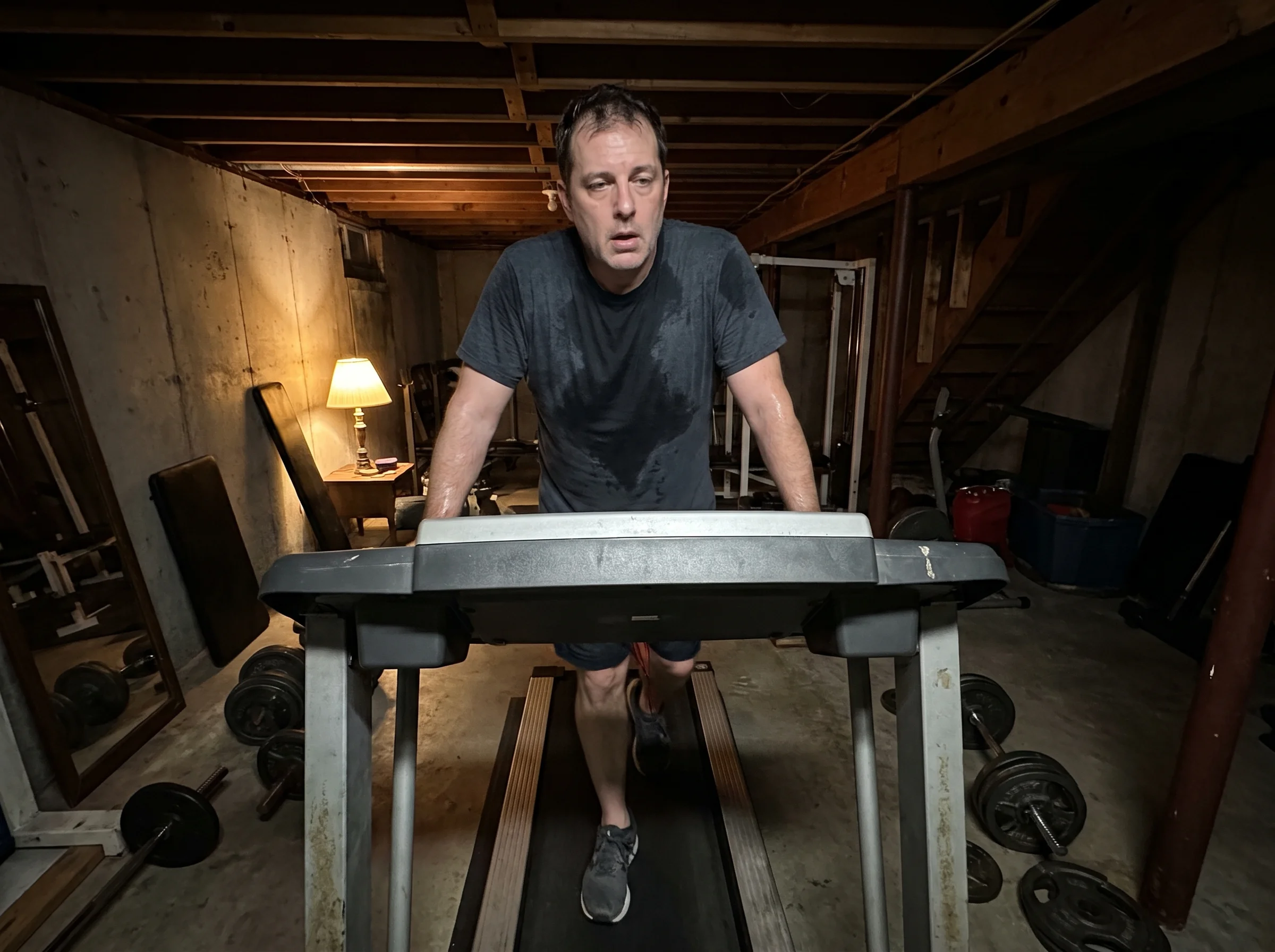
For most guys reading this, the exercise doing the damage is not the deadlift or the sprint. It is the chronic moderate-hard cardio. The Peloton streak. The 45 minute treadmill jog four days a week at about 75 percent effort. The class where you finish sweaty and gassed but never really wrecked.
Feels virtuous. Looks like discipline on the calendar. And at your age, on your sleep, it is corrosion dressed up as consistency.
The mechanism is simple. You never go easy enough to actually recover. You never go hard enough to force an adaptation. You just accumulate stress, day after day, week after week.
Now layer in the biology. The machinery inside your cells that makes energy, your mitochondria, measurably slows down as you age. In one study of adults 18 to 89, muscle mitochondrial ATP production dropped about 8 percent per decade [1]. You are asking 30 year old work out of 50 year old hardware.
And you are doing it on a sleep budget that has your baseline cortisol already elevated and your stress response amplified [2]. Every rep on 5 hours of sleep costs you more than it did at 35.
The thing you thought was discipline is the thing making you tired.
What Actually Belongs in a 50 Year Old's Week
Two ingredients done well beat five ingredients done sloppy.
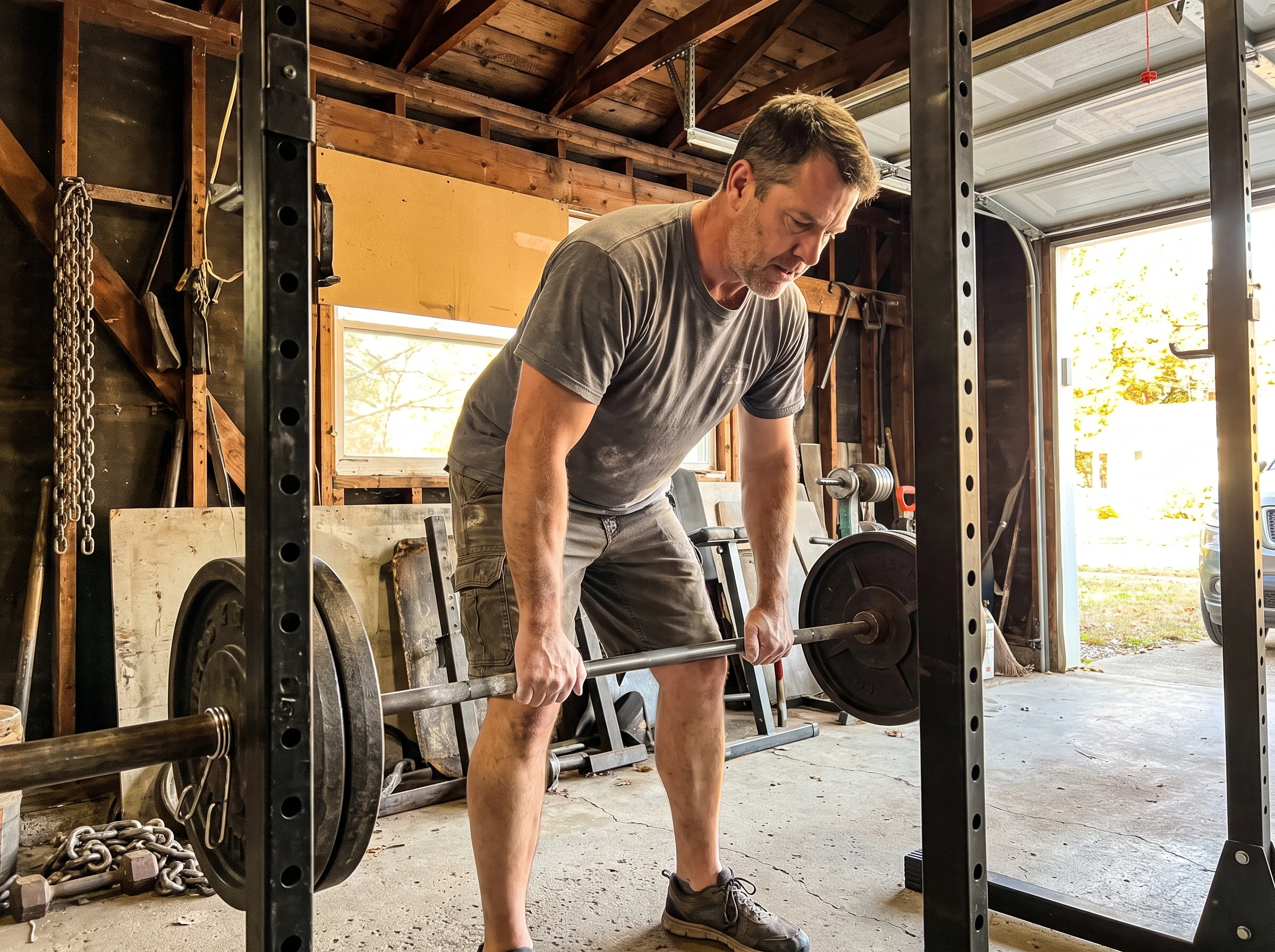
Heavy resistance training, two to three times a week. Testosterone is acutely elevated right after heavy lifts in men [3], and muscle in midlife responds to load plus adequate protein, not to more sweat [4]. Compound movements. 3 to 5 sets. 4 to 6 reps. Leave one in the tank.
One short, real intensity session per week. Sprints on a hill. Sled pushes. Bike intervals. 10 to 20 minutes total. In, out, done.
Easy movement most other days. Walk 30 to 45 minutes. Zone 1. The stuff that does not tax recovery, only supports it.
What you drop: the four days of moderate-hard cardio. That is the sacrifice, and it is the whole trick.
For protein, aim around 1.0 to 1.2 grams per kilogram of bodyweight if you are healthy and older, and higher if you are training hard, with diminishing returns past about 1.6 g/kg [5, 4]. If you weigh 200 pounds, that is roughly 140 to 160 grams a day, real food, spread across meals.
You feel that, right? The workouts you dread are usually the ones aging you. The ones you actually need are shorter, harder in short bursts, and easier the rest of the time.
The Recovery Floor Nobody Talks About
Training is a stimulus. It only makes you younger if you can absorb it.
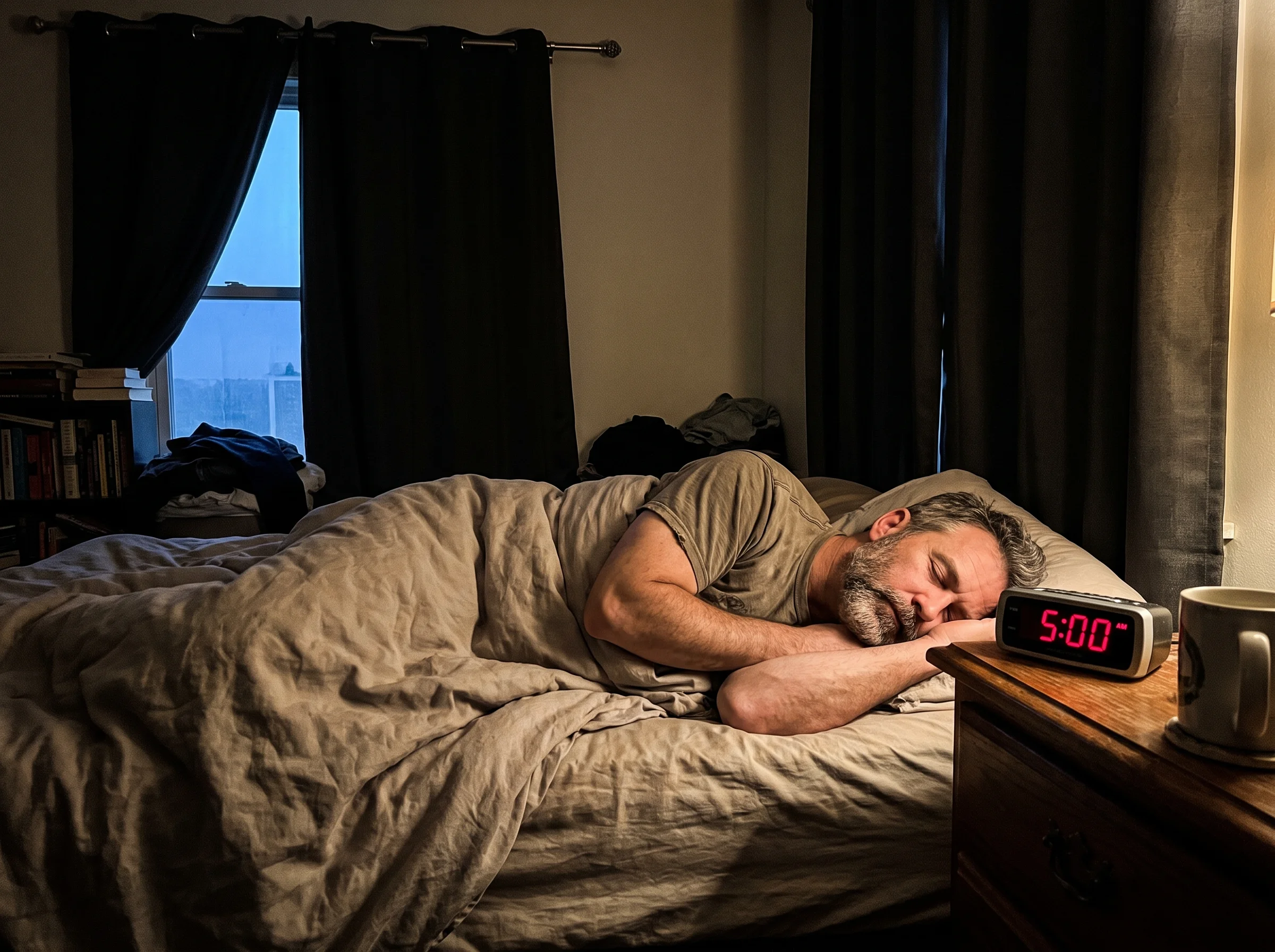
Sleep first. In healthy young men, restricting sleep to about 5 hours a night for one week dropped daytime testosterone 10 to 15 percent [6]. That is in young men whose baseline was high. Testosterone in healthy men falls gradually and progressively with age anyway [7]. If 5 hours punches a 25 year old that hard, imagine what your 51 year old system is doing on that same budget for the last decade.
Then there is the raw material problem, and this is the one nobody in your annual physical is going to bring up.
Your cells run on specific nutrients you cannot fake. CoQ10 sits in the mitochondrial machinery that makes ATP, concentrates in the heart, and levels decline in some tissues with age [8]. Preformed vitamin A in liver skips the conversion lottery that plant beta-carotene forces on you, where the conversion ratio ranges from about 4 to 1 all the way to 28 to 1 by weight, depending on the person [9]. Choline is essential, men are chronically low on it, and under severe restriction 77 percent of men developed signs of liver or muscle dysfunction that reversed when they got it back [10].
Think of the kitchen. You can be the best chef alive. If the walk-in fridge is empty, dinner does not happen. Training is the chef. Nutrients are the ingredients. Most guys my age are trying to cook harder in a stocked-out kitchen.
That afternoon crash you feel at 2:47pm? A chunk of it is circadian, a real measured midafternoon dip in alertness that shows up even on days you skip lunch [11]. But the part you can actually influence is the raw material floor underneath it.
Why I Take Organs, and Why in a Capsule
Liver, heart, kidney. These are the densest food inputs on the planet for the exact micronutrients your machinery is asking for. A 2024 analysis of raw United States beef offal confirmed liver is concentrated in preformed vitamin A, B12, riboflavin, copper and iron, with heart and kidney adding their own dense profiles [12]. USDA data backs it up, and kidney in particular is loaded with selenium [13].
Grandpa ate this stuff. We throw it out.
I tried, I really did, to eat liver every morning for a month. Made it nine days. It tastes like it lost a fight and there is not enough onion in Texas to fix it at 5:30am.
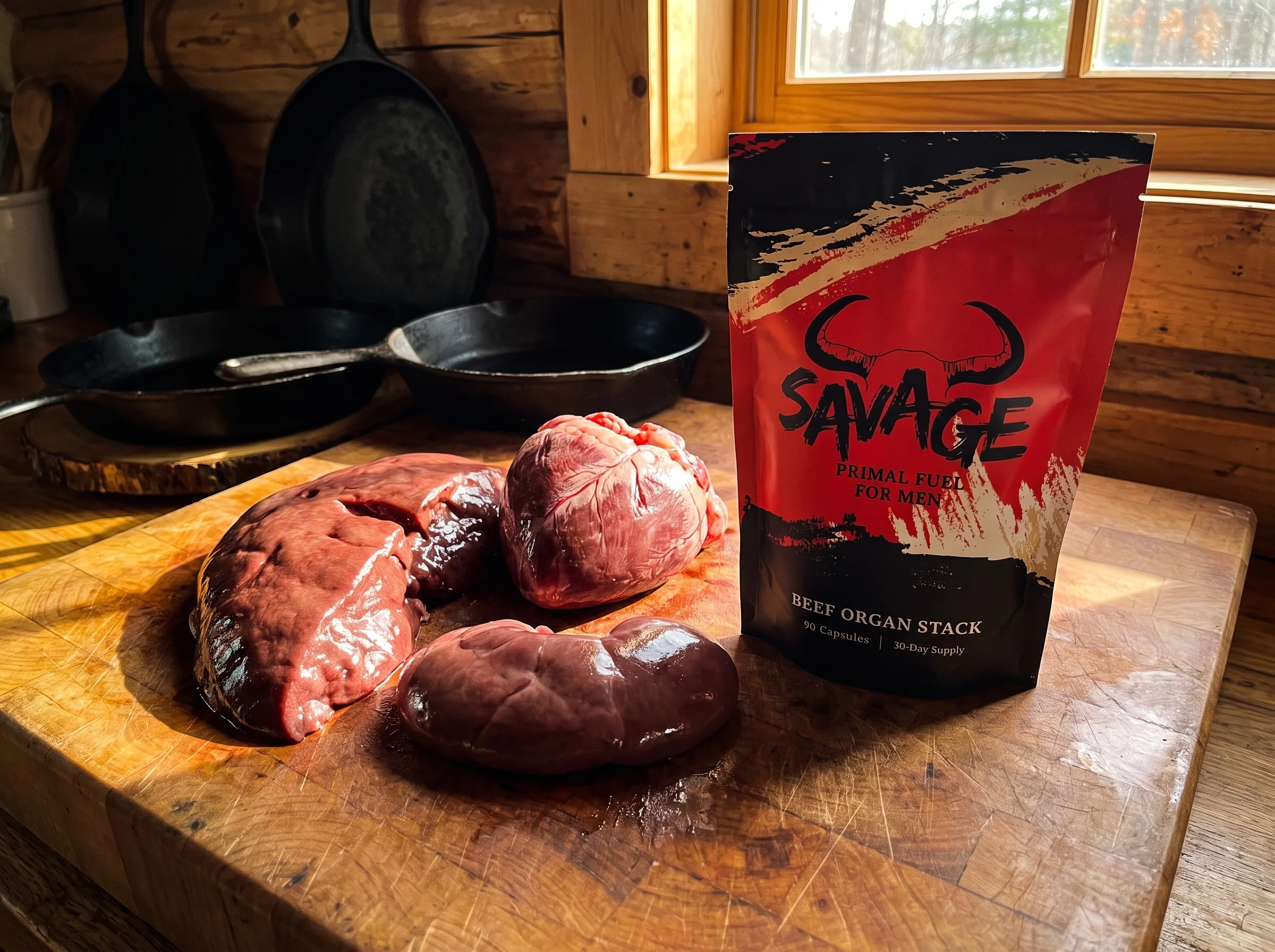
That is why the Savage Beef Organ Stack exists. Three capsules with food, all six organs, freeze-dried raw so you skip the losses that come with cooking. Broiling beef liver loses about 41 percent of its folate, frying about 50 percent [14]. Frying knocks CoQ10 in beef heart down to roughly 69 percent of what was there raw [15]. Freeze-drying is a low temperature vacuum process, which better preserves heat-sensitive components than hot-air drying [16].
That is one product mention. I am not pretending a capsule replaces the training. I am telling you organ meat is what supports the floor while you fix the dose.
The Two-Week Reset
Start Monday. Give it 14 days before you judge it.
- Cut the gray-zone cardio to zero.
- Add two heavy lifts a week. Compound. 3 to 5 sets. 4 to 6 reps.
- Add one hard 15 minute session. Hills, sprints, or a sled.
- Walk 30 to 45 minutes on your other days.
- Sleep target: 7 hours minimum. Not negotiable. No screens in bed.
- Protein floor: roughly 0.7 to 1.0 grams per pound of bodyweight.
- Feed the floor: organ meats once a week if you can stomach them, or the Savage Stack if you cannot.
By day 10, most guys report the same three things: a lighter 3pm, deeper sleep, and cleaner energy in the morning without leaning on the second coffee.

The Real Answer to Which Exercise Takes 20 Years Off Your Life
The exercise that takes 20 years off your life is not the deadlift and it is not the sprint. It is the workout you cannot recover from, done four times a week for a decade, on 5 hours of sleep and a nutrient-poor plate.
The machine is fine. The dose was wrong. The raw materials were missing.
This is not another point-solution pill or a lifelong prescription conversation you do not want. It is ownership. Train less at the wrong intensity, train harder in shorter windows on the days you do train, feed the floor, sleep like your job depends on it, and take the wheel back.
That guy who walks in from the garage on a Tuesday at 6pm and still has something in the tank for his kids? He is not doing more than you. He is doing less of the wrong thing, and more of the right one.
That is the whole answer.
References
[1] Short KR, et al. Decline in skeletal muscle mitochondrial function with aging in humans. PNAS. 2005;102(15):5618-5623. https://pubmed.ncbi.nlm.nih.gov/15800038/
[2] Minkel J, et al. Sleep deprivation and stressor-evoked changes in cortisol. Health Psychol. 2014;33(11):1430-1434. https://pubmed.ncbi.nlm.nih.gov/24818608/
[3] Vingren JL, et al. Testosterone physiology in resistance exercise and training. Sports Med. 2010;40(12):1037-1053. https://link.springer.com/article/10.2165/11536910-000000000-00000
[4] Morton RW, et al. A systematic review, meta-analysis and meta-regression of the effect of protein supplementation on resistance training-induced gains in muscle mass and strength. Br J Sports Med. 2018;52(6):376-384. https://pubmed.ncbi.nlm.nih.gov/28698222/
[5] Bauer J, et al. Evidence-based recommendations for optimal dietary protein intake in older people: a position paper from the PROT-AGE study group. J Am Med Dir Assoc. 2013;14(8):542-559. https://pubmed.ncbi.nlm.nih.gov/23867520/
[6] Leproult R, Van Cauter E. Effect of 1 week of sleep restriction on testosterone levels in young healthy men. JAMA. 2011;305(21):2173-2174. https://jamanetwork.com/journals/jama/fullarticle/1029127
[7] Harman SM, et al. Longitudinal effects of aging on serum total and free testosterone levels in healthy men. Baltimore Longitudinal Study of Aging. J Clin Endocrinol Metab. 2001;86(2):724-731. https://academic.oup.com/jcem/article/86/2/724/2841070
[8] Diaz-Casado ME, et al. The paradox of coenzyme Q10 in aging. Nutrients. 2019;11(9):2221. https://pmc.ncbi.nlm.nih.gov/articles/PMC6770889/
[9] Tang G. Bioconversion of dietary provitamin A carotenoids to vitamin A in humans. Am J Clin Nutr. 2010;91(5):1468S-1473S. https://pubmed.ncbi.nlm.nih.gov/20200262/
[10] Fischer LM, et al. Sex and menopausal status influence human dietary requirements for the nutrient choline. Am J Clin Nutr. 2007;85(5):1275-1285. https://pubmed.ncbi.nlm.nih.gov/17490963/
[11] Monk TH. The post-lunch dip in performance. Clin Sports Med. 2005;24(2):e15-e23. https://pubmed.ncbi.nlm.nih.gov/15892914/
[12] Fuerniss HF, et al. Nutrient analysis of raw United States beef offal items. Nutrients. 2024;16(18):3104. https://pubmed.ncbi.nlm.nih.gov/39339704/
[13] USDA FoodData Central SR Legacy, beef liver 169451 / heart 168625 / kidney 169449. https://fdc.nal.usda.gov/food-details/169451/nutrients
[14] Aramouni FM, Godber JS. Folate losses in beef liver due to cooking and frozen storage. J Food Qual. 1991;14(5):357-365. https://onlinelibrary.wiley.com/doi/10.1111/j.1745-4557.1991.tb00077.x
[15] Ercan P, El SN. Changes in content of coenzyme Q10 in beef muscle, beef liver and beef heart with cooking and in vitro digestion. J Food Compost Anal. 2011;24(8):1136-1140. https://www.sciencedirect.com/science/article/pii/S0889157511001517
[16] Ratti C. Hot air and freeze-drying of high-value foods: a review. J Food Eng. 2001;49(4):311-319. https://www.sciencedirect.com/science/article/pii/S0260877400002284