What Vitamins Do Men Lack the Most? The Real 5
What vitamins do men lack the most? The five nutrients missing from the modern man's plate, why your labs miss them, and what actually moves the needle.


It is 3:07pm on a Tuesday. You have been staring at the same email for twenty minutes. Your second coffee is cold. The guy you were three years ago would have crushed this before lunch and gone for a walk. Today you are calculating how many hours until you can sit down.
You feel that too? Yeah. Me too.
Here is the thing nobody at your last physical told you. This is not just aging. Something is missing from your plate that used to be on every plate in your bloodline, and it has a name. Actually, five names. If you have ever typed "what vitamins do men lack the most?" into a search bar at midnight, keep reading. The answer is more specific than the front-of-the-store multi wants you to know.
Your Labs Say Normal. You Feel Like Hell. Both Are True.
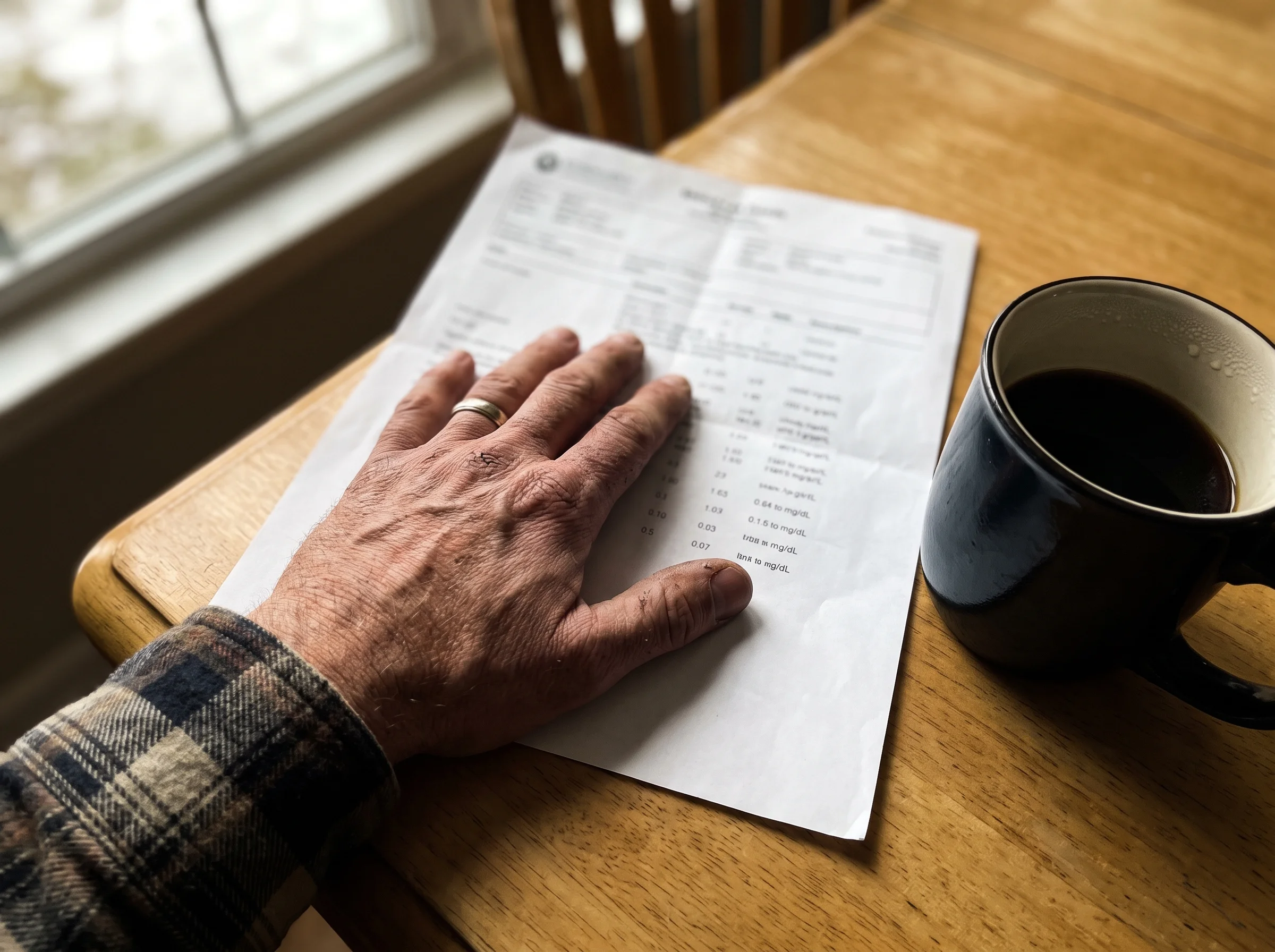
The standard panel your doctor ran is a disease screen. It is looking for the ditch, not the road. "In range" means you are not sick enough to bill an insurance code. It does not mean you are running well.
Testosterone drifts down with age in healthy men, that is documented in the Baltimore aging study [1]. The 3pm crash you feel is a real circadian dip in alertness that shows up even on the days you skip lunch [2]. So no, you are not making it up. Your body is telling the truth. The blood work just is not listening at that frequency.
Normal for a 49 year old American man is a bar I refused to clear, and if you are reading this, you already know why.
The Five Vitamins Men Actually Run Short On After 40
Forget the top-ten sprawl. Here are the five that map to how you actually feel, and why the front-of-the-store multivitamin keeps missing them.
1. Vitamin B12
B12 only exists meaningfully in animal food. Your body uses it for red blood cell formation, nervous system function, and energy metabolism, and deficiency causes fatigue [3]. Straight talk though: if you are not deficient, more B12 will not make you feel like Superman. This is a floor problem, not a ceiling problem. You want to make sure you have enough. That is it.
2. Preformed Vitamin A (retinol)
Vitamin A runs immune function, reproduction, and cellular communication [4]. Here is the part nobody tells the guy eating carrots and sweet potatoes: plant beta-carotene has to be converted to retinol inside your body, and the conversion rate varies wildly, roughly 4 to 1 all the way out to 28 to 1 by weight [5]. If you are a poor converter, "orange vegetables have vitamin A" is a coin flip.
Preformed retinol from liver skips the coin flip. Your body just uses it.
3. Zinc
Zinc is essential for reproductive function. Deficiency causes hypogonadism [6]. It concentrates in red meat, shellfish, and organs.
I will say this once because the T-booster crowd will not: zinc does not raise testosterone in a man who is not deficient. It supports the machinery. It does not turn you into a bull. Anyone who tells you otherwise is selling you something.
4. Choline
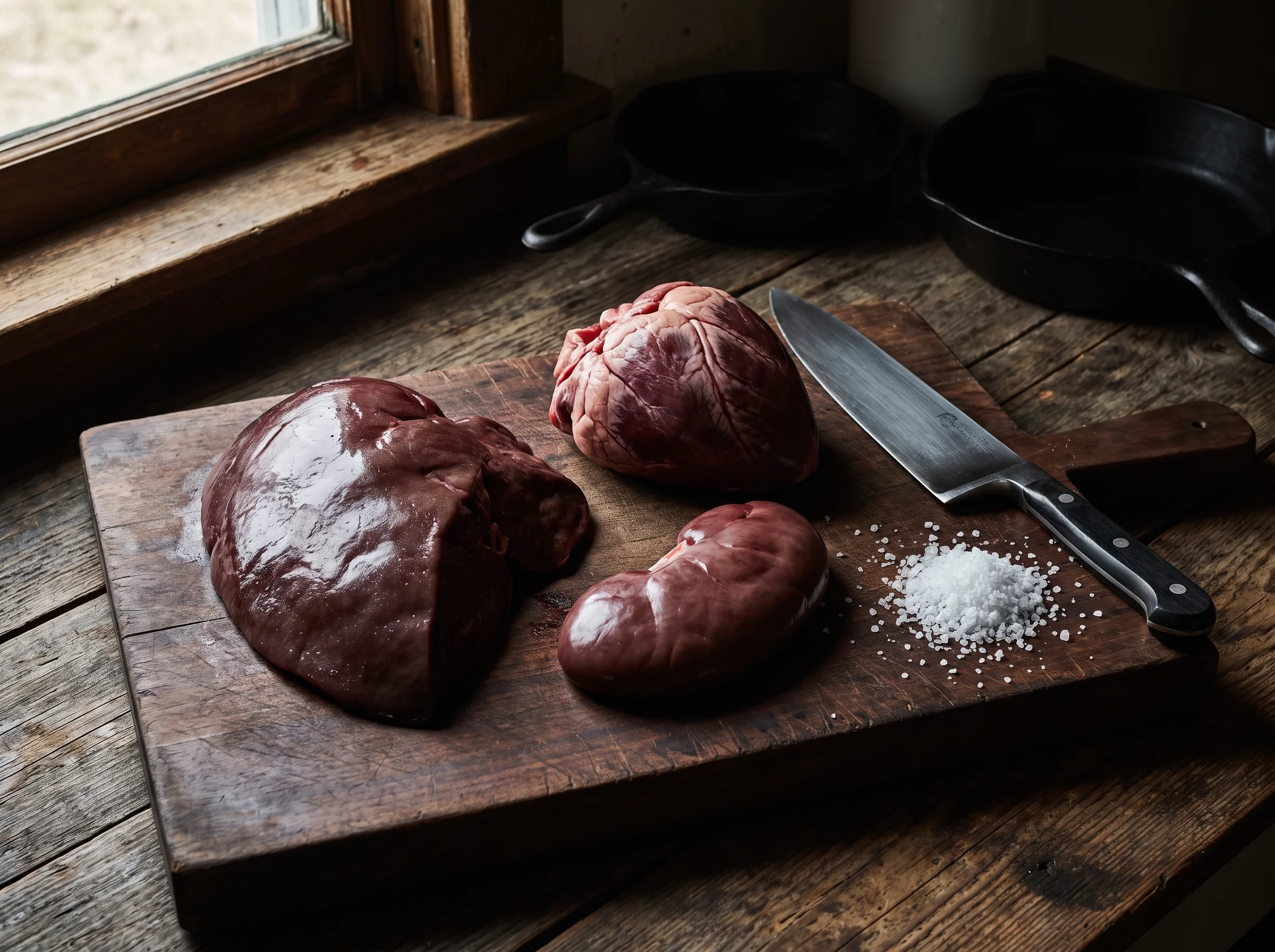
This is the one nobody talks about, and men are especially exposed. Under severe choline restriction, 77 percent of men developed reversible signs of liver or muscle dysfunction, showing the body genuinely requires it [7]. In the Framingham Offspring data, higher dietary choline was linked to better verbal and visual memory [8]. The whole-food source? Beef liver, roughly 330 mg per 100 grams [9].
Association is not proof. But if the modern man is short on one nutrient tied to how his brain feels at 3pm, this is a strong candidate.
5. Selenium
Selenium runs your antioxidant enzymes and helps convert thyroid hormone into its active form [10]. Kidney is one of the richest whole-food sources on earth. You have probably never eaten one on purpose.
Think of these five like the specific spark plugs your engine needs. Vitamin D and fish oil are the gas. Without the plugs, more gas does not help.
Why You Are Short Even Though You Eat "Healthy"
Here is where it gets interesting. You are not lazy. You are not eating fast food every day. You grill chicken. You have a salad. You take a multi. And you still feel like garbage.
There is a reason.
Muscle meat is not the same as meat. A ribeye is protein and some minerals. The nutrient-dense parts of the animal are the parts we throw in the trash. A 2024 analysis of United States beef offal confirmed liver, heart, and kidney carry distinct, concentrated micronutrient loads that muscle meat does not [11]. USDA's own database backs it: liver stacks preformed A, B12, folate, copper, and choline; kidney is loaded with selenium [12].
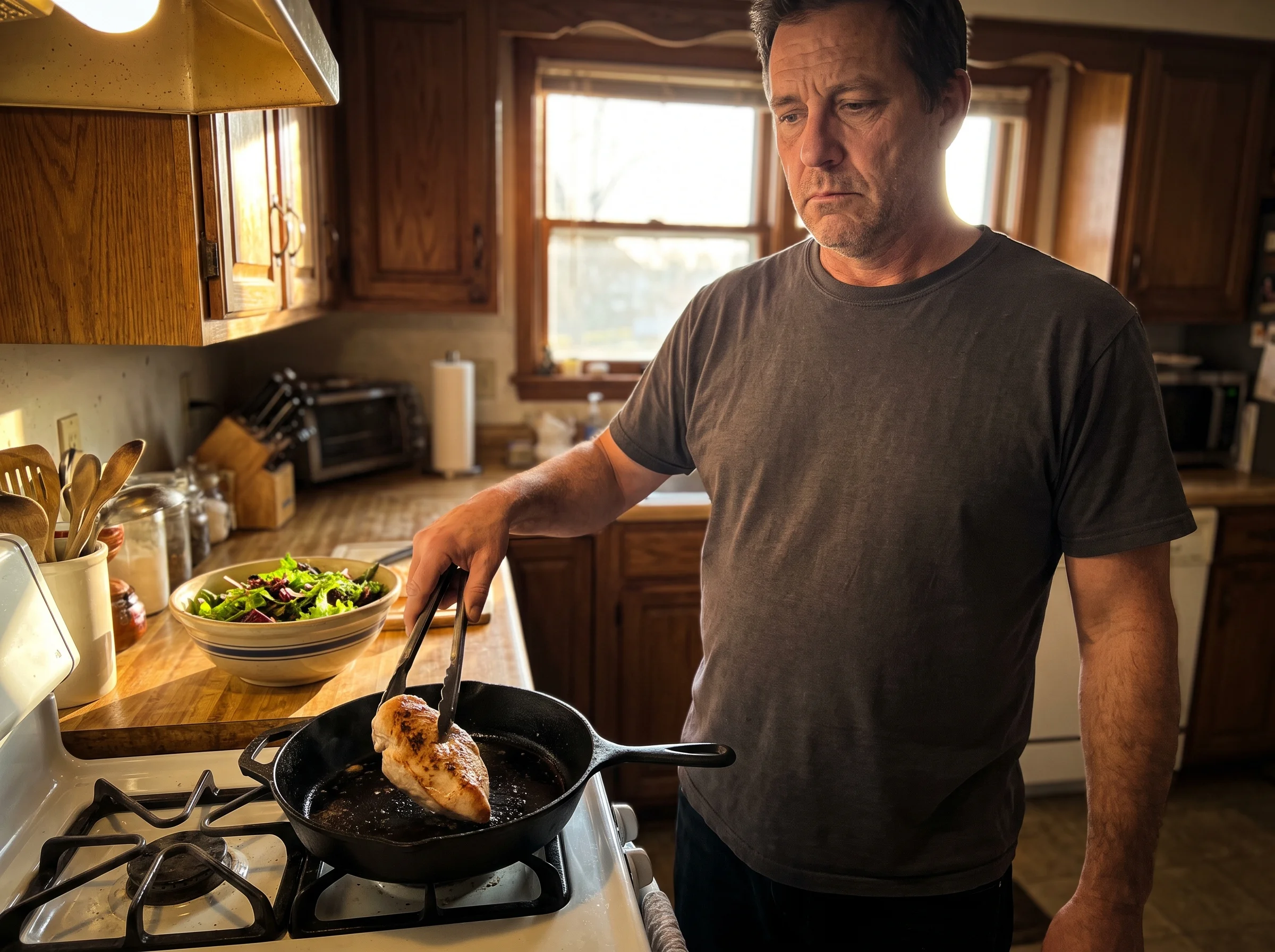
Cooking strips what is left. Broiling beef liver loses about 41 percent of its folate. Frying, about 50 percent [13]. Heart holds CoQ10, the compound your mitochondria use to make energy, and frying cuts recoverable CoQ10 to roughly 69 percent [14]. So even when a man does eat organ meat, half the reason he ate it walks out with the steam.
The food system is built for calories, not density. Soil, feed, transit time, storage. I will not throw a fake stat at you, you have heard enough of those. Just look at your grandfather's plate and yours. His had liver on it once a week. Yours has a protein bar in the console.
Your great-grandfather ate the whole animal because throwing away the liver was insulting to the cow that died for it. You inherited his frame and his hormonal wiring and none of his groceries. That is the whole story in one sentence.
What Actually Moves the Needle on the Vitamins Men Lack
Three moves. In this order. Do not skip step one to get to step three.
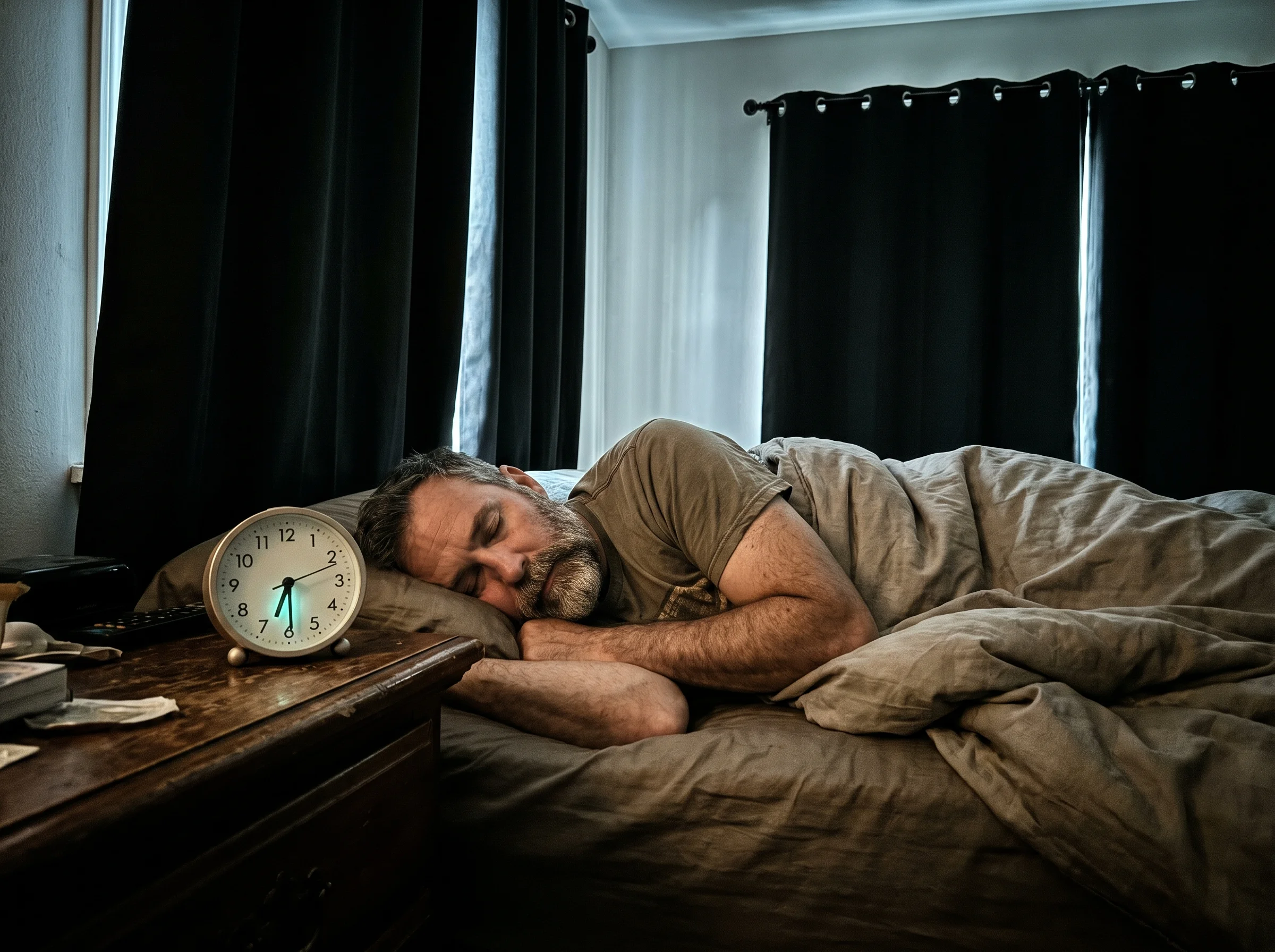
1. Sleep first. Restricting healthy young men to 5 hours a night for one week dropped daytime testosterone by 10 to 15 percent [15]. Poor sleep also cranks up your cortisol response to stress the next day [16]. No capsule, no protein shake, no cold plunge fixes 5 hours in bed. Get 7. Non-negotiable.
2. Train heavy. Testosterone acutely elevates right after heavy resistance work in men [17], and paired with enough protein, lifting actually builds muscle in midlife [18]. Shoot for 1.0 to 1.2 grams of protein per kilo of body weight if you are healthy and older, more if you train hard [19]. Real food. Meat, eggs, fish. Not powder as a main course.
3. Fix the nutrient plate. This is where organ meat comes in, and this is where I lost the plot for two years.
I tried to eat liver twice a week. I made it four days. There is not enough ketchup, hot sauce, or bacon in the world to make me put that in my mouth every morning. The men I coach say the same thing. It is nature's multivitamin, and it also tastes like it lost a fight.
That gap is the entire reason the Savage Beef Organ Stack exists. Three freeze-dried capsules with breakfast. All six organs (liver, heart, kidney, testicle, prostate, pituitary), no gag reflex, no ketchup. Freeze-drying skips the sustained heat that degrades heat-sensitive nutrients in hot-air processing [20] and retains many measured components in organ tissue [21]. It supports what your plate is already missing.
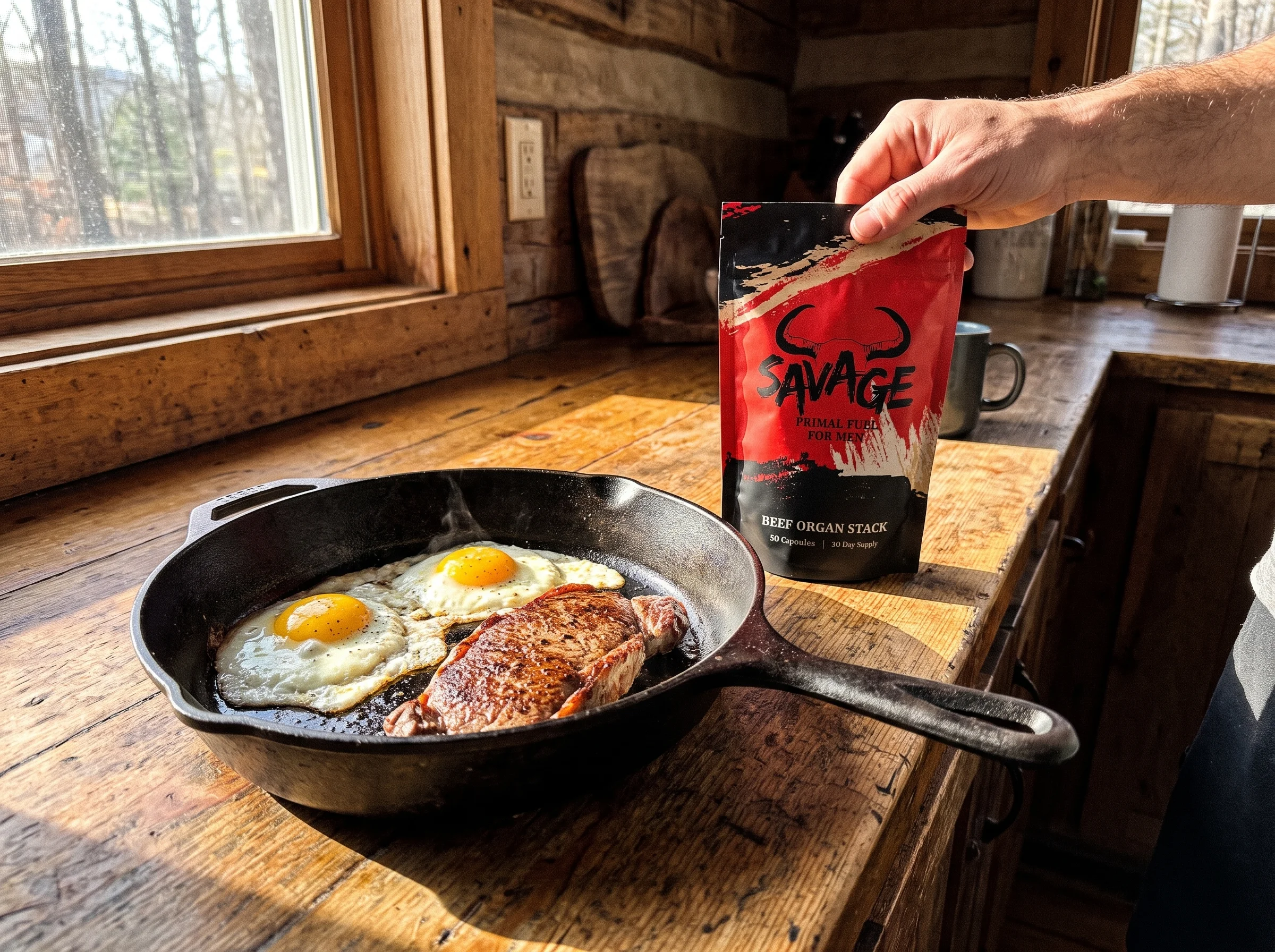
I am not selling you a hormone. I am selling you the food your bloodline ate and you quit eating.
What This Is Not
I owe you the disclaimers, because you have been sold enough hype.
This is not a testosterone booster. Nobody has ever cleanly shown a food or a supplement reliably raises testosterone in a man who is not deficient. If somebody tells you their capsule will, walk.
This is not a replacement for real meals. Capsules are micronutrient support. Not protein. Not dinner.
Iron caution. If you have hemochromatosis, high ferritin, or a doctor telling you to limit iron, do not take any organ product without checking with them first.
And this is not a lifelong prescription you can never get off. That is the whole point. You are feeding the body food it recognizes. You own this. Nobody rents it to you.
The Man on the Other Side
The guy who wakes up before his alarm. Gets through Tuesday without the wall. Roughhouses with his kids after dinner instead of falling asleep on the couch while they finish their homework without him.

He did not chase symptoms. He did not chase a T number. He fixed the plate, the sleep, and the training. In that order.
Start there. The Stack is the plate-fix, not the whole answer. But it is the daily nutrient floor a lot of us quietly needed and did not know how to get in without gagging.
Take control of the plate this week. The rest follows.
References
[1] Harman SM, et al. Longitudinal Effects of Aging on Serum Total and Free Testosterone Levels in Healthy Men (Baltimore Longitudinal Study of Aging). J Clin Endocrinol Metab. 2001;86(2):724-731. https://academic.oup.com/jcem/article/86/2/724/2841070
[2] Monk TH. The Post-Lunch Dip in Performance. Clin Sports Med. 2005;24(2):e15-e23. https://pubmed.ncbi.nlm.nih.gov/15892914/
[3] NIH Office of Dietary Supplements, Vitamin B12 Fact Sheet for Health Professionals. https://ods.od.nih.gov/factsheets/VitaminB12-HealthProfessional/
[4] NIH Office of Dietary Supplements, Vitamin A and Carotenoids Fact Sheet for Health Professionals. https://ods.od.nih.gov/factsheets/VitaminA-HealthProfessional/
[5] Tang G. Bioconversion of dietary provitamin A carotenoids to vitamin A in humans. Am J Clin Nutr. 2010;91(5):1468S-1473S. https://pubmed.ncbi.nlm.nih.gov/20200262/
[6] NIH Office of Dietary Supplements, Zinc Fact Sheet for Health Professionals. https://ods.od.nih.gov/factsheets/Zinc-HealthProfessional/
[7] Fischer LM, et al. Sex and menopausal status influence human dietary requirements for the nutrient choline. Am J Clin Nutr. 2007;85(5):1275-1285. https://pubmed.ncbi.nlm.nih.gov/17490963/
[8] Poly C, et al. The relation of dietary choline to cognitive performance and white-matter hyperintensity in the Framingham Offspring Cohort. Am J Clin Nutr. 2011;94(6):1584-1591. https://pubmed.ncbi.nlm.nih.gov/22071706/
[9] USDA Database for the Choline Content of Common Foods, Release 2 (2008). https://www.ars.usda.gov/ARSUserFiles/80400525/data/choline/choln02.pdf
[10] NIH Office of Dietary Supplements, Selenium Fact Sheet for Health Professionals. https://ods.od.nih.gov/factsheets/Selenium-HealthProfessional/
[11] Fuerniss HF, et al. Nutrient Analysis of Raw United States Beef Offal Items. Nutrients. 2024;16(18):3104. https://pubmed.ncbi.nlm.nih.gov/39339704/
[12] USDA FoodData Central SR Legacy, beef liver 169451. https://fdc.nal.usda.gov/food-details/169451/nutrients
[13] Aramouni FM, Godber JS. Folate losses in beef liver due to cooking and frozen storage. J Food Qual. 1991;14(5):357-365. https://onlinelibrary.wiley.com/doi/10.1111/j.1745-4557.1991.tb00077.x
[14] Ercan P, El SN. Changes in content of coenzyme Q10 in beef muscle, beef liver and beef heart with cooking and in vitro digestion. J Food Compost Anal. 2011;24(8):1136-1140. https://www.sciencedirect.com/science/article/pii/S0889157511001517
[15] Leproult R, Van Cauter E. Effect of 1 Week of Sleep Restriction on Testosterone Levels in Young Healthy Men. JAMA. 2011;305(21):2173-2174. https://jamanetwork.com/journals/jama/fullarticle/1029127
[16] Minkel J, et al. Sleep deprivation and stressors: evidence for elevated negative affect in response to mild stressors when sleep deprived. Health Psychol. 2014;33(11):1430-1434. https://pubmed.ncbi.nlm.nih.gov/24818608/
[17] Vingren JL, et al. Testosterone Physiology in Resistance Exercise and Training. Sports Med. 2010;40(12):1037-1053. https://link.springer.com/article/10.2165/11536910-000000000-00000
[18] Morton RW, et al. A systematic review, meta-analysis and meta-regression of the effect of protein supplementation on resistance training-induced gains in muscle mass and strength in healthy adults. Br J Sports Med. 2018;52(6):376-384. https://pubmed.ncbi.nlm.nih.gov/28698222/
[19] Bauer J, et al. Evidence-based recommendations for optimal dietary protein intake in older people: a position paper from the PROT-AGE Study Group. J Am Med Dir Assoc. 2013;14(8):542-559. https://pubmed.ncbi.nlm.nih.gov/23867520/
[20] Ratti C. Hot air and freeze-drying of high-value foods: a review. J Food Eng. 2001;49(4):311-319. https://www.sciencedirect.com/science/article/pii/S0260877400002284
[21] Juknienė I, et al. The Effect of Freeze-Drying on the Composition of Nutritional Components of Animal Organs. Appl Sci. 2022;12(24):12984. https://www.mdpi.com/2076-3417/12/24/12984