What Is the Most Neglected Nutrient? The Honest Answer
What is the most neglected nutrient? It's not magnesium or vitamin D. Here's the whole food two generations of men quit eating, and why it matters at 51.


It's 3pm on a Wednesday. You are staring at the same email you opened 20 minutes ago. Coffee number three isn't touching it. You are not sick, you are not lazy, and your last physical said everything was "normal." So why do you feel like someone unplugged you at lunch?
You feel that too? Then the answer to "what is the most neglected nutrient" is going to piss you off a little, because it is not magnesium. It is not vitamin D. And it is not sitting on the shelf at CVS.
The Trick Question Everyone Answers Wrong
Google this question and you'll get the same four answers on every article: magnesium, vitamin D, potassium, omega-3s.
Every one of those is a real gap. Not one of them is the answer.
Here is the shift. Neglect isn't a molecule. It is a whole food category we quit eating two generations ago. When you ask "what is the most neglected nutrient," you are asking the wrong question the same way a guy asks a mechanic "what's the most neglected part of my car" after 40,000 miles without an oil change. The mechanic looks at him and says, "brother, all your parts are neglected." Same story on your plate.
So let me give you both answers. The technical one, and the real one.
The Technical Answer to What Is the Most Neglected Nutrient: Choline
If you put a gun to my head and made me pick one nutrient, I'd pick choline.
Most guys have never heard of it. It didn't even have an official recommended intake in the U.S. until 1998. It is essential, meaning your body cannot make enough of it on its own, and it does three big jobs: it builds cell membranes, it moves fat out of your liver, and it feeds the signaling system your brain uses to remember words and names.
Here is the part that should get your attention. In a study where researchers put men on a severe choline-restricted diet, 77 percent of them developed reversible signs of liver or muscle dysfunction [1]. Men, in particular, got hammered. Not women. Not "adults." Men.
And on the brain side, the Framingham Offspring cohort found that people with higher choline intake had better verbal and visual memory markers and fewer white-matter lesions on brain imaging [2]. That is an association, not a cure. But it lines up with what choline does mechanically.
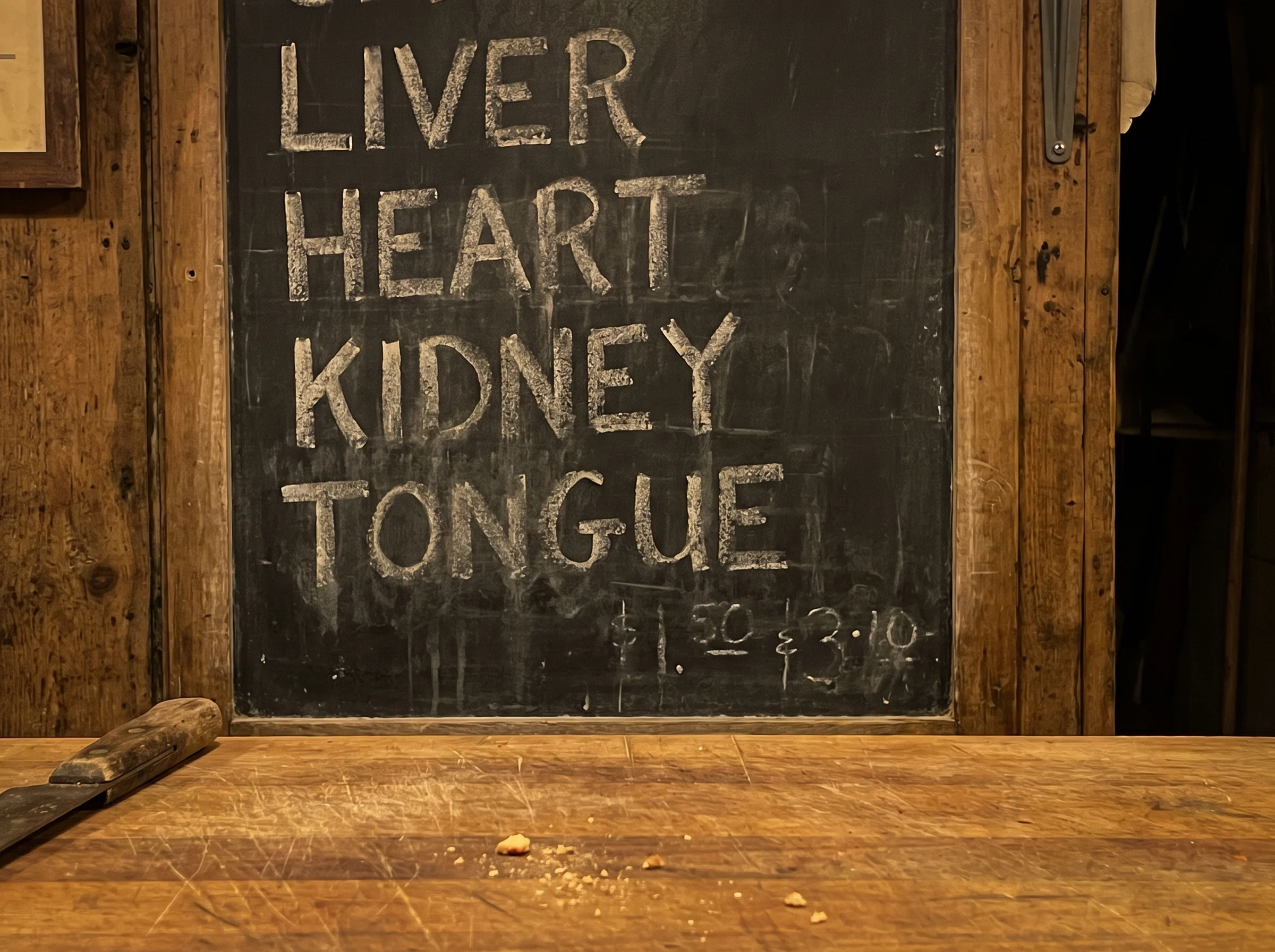
Where does choline live? Egg yolks. And by a wide margin, liver. Raw beef liver carries about 330 mg of total choline per 100 grams [3]. That's roughly a full day's requirement in a serving the size of a deck of cards.
Now ask yourself: when was the last time you ate liver?
The Real Answer: A Whole Food, Not a Molecule
Here is where it gets interesting.
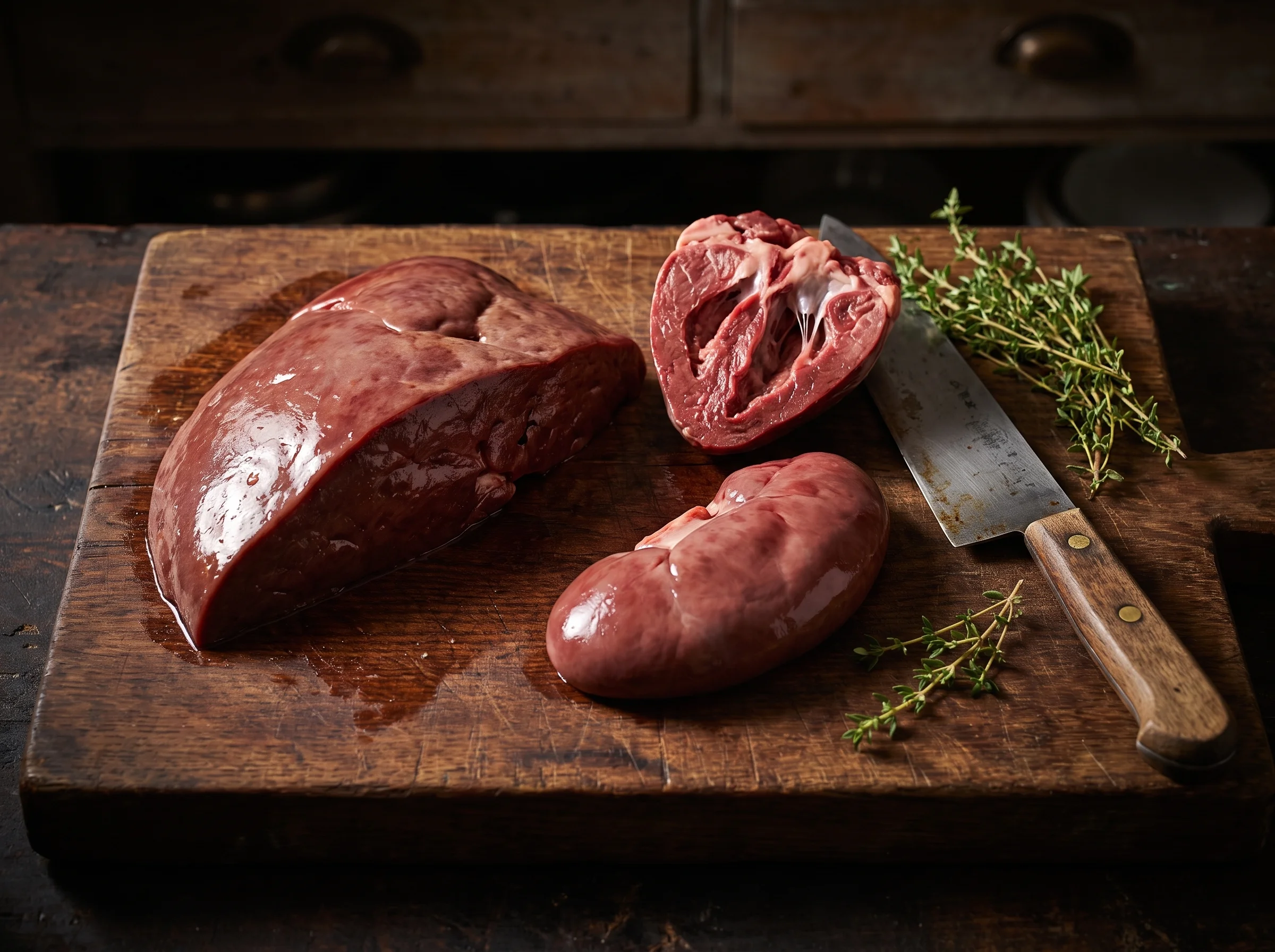
The moment you name the food that carries choline, you notice something. Liver isn't just a choline bomb. It is sitting on top of an entire pile of "most neglected" nutrients, and so are the other organs we throw away.
- Preformed vitamin A in liver skips the conversion step your body has to gamble on with plant beta-carotene. That conversion runs anywhere from 4-to-1 to 28-to-1 by weight depending on the person [4]. Liver hands you the finished product.
- B12 in an animal-food matrix, which the body reads easily [5].
- CoQ10, especially concentrated in heart muscle. Raw beef heart holds about 11 mg per 100g, and frying it drops recoverable CoQ10 to roughly 69 percent of what was there [6]. Cook the heart, lose a chunk of the CoQ10.
- Selenium from kidney, built into the enzymes that run your antioxidant defense and thyroid metabolism [7].
- Zinc, essential for male reproductive function [8].
- Heme iron in an animal matrix, absorbed more consistently than plant iron in people with low stores [9]. (Caveat: if you've got high ferritin or a family history of hemochromatosis, talk to a doctor before adding iron.)
A modern 2024 analysis of raw U.S. beef offal confirmed what your great-grandmother knew: liver, heart, and kidney each carry distinct, concentrated micronutrient loads that muscle meat simply does not [10]. USDA's own database says the same [11].
Chasing "the most neglected nutrient" one bottle at a time is like trying to rebuild a house by ordering one nail at a time on Amazon. Or you could go get the whole toolbox in one trip. The toolbox is organ meat.
Why This Isn't Your Fault
Two generations ago, liver and onions was a Tuesday night dinner. Kidney was in the pie. Heart was in the stew. That wasn't hillbilly food, that was working-class dinner from Kansas City to London.
Then the industrial food system rolled through and taught us to eat skeletal muscle only. Chicken breast. Ground beef. Boneless-skinless everything. The organs got shipped off as pet food or dumped behind the butcher shop.
The "high-protein" guy eating a ribeye every night thinks he is winning. He is eating one instrument in the orchestra and wondering why the music sounds thin.
Even the "clean eating" guy has a hole in his plate the size of an ancestor's dinner table.
What This Actually Feels Like at 51
I'm not going to give you the clinical version. You've read it. "Fatigue, poor concentration, low mood." Useless.
Here is the lived version, because I lived it.
The 3pm wall isn't in your head. It's a documented mid-afternoon dip in alertness that shows up even on days you skip lunch, because it's driven partly by your circadian clock [12]. So when you feel it, it is real. That is your first braingasm of the day. It is not a moral failing.
Then there's the short fuse with your wife and your kids. The gut that won't budge even though you hit the gym three times a week. The reach for a name in a conversation that just, isn't there. Sleep that leaves you more tired than when you laid down. Bad sleep, by the way, cranks up your baseline cortisol and your stress response [13], so no capsule on earth will out-run 5 hours a night.
Your labs? "Normal for a 49-year-old American man." That is a bar I refused to clear, and you should too. Testosterone in healthy men falls gradually and progressively with age. The Baltimore aging study proved it decades ago [14]. That does not mean "just live with it." It means the base needs to be better than average, because average is on the floor.
For me, the wake-up was a Tuesday. Head on the desk at 3pm. Could not remember the last time I felt like myself. Not sick. Just leaked. A little less energy every month until one afternoon there wasn't any left.

The Honest Fix for the Most Neglected Nutrient Gap
The answer is not another isolated pill. It is putting the food back on the plate.
Two realistic options.
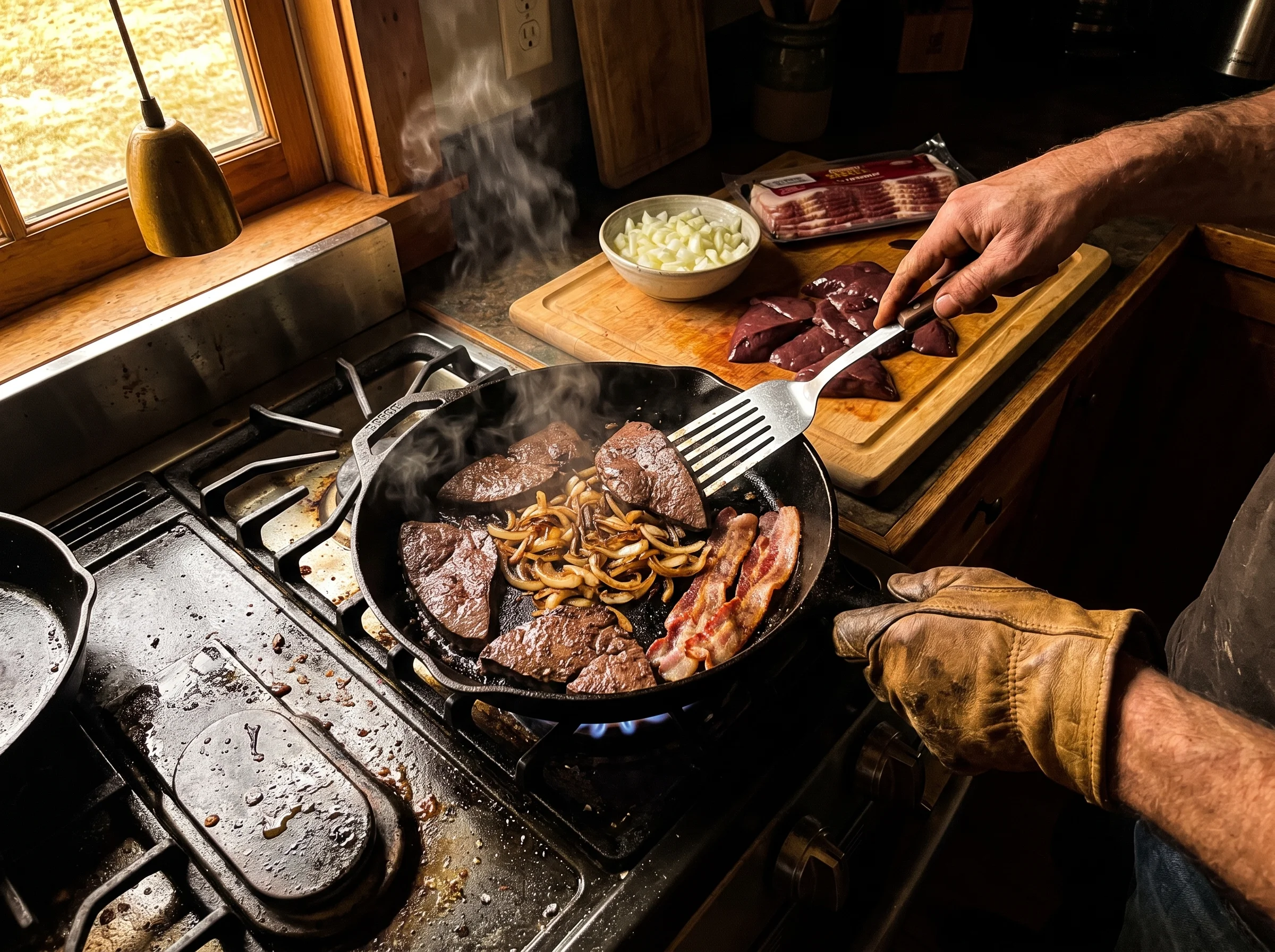
Option A: Eat liver once a week. Sauté it with onions and bacon. If you can pull that off as a habit, respect. Most men, myself included, cannot. I tried. I lasted a month. One Tuesday I stood over the pan and thought, I would rather feel like garbage than eat this again. Liver is nature's multivitamin. It also tastes like it lost a fight.
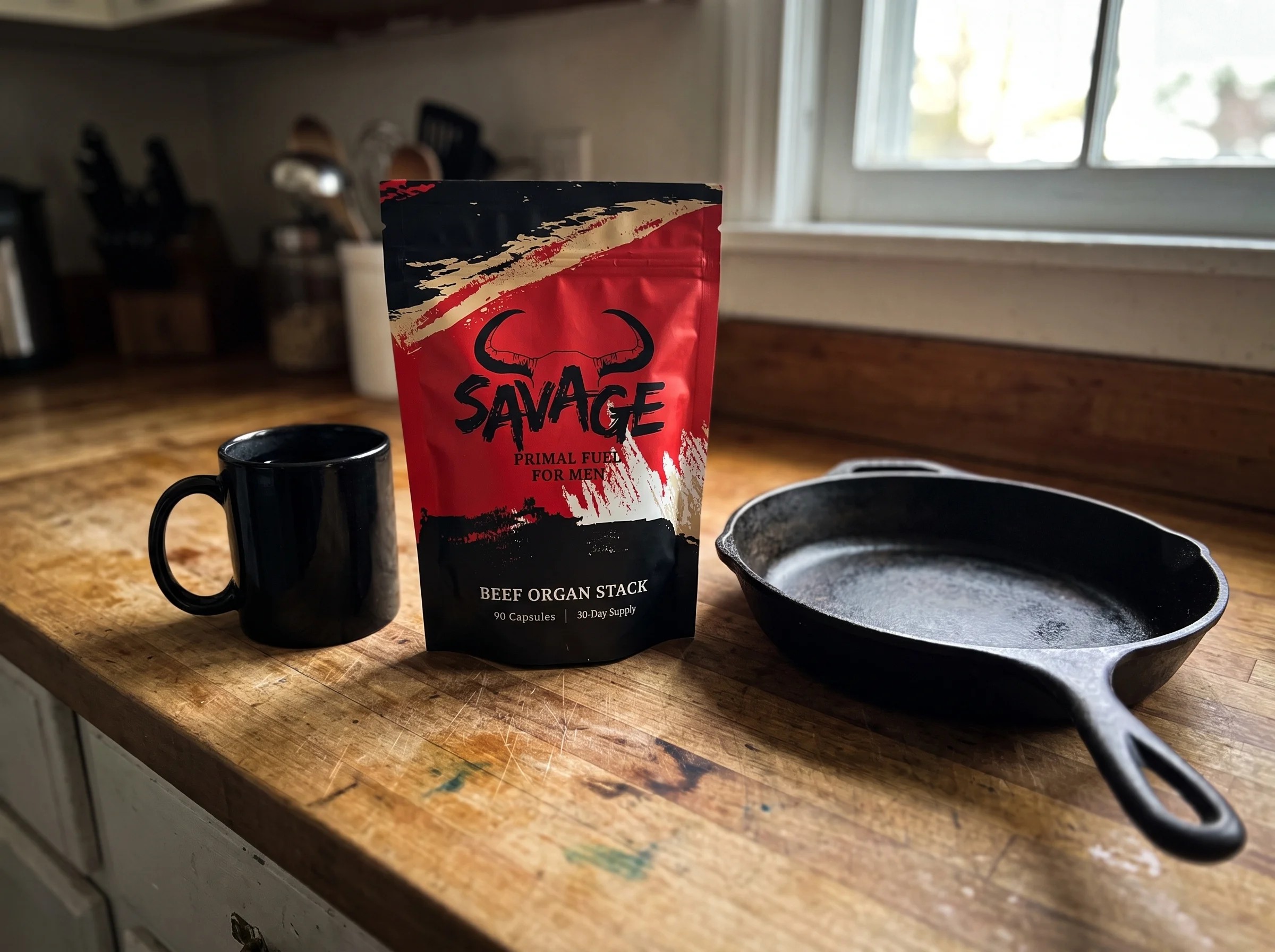
Option B: Take the organs freeze-dried. That is where the Savage Beef Organ Stack came in for me. Three capsules with food. Six organs in one shot: liver, heart, kidney, testicle, prostate, pituitary. Grass-fed, pasture-raised, freeze-dried raw. No smell. No ketchup. That was the catalyst that let me actually keep the food in my life every day, and it is what the men I coach use now.
Why freeze-dried and not cooked? Because cooking is brutal on the fragile stuff. Broiling beef liver loses about 41 percent of its folate, frying it loses about 50 percent [15]. Frying heart cuts CoQ10 by roughly a third [6]. Freeze-drying pulls water out at low temperature under vacuum and avoids that sustained heat exposure [16]. It is not magic. It doesn't lock in "100 percent" of everything. But it avoids the documented losses cooking causes.
The Stack supports energy, recovery, and hormonal balance. That is the ceiling of what I'll say. What it did for me is a longer story, and it started with putting the food back.
What This Is Not
Let me kill three objections before they land.
This is not a testosterone hack. I am not giving you a number. I am not promising anything on that front.
This is not a replacement for protein or lifting. Muscle in midlife depends on total protein intake, somewhere around 1.0 to 1.6 g/kg/day depending on your training [17][18], plus resistance work. Organ capsules are micronutrient support, not a protein source. Eat the steak. Do the squats.
This is not a shortcut past bad sleep. Nothing is. Fix the 5 hours a night before you blame your diet.
The Bottom Line
The most neglected "nutrient" isn't a nutrient. It is a whole food we quit eating.
You can chase choline. You can chase preformed A. You can chase CoQ10. Or you can name the one food that carries all of them, along with B12, selenium, zinc, and heme iron, and put that food back on your plate.
That is the difference between a scattered supplement stack and a root-cause fix. It is the difference between another point-solution pill and taking back the wheel on your own body.
Cook the liver if you can. Take it freeze-dried if you can't. Either way, stop leaving the best half of the animal in the dumpster behind the butcher shop.
Your great-grandfather ate it every week. He also had steady afternoon energy and remembered your grandmother's cousin's name. That is not a coincidence. That is the plate.
References
[1] Fischer LM, et al. Sex and menopausal status influence human dietary requirements for the nutrient choline. Am J Clin Nutr. 2007;85(5):1275-1285. https://pubmed.ncbi.nlm.nih.gov/17490963/
[2] Poly C, et al. The relation of dietary choline to cognitive performance and white-matter hyperintensity in the Framingham Offspring Cohort. Am J Clin Nutr. 2011;94(6):1584-1591. https://pubmed.ncbi.nlm.nih.gov/22071706/
[3] USDA Database for the Choline Content of Common Foods, Release 2 (2008). https://www.ars.usda.gov/ARSUserFiles/80400525/data/choline/choln02.pdf
[4] Tang G. Bioconversion of dietary provitamin A carotenoids to vitamin A in humans. Am J Clin Nutr. 2010;91(5):1468S-1473S. https://pubmed.ncbi.nlm.nih.gov/20200262/
[5] NIH Office of Dietary Supplements. Vitamin B12 Fact Sheet for Health Professionals. https://ods.od.nih.gov/factsheets/VitaminB12-HealthProfessional/
[6] Ercan P, El SN. Changes in content of coenzyme Q10 in beef muscle, beef liver and beef heart with cooking and in vitro digestion. J Food Compost Anal. 2011;24(8):1136-1140. https://www.sciencedirect.com/science/article/pii/S0889157511001517
[7] NIH Office of Dietary Supplements. Selenium Fact Sheet for Health Professionals. https://ods.od.nih.gov/factsheets/Selenium-HealthProfessional/
[8] NIH Office of Dietary Supplements. Zinc Fact Sheet for Health Professionals. https://ods.od.nih.gov/factsheets/Zinc-HealthProfessional/
[9] Hurrell R, Egli I. Iron bioavailability and dietary reference values. Am J Clin Nutr. 2010;91(5):1461S-1467S. https://pubmed.ncbi.nlm.nih.gov/20200263/
[10] Fuerniss HF, et al. Nutrient Analysis of Raw United States Beef Offal Items. Nutrients. 2024;16(18):3104. https://pubmed.ncbi.nlm.nih.gov/39339704/
[11] USDA FoodData Central SR Legacy, beef liver 169451 / heart 168625 / kidney 169449. https://fdc.nal.usda.gov/food-details/169451/nutrients
[12] Monk TH. The Post-Lunch Dip in Performance. Clin Sports Med. 2005;24(2):e15-e23. https://pubmed.ncbi.nlm.nih.gov/15892914/
[13] Minkel J, et al. Sleep deprivation and stressors: evidence for elevated negative affect in response to mild stressors when sleep deprived. Health Psychol. 2014;33(11):1430-1434. https://pubmed.ncbi.nlm.nih.gov/24818608/
[14] Harman SM, et al. Longitudinal Effects of Aging on Serum Total and Free Testosterone Levels in Healthy Men (Baltimore Longitudinal Study of Aging). J Clin Endocrinol Metab. 2001;86(2):724-731. https://academic.oup.com/jcem/article/86/2/724/2841070
[15] Aramouni FM, Godber JS. Folate losses in beef liver due to cooking and frozen storage. J Food Qual. 1991;14(5):357-365. https://onlinelibrary.wiley.com/doi/10.1111/j.1745-4557.1991.tb00077.x
[16] Ratti C. Hot air and freeze-drying of high-value foods: a review. J Food Eng. 2001;49(4):311-319. https://www.sciencedirect.com/science/article/pii/S0260877400002284
[17] Morton RW, et al. A systematic review, meta-analysis and meta-regression of the effect of protein supplementation on resistance training-induced gains in muscle mass and strength in healthy adults. Br J Sports Med. 2018;52(6):376-384. https://pubmed.ncbi.nlm.nih.gov/28698222/
[18] Bauer J, et al. Evidence-based recommendations for optimal dietary protein intake in older people: a position paper from the PROT-AGE Study Group. J Am Med Dir Assoc. 2013;14(8):542-559. https://pubmed.ncbi.nlm.nih.gov/23867520/