What Do You Crave When Your B12 Is Low? A Man's Guide
What do you crave when your B12 is low? Discover the specific foods your body signals for and why these cravings mean more than you think.


You are on a Zoom at 2:47pm. Somebody is sharing a screen. You are nodding. And in the back of your head, loud as a smoke alarm, is one word: cheeseburger.
Not a salad. Not a shake. Not the almonds in your drawer. Red meat. Every damn afternoon this week. You told yourself Monday was a fluke. Tuesday was stress. By Thursday you are in the drive-thru line again wondering when you turned into a guy with no discipline.
You are not a guy with no discipline. Your body is sending you a note, and you have been throwing it in the trash for about a year. So what do you crave when your B12 is low? Usually the exact stuff your grandfather ate without thinking about it.
The Craving Is a Signal, Not a Character Flaw
Here is the first thing I want you to hear, because nobody said it to me for way too long: the 3pm crash is real. It is not laziness. Researchers call it the post-lunch dip, and the wild part is it shows up even on the days you skip lunch, because it is baked into your circadian clock [1]. Your body has an afternoon low tide. That part is not your fault.
What IS worth paying attention to is what you crave when the tide goes out. That is the memo.
Cravings are your body's oldest language. Long before blood tests, before nutrition labels, this is how humans knew what to eat next. If you find yourself thinking about a specific food, at a specific time, for weeks in a row, that is not noise. That is data.
Think of it like the low-fuel light on the dash. It is not the light's fault the tank is empty. Ignoring it does not add gas.
What B12 Actually Does, and Why Low B12 Makes You Want Red Meat
B12 is required for red blood cell formation, nerve function, and energy metabolism, and running low on it shows up as fatigue and fog before it shows up as anything scary [2]. It is the spark in the plug. Fuel is fine, engine is fine, but no spark and you sit in the driveway.
Here is the part your body knows on an old, deep level: B12 is only found in animal foods. Plants do not make it. The foods highest in B12 are exactly the ones a tired man starts thinking about at 3pm: red meat, eggs, and especially the organs, liver, heart and kidney [3][4].
Now the honest part, because I owe it to you. NIH is very clear on this: B12 supplements only improve energy in people who are actually deficient. If you are already topped up, a pill does nothing [2]. So the answer here is not "chug a B12 shot and call it a day." The answer is: listen to the signal, then figure out what is really going on.
Why This Is Hitting You Now and Not at 28
You keep asking yourself, "I ate this same breakfast at 30 and felt fine. What changed?"
Your stomach did.
To absorb the B12 in food, you need stomach acid to release it from the protein it is bound to. Your stomach quietly turns the volume down on itself as you age. Same eggs, same toast, same rushed coffee, less absorption. Nobody warns you about that in your 40s.
On top of that, a bunch of ordinary things in a modern American life chip away at absorption. Heavy coffee. Chronic acid reducers. Metformin. None of these are villains on their own. Stack them on a stomach that is already running quieter, on a diet that leans on chicken breast and protein powder, and you get a guy who is technically "eating enough" and still short.
And then there is the food itself. Your grandfather ate liver once a week. Your dad probably had it a few times a year. You have not touched it in twenty years. Muscle meat has some B12. Organ meat is loaded with it, plus a bunch of other things that travel with it [4].
I hit this wall myself at 45. Same breakfast for a decade. Different body. It was not a willpower problem. My inputs stopped matching my physiology.
You Are Not Craving a Nutrient. You Are Craving a Pattern.
This is the part I wish somebody had drawn on a napkin for me ten years ago.
When your body wants a burger, it is not asking for one thing. It is asking for a package. B12, heme iron, zinc, choline, preformed vitamin A. All of these show up together in red meat, and all of them concentrate hard in organ meat.
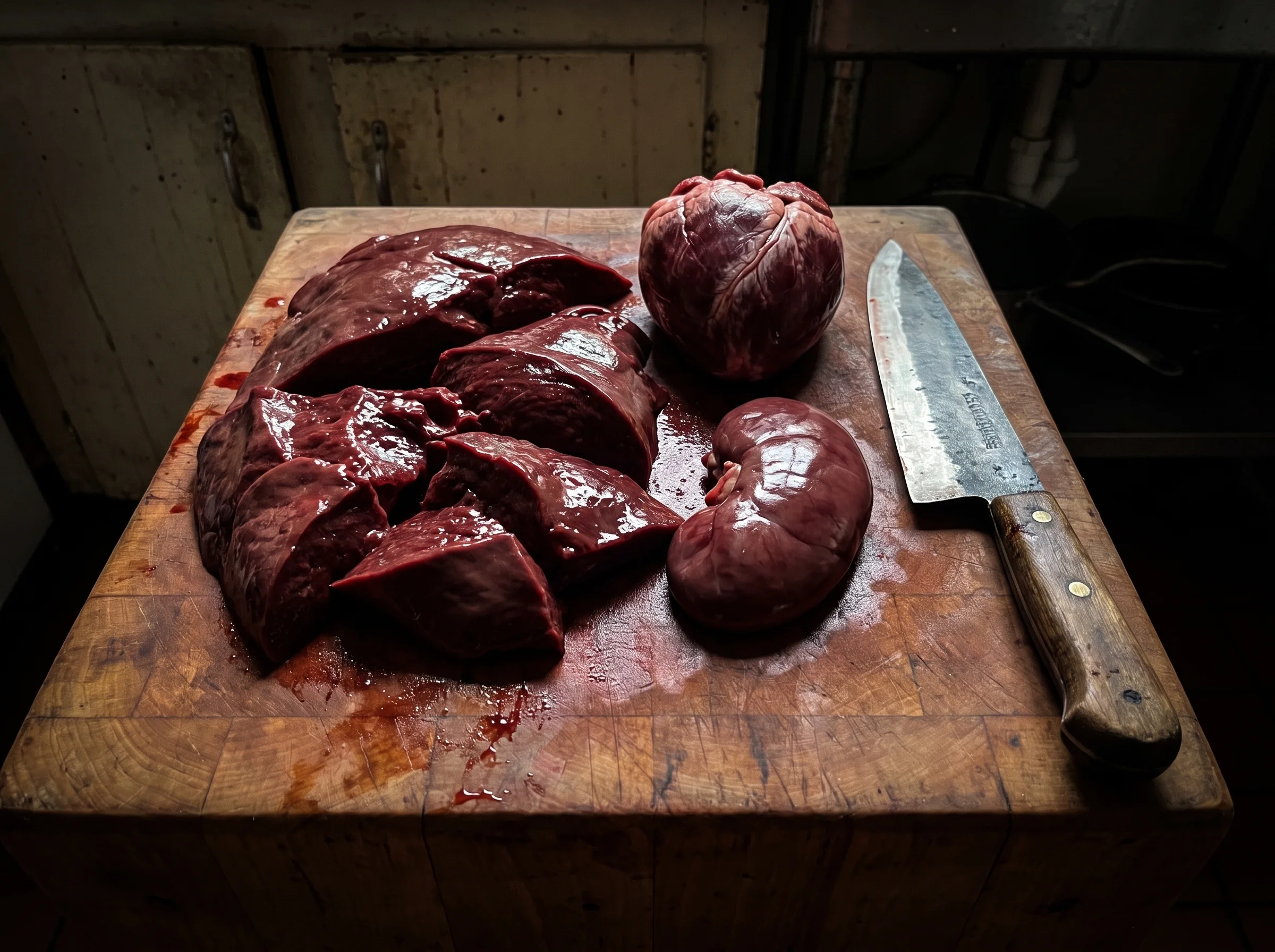
The iron in animal food gets absorbed more consistently than iron from plants, especially in guys whose stores are running low [5]. The vitamin A in liver comes preformed, so it skips the conversion coin-flip that plant beta-carotene has to win, and that conversion varies wildly from one person to the next [6]. Choline is essential, most guys under-eat it, and beef liver holds roughly 330 mg per 100 g, which is a stupid amount compared to almost anything else on your plate [7][8].
Your body is not calling for a specific nail. It is calling for the whole toolbox. Throwing one B12 tablet at the craving is like handing a carpenter a hammer when he asked you to unpack the truck.
That is the aha, if you want one clean one to take with you: the craving is not a single-nutrient alarm. It is a pattern alarm. Your body is asking to be fed the way it was designed to be fed.
The Uncomfortable Truth About Fixing Low B12 Cravings
The honest answer is old and unglamorous. Eat the animal your great-grandfather ate. All of it. Not just the ribeye.
Liver was on the table once a week in most American houses in 1955. Onions, bacon, cast iron. Then it disappeared. Now most men my age have not put a piece of liver in their mouth since a grandmother forced them to.
I tried to bring it back. I really did. I bought grass-fed liver, watched the videos, soaked it in milk, cooked it with enough bacon fat to sedate a horse. I made it four weeks. Liver tastes like it lost a fight. There is not enough onion in the world.
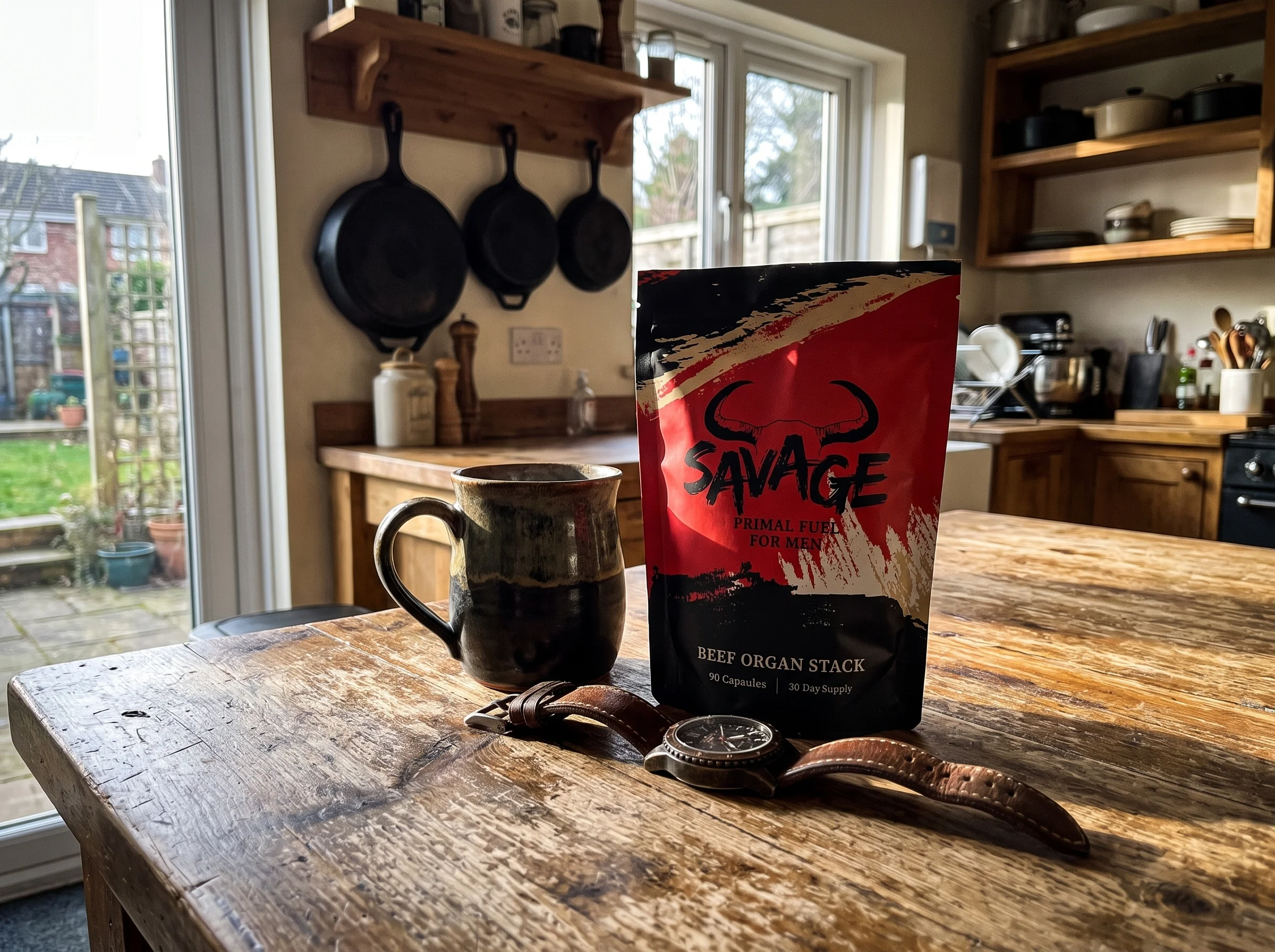
That is the whole reason the Savage Beef Organ Stack exists, and I will not pretend otherwise. I take three capsules with food, and I get liver, heart, kidney, prostate, orchic and pituitary, freeze-dried raw, without a gag reflex. Freeze-drying matters here because ordinary cooking heat does real damage to the fragile stuff. Frying beef heart knocks CoQ10 down to about 69 percent of raw [9]. Broiling and frying liver strip roughly 41 to 50 percent of the folate [10]. Skipping the heat is not a marketing gimmick. It is why the raw form of these foods is worth eating in the first place.
I do not sell it as a B12 pill. It supports the whole pattern the craving is pointing at, which is a much more honest sentence than anything you will read on a bottle at the vitamin store.
What to Do This Week
Three moves. That is it.
Listen to the craving. Stop shaming it. Stop burying it under a granola bar and a second cold brew. Write down what you want and when. You will see a pattern in seven days.
Get bloodwork. Ask for B12, ferritin, iron studies, and vitamin D. The "normal" ranges are wide enough to drive a truck through. Aim for the top third, not the floor above deficient. If your ferritin runs high, or you have a family history of hemochromatosis, tell your doctor before you start piling on iron-rich foods or supplements.
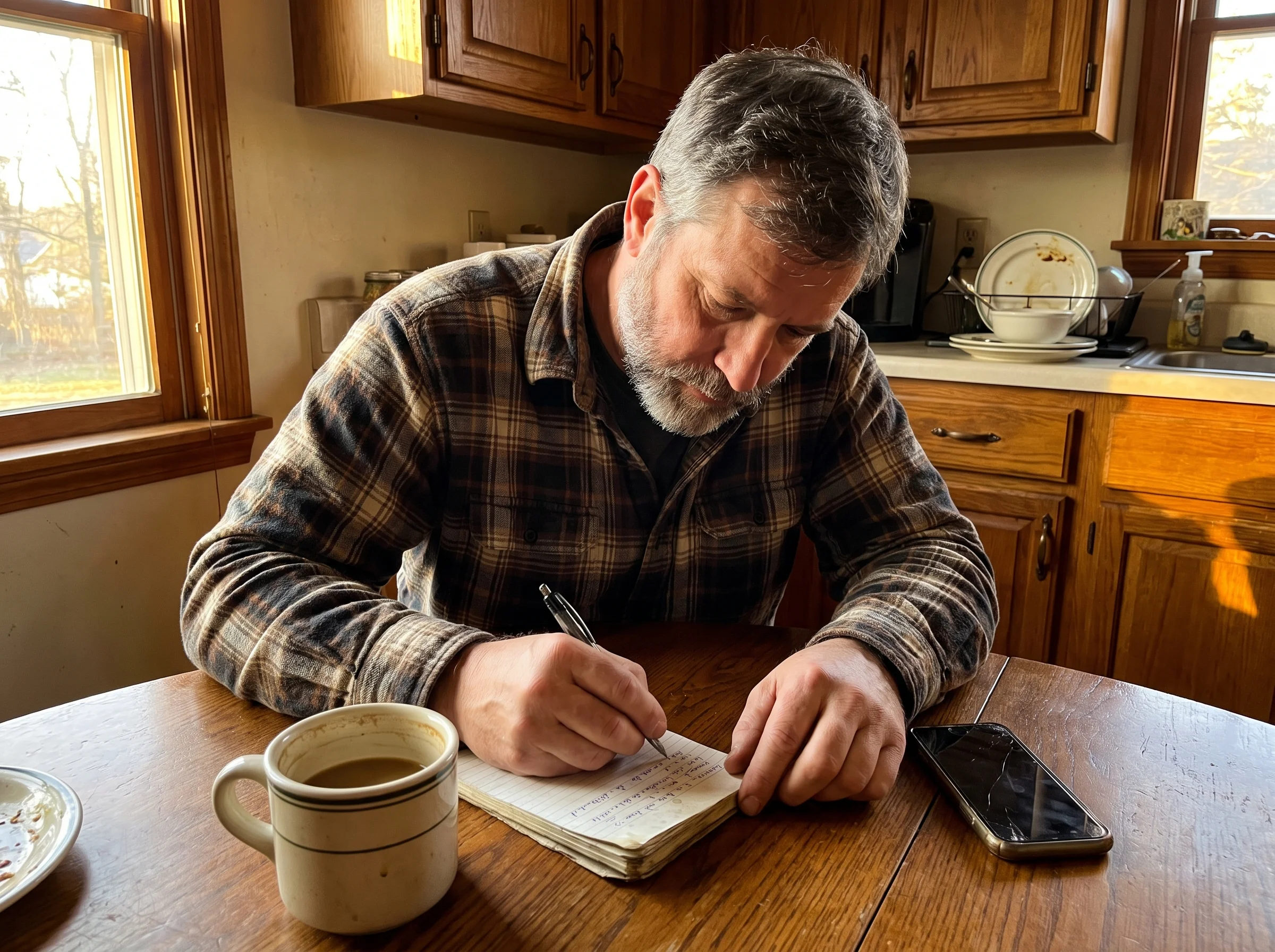
Rebuild the plate around the pattern. Red meat two or three times a week. Eggs daily. Liver if you can stomach it, an organ stack if you cannot. And then, before you spend another dollar on any of this: sleep more than five hours. One week of restricted sleep dropped daytime testosterone 10 to 15 percent in healthy young men [11], and short sleep cranks your cortisol response to normal daily stress [12]. No nutrient outruns a bad bedtime. Nothing on this list will save you if you keep going to bed at 1am.
The Bottom Line
That 3pm craving is not going away by itself. You already know that, or you would not have Googled this.
Your body is not defective. It is talking. Your grandfather's plate had answers on it that yours does not, and your stomach is not quite as loud as it used to be, so the little bit you are getting is not landing the way it used to.
This is not another T-booster. It is not another cardio plan. It is not a prescription you take for the rest of your life. It is stopping the leak by putting the food back on the plate that used to be there.
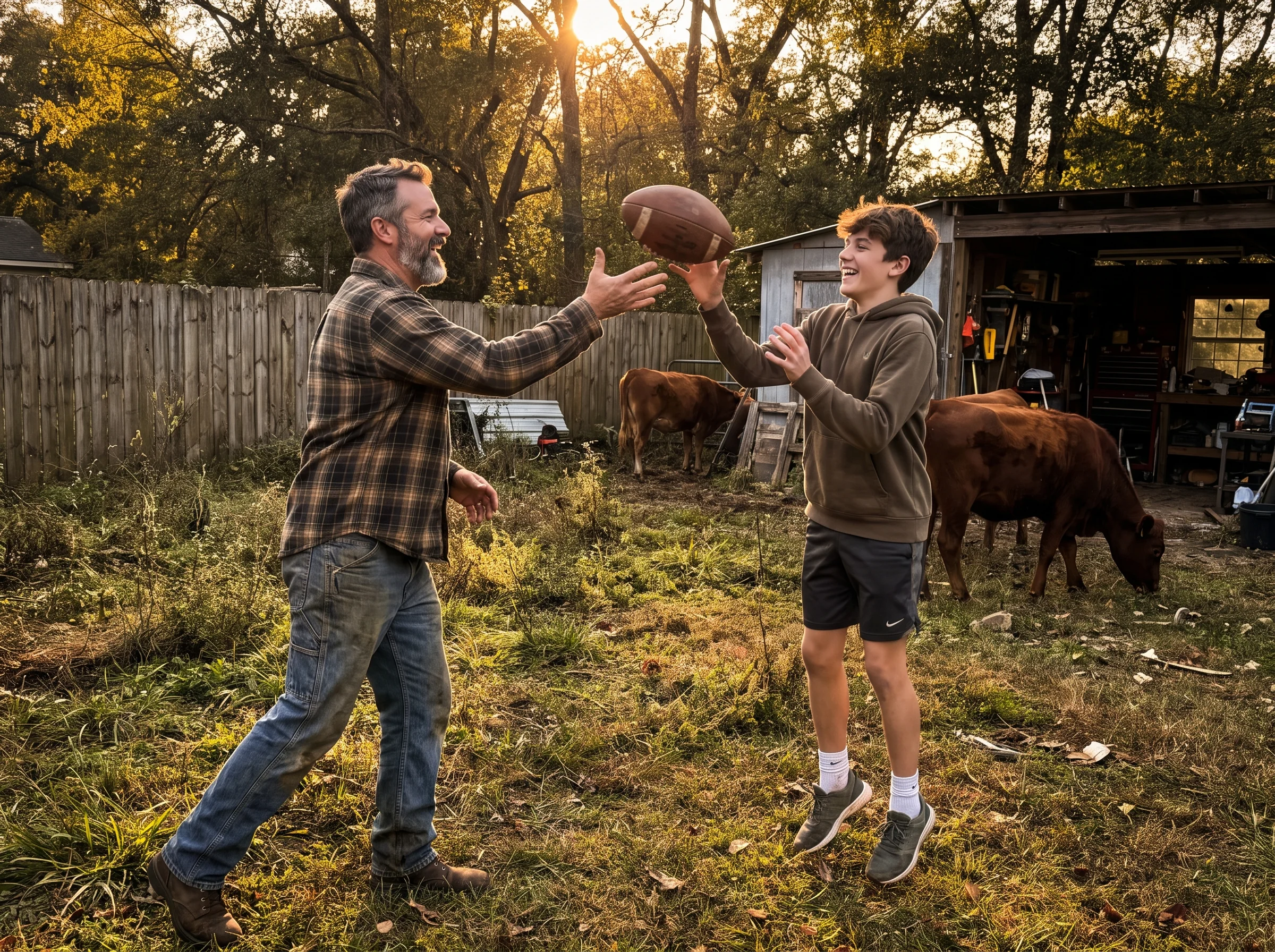
Do that, and 4pm starts to feel different than noon. You get through dinner without the fuse. Your kids see their dad in the room, not the shell of him staring at his phone on the couch.
That is what your body has been asking for. It has just been asking in the only language it has.
References
[1] Monk TH. The Post-Lunch Dip in Performance. Clin Sports Med. 2005;24(2):e15-e23. https://pubmed.ncbi.nlm.nih.gov/15892914/
[2] NIH Office of Dietary Supplements. Vitamin B12 Fact Sheet for Health Professionals. https://ods.od.nih.gov/factsheets/VitaminB12-HealthProfessional/
[3] Fuerniss HF, et al. Nutrient Analysis of Raw United States Beef Offal Items. Nutrients. 2024;16(18):3104. https://pubmed.ncbi.nlm.nih.gov/39339704/
[4] USDA FoodData Central. Beef liver 169451 / heart 168625 / kidney 169449. https://fdc.nal.usda.gov/food-details/169451/nutrients
[5] Hurrell R, Egli I. Iron bioavailability and dietary reference values. Am J Clin Nutr. 2010;91(5):1461S-1467S. https://pubmed.ncbi.nlm.nih.gov/20200263/
[6] Tang G. Bioconversion of dietary provitamin A carotenoids to vitamin A in humans. Am J Clin Nutr. 2010;91(5):1468S-1473S. https://pubmed.ncbi.nlm.nih.gov/20200262/
[7] USDA Database for the Choline Content of Common Foods, Release 2 (2008). https://www.ars.usda.gov/ARSUserFiles/80400525/data/choline/choln02.pdf
[8] Fischer LM, et al. Sex and menopausal status influence human dietary requirements for the nutrient choline. Am J Clin Nutr. 2007;85(5):1275-1285. https://pubmed.ncbi.nlm.nih.gov/17490963/
[9] Ercan P, El SN. Changes in coenzyme Q10 during processing of beef. J Food Compost Anal. 2011;24(8):1136-1140. https://www.sciencedirect.com/science/article/pii/S0889157511001517
[10] Aramouni FM, Godber JS. Folate losses in beef liver due to cooking. J Food Qual. 1991;14(5):357-365. https://onlinelibrary.wiley.com/doi/10.1111/j.1745-4557.1991.tb00077.x
[11] Leproult R, Van Cauter E. Effect of 1 Week of Sleep Restriction on Testosterone Levels in Young Healthy Men. JAMA. 2011;305(21):2173-2174. https://jamanetwork.com/journals/jama/fullarticle/1029127
[12] Minkel J, et al. Sleep deprivation and stressors: evidence for elevated negative affect in response to mild stressors when sleep deprived. Health Psychol. 2014;33(11):1430-1434. https://pubmed.ncbi.nlm.nih.gov/24818608/