Is 35 too early for TRT / Is 36 too early for TRT?
Is 35 too early for TRT / Is 36 too early for TRT? Before committing to treatment, audit your sleep, training, and nutrition first—most men don't need it yet.


You sat in the parking lot before that appointment. Rehearsed the words in your head. "I'm tired all the time, no drive, feel like I'm 55 already." Thirty minutes later a guy in a polo shirt is quoting you monthly pricing on a testosterone protocol, and you are wondering if this is what men do now at 36.
Pump the brakes for one article.
I am not anti-TRT. I coach men who need it and men who do not. What I am against is a 35 year old signing a lifetime subscription before he has audited the three things underneath the problem. Because here is the part that clinic did not tell you: at your age, you have a window most 60 year olds do not. So before you answer the question "is 35 too early for TRT" with a signature, let me walk you through what I run with every guy who asks me.
The Question Under The Question
Nine times out of ten, when a guy asks me "is 35 too early for TRT?", he is not asking a medical question. He is asking a permission question. Permission to stop feeling like garbage. Permission to stop faking energy at his kid's soccer game. Permission to stop pretending the gut in the mirror is water weight.
You feel that too?
Here is the thing worth saying out loud: what you are feeling is real. It is not in your head, it is not a character flaw, and it is not you being soft. In healthy young men, cutting sleep to about five hours a night for one week dropped daytime testosterone 10 to 15 percent [1]. One week. Sleep alone. And I would bet a steak dinner your last twelve months have looked a lot more like five hours than eight.
Your body is responding to inputs. That is the first brick.

What "Too Early" For TRT Actually Means
Here is the analogy nobody at the clinic drew for you.
Your body makes testosterone the way a gas station makes gas. The brain signals the testes, the testes produce, the system runs. TRT is not putting more gas in your tank. TRT is having a delivery truck park at your house and pipe fuel in every week. It works. You get gas. But the second that truck shows up, your body senses the incoming supply and the local station starts shutting down. Testes shrink. Natural production drops. Getting the station back online later takes months of protocol, sometimes fertility drugs, and sometimes it does not fully come back.
At 60, that station has already mostly retired anyway. Testosterone falls gradually with age in healthy men [2], and by 60 the decline has compounded. Different conversation.
At 35, your station is still open. The signal is weak, the output is down, but the wiring is intact. That is a system running on bad inputs.
The Fertility Talk You Have Not Had
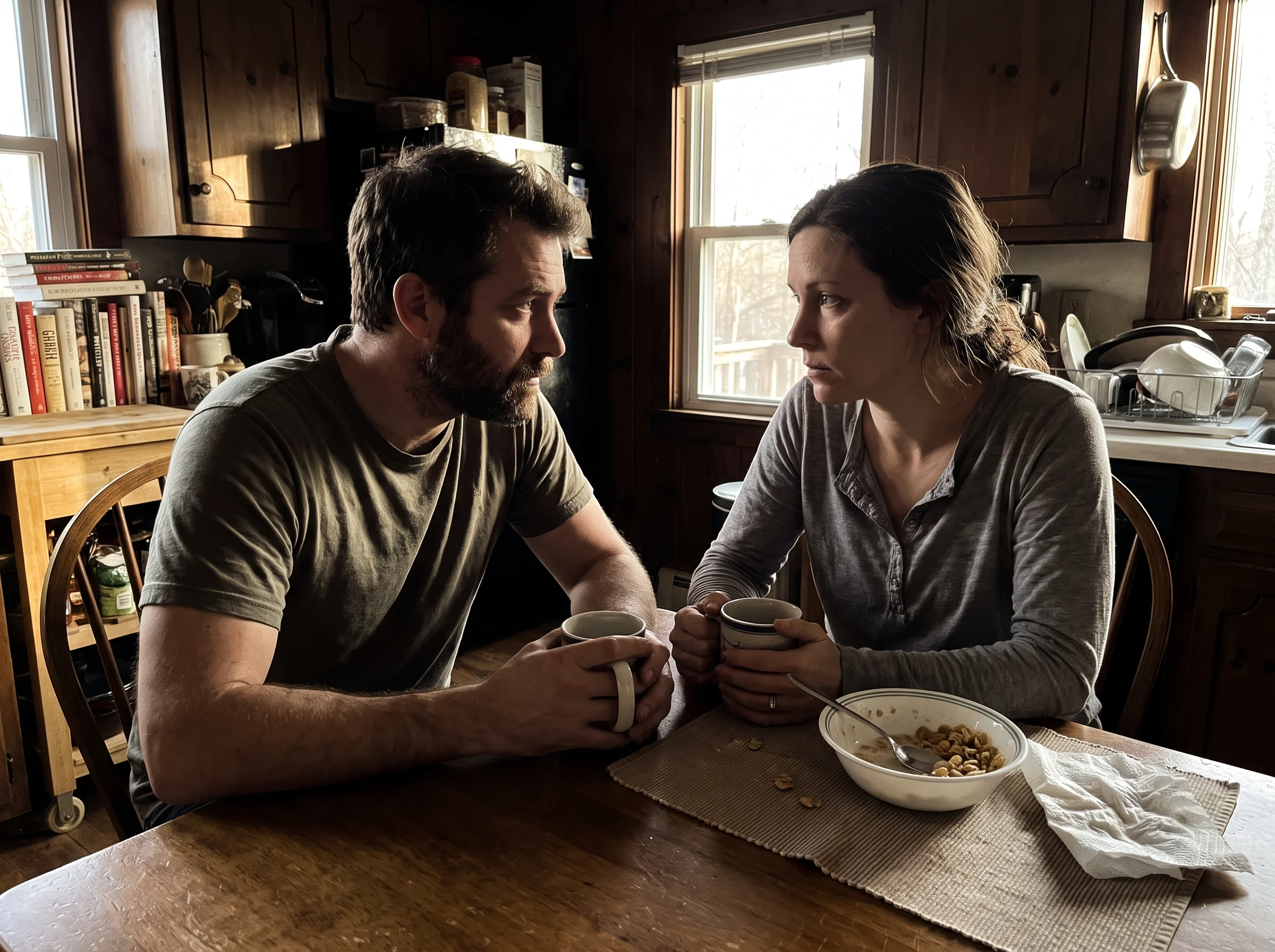
Are you done having kids? Really? Have you and your wife actually settled that?
Because exogenous testosterone suppresses sperm production. Sometimes it comes back when you stop. Sometimes it does not come all the way back. I have a friend who started at 34. Two years in, they wanted a third kid. He is now on Clomid trying to coax his testes back online while his wife tracks ovulation. That was a conversation he thought he would never have to have.
If there is any chance you want more kids, this needs to be on the table before you sign anything. Not after.
The 90 Day Audit Before You Sign Anything
Here is the sequence I run with every guy in his mid-30s who comes to me asking whether 36 is too early for TRT. Before you spend a dime at a clinic, spend a season on the boring stuff. If your labs still stink at the end of it, go get the prescription with a clean conscience. Most guys do not need to.
1. Sleep
The cheapest lever, the one everyone skips. If you are running on 5 to 6 hours, that alone is a documented hit to daytime testosterone in young men [1]. It also cranks your cortisol response the next day [3], which is the exact hormonal environment you do not want.
Non-negotiable: seven hours in bed, dark room, phone in the kitchen. For 90 days. No hacks.
2. Barbell
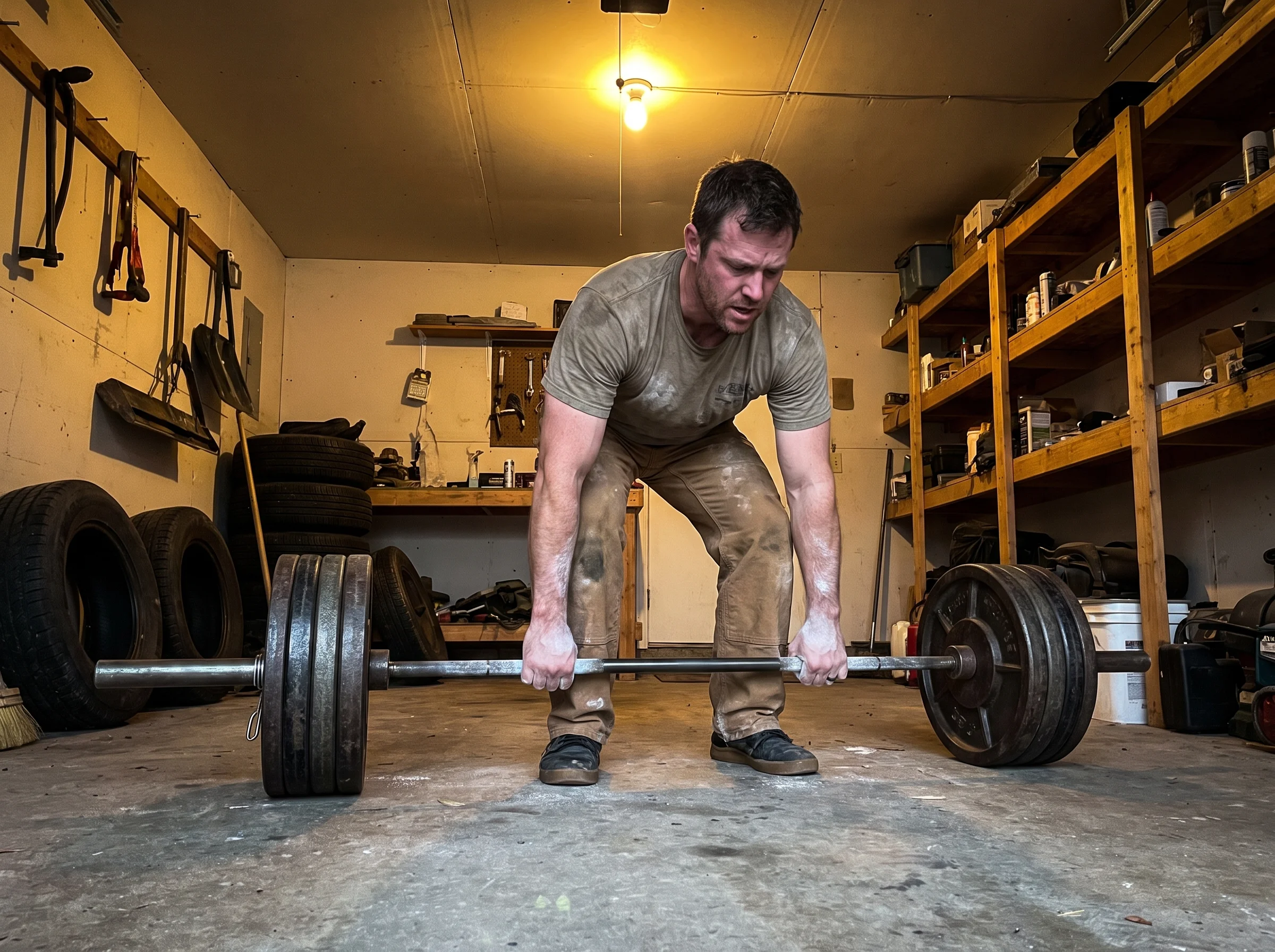
More cardio is not the answer. Barbell is. Testosterone is a primary driver of muscle growth, and heavy resistance training acutely lifts testosterone right after the session [4]. Three days a week. Squat, hinge, press, pull. Get strong on those four movements and the rest sorts itself out.
Feed it. Protein intake around 1.6 g/kg/day is where the muscle response plateaus in trained adults [5]. For most of you reading this, that means roughly a gram per pound of your goal bodyweight. Steak, eggs, whey. Boring, effective.
3. Food Quality
Here is where it gets interesting. The cellular machinery that makes your energy actually changes with age. Skeletal muscle mitochondrial ATP production drops about 8 percent per decade in adults [6]. Which means the quality of what you put on your plate matters more at 36 than it did at 26.
The micronutrients that keep this machinery running are concentrated in the parts of the animal you have never eaten. Zinc deficiency causes hypogonadism, period [7]. Selenium runs your antioxidant defense and thyroid metabolism [8]. B12 is required for energy metabolism, and being low tanks you [9]. These live in organs. Liver carries preformed vitamin A that skips the plant-conversion gamble [10] and roughly 330 mg of choline per 100 grams [11]. Heart naturally holds CoQ10, and cooking cuts it down [12]. Kidney brings selenium.

Liver is nature's multivitamin. Liver also tastes like it lost a fight. There is not enough ketchup in the world to make me eat it every day, and that is exactly why the Savage Beef Organ Stack exists. Six organs, freeze-dried raw, three capsules with breakfast. It is not a testosterone booster and I will not insult you by pretending it is. It is the food leg of this audit for the man who is not standing over a cast iron pan at 5am searing kidney.
When TRT Is Actually The Right Call
I am not going to leave you thinking every guy who takes testosterone is a mark. Some men genuinely need it. Klinefelter syndrome. Testicular injury. Pituitary tumors. Real primary or secondary hypogonadism where the wiring itself is damaged.
If you have done the 90 day audit, if you have slept, lifted, and eaten like a grown man for a season, and your labs still come back bottom-decile, and you have closed the fertility conversation, and you accept that this is a lifetime commitment, then TRT is a legitimate tool. Go use it.
That is a very different sentence than "you are 35, you are tired, sign here."
The Labs To Actually Get
If you are going to test, test right. Morning draw, fasted. Get the full picture, not a single number a clinic can spin.
- Total testosterone and free testosterone
- LH and FSH (tells you if the problem is the signal from the brain or the testes themselves)
- SHBG
- Estradiol, sensitive assay
- Ferritin, vitamin D, full thyroid panel
Understand this: "low" at a men's clinic and "low" at your primary care doctor are two different numbers with two different sales pitches attached. Same lab value, one guy shrugs and one guy hands you a protocol. Know that going in.

The Real Answer
Is 35 too early for TRT? For a small percentage of men with genuine medical hypogonadism, no age is too early. For the other 90 percent asking that question, yes, it is too early, because you have not yet done the work that would tell you whether you actually need it.
At 35, if you sign up for TRT before you have audited your sleep, your barbell, and your plate, you are not fixing low testosterone. You are outsourcing a problem you never diagnosed. And the invoice comes every month for the rest of your life.
You have a 90 day window. Sleep, lift, eat like the animal you are. The Stack is the daily insurance policy on the food piece so you are not gambling on the salad. Retest at six months. Then decide from a position of information, not desperation.
You are not 60. Do not let anyone treat you like you are.
References
[1] Leproult R, Van Cauter E. Effect of 1 Week of Sleep Restriction on Testosterone Levels in Young Healthy Men. JAMA. 2011;305(21):2173-2174. https://jamanetwork.com/journals/jama/fullarticle/1029127
[2] Harman SM, et al. Longitudinal Effects of Aging on Serum Total and Free Testosterone Levels in Healthy Men (Baltimore Longitudinal Study of Aging). J Clin Endocrinol Metab. 2001;86(2):724-731. https://academic.oup.com/jcem/article/86/2/724/2841070
[3] Minkel J, et al. Sleep Deprivation and Stressors: Evidence for Elevated Negative Affect in Response to Mild Stressors When Sleep Deprived. Health Psychol. 2014;33(11):1430-1434. https://pubmed.ncbi.nlm.nih.gov/24818608/
[4] Vingren JL, et al. Testosterone Physiology in Resistance Exercise and Training. Sports Med. 2010;40(12):1037-1053. https://link.springer.com/article/10.2165/11536910-000000000-00000
[5] Morton RW, et al. A systematic review, meta-analysis and meta-regression of the effect of protein supplementation on resistance training-induced gains in muscle mass and strength in healthy adults. Br J Sports Med. 2018;52(6):376-384. https://pubmed.ncbi.nlm.nih.gov/28698222/
[6] Short KR, et al. Decline in skeletal muscle mitochondrial function with aging in humans. PNAS. 2005;102(15):5618-5623. https://pubmed.ncbi.nlm.nih.gov/15800038/
[7] NIH Office of Dietary Supplements, Zinc Fact Sheet for Health Professionals. https://ods.od.nih.gov/factsheets/Zinc-HealthProfessional/
[8] NIH Office of Dietary Supplements, Selenium Fact Sheet for Health Professionals. https://ods.od.nih.gov/factsheets/Selenium-HealthProfessional/
[9] NIH Office of Dietary Supplements, Vitamin B12 Fact Sheet for Health Professionals. https://ods.od.nih.gov/factsheets/VitaminB12-HealthProfessional/
[10] NIH Office of Dietary Supplements, Vitamin A and Carotenoids Fact Sheet for Health Professionals. https://ods.od.nih.gov/factsheets/VitaminA-HealthProfessional/
[11] USDA Database for the Choline Content of Common Foods, Release 2 (2008). https://www.ars.usda.gov/ARSUserFiles/80400525/data/choline/choln02.pdf
[12] Ercan P, El SN. Changes in content of coenzyme Q10 in beef muscle, beef liver and beef heart with cooking and in vitro digestion. J Food Compost Anal. 2011;24(8):1136-1140. https://www.sciencedirect.com/science/article/pii/S0889157511001517