How did David Goggins lose 100lbs in 3 months?
How did David Goggins lose 100lbs in 3 months? Discover the real story behind his extreme weight loss and why this approach can damage a 50-year-old body.


The 11pm Search That Brought You Here
You saw the clip. Goggins, 297 pounds, staring at himself in the bathroom mirror, then three months later a hundred pounds lighter and running toward the Navy. You closed the phone, walked past the fridge, and thought maybe I can still do this.
Then you thought about your knees. Your back. The 3pm wall at your desk. The five and a half hours of sleep you got last night. The spark went out before you finished your coffee. You feel that too?
Here is the honest answer to what you actually typed into your phone. How did David Goggins lose 100lbs in 3 months? Yes, it is real. No, you cannot copy it at 51 without ending up on crutches. And yes, there is still a version of this that works for you. Let me walk you through what actually happened, and what actually transfers.
The Story, With The Parts They Skip
Goggins was 24. Sedentary, eating garbage, 297 pounds, and staring down a Navy BUD/S deadline that gave him one shot. That combination matters. A 24 year old obese untrained man drops weight fast on almost any severe intervention because water, glycogen, and fat all move quickly when the body has that much to give and that much youth to burn.
He rode a stationary bike for hours. He climbed a stair-climber until his legs gave out. He ran. He cut his food down to almost nothing. He did this every day, all day, for roughly three months.
He also paid for it. He has talked openly about the knee surgeries, the atrial fibrillation, and the hole in his heart he did not know he had. The transformation is real. The bill on the back end is also real.
The fanboy articles show you the before-and-after. They skip the after-the-after.
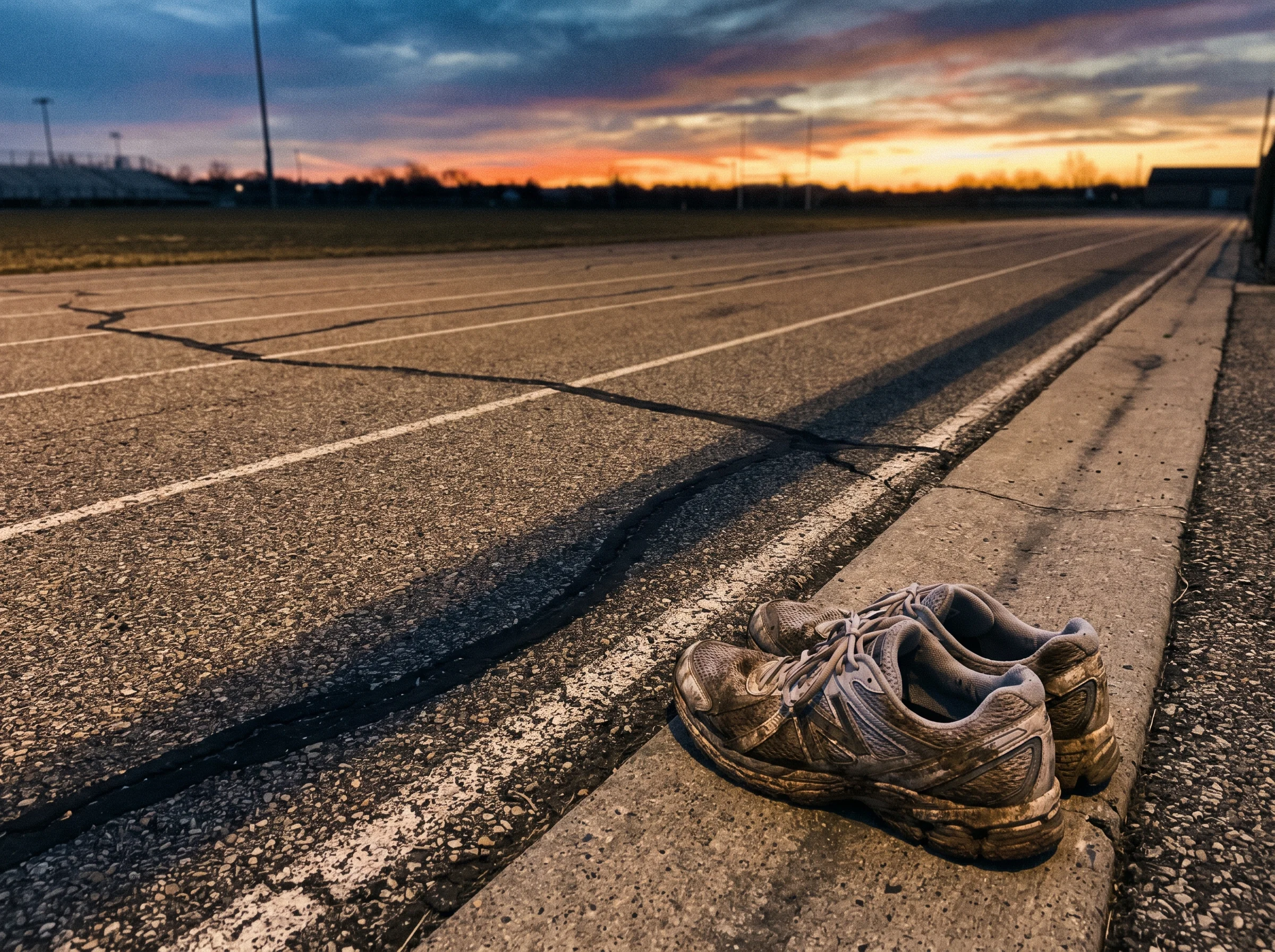
Why The Goggins Playbook Breaks A 50-Year-Old
Think of it this way. A 24 year old body is a rental car. You can drive it into the ground, hand back the keys, and walk away. A 51 year old body is your own truck, and you still need to drive it to work Monday.
The cellular machinery that makes energy actually changes with age. In adults between 18 and 89, skeletal muscle mitochondrial ATP output declined about 8 percent per decade [1]. Testosterone tapers gradually with age in healthy men, documented across the Baltimore aging study [2]. Your tendons take longer to heal. Your cortisol response to stress runs hotter, especially if you are sleep-deprived, and sleep-deprived adults show higher baseline cortisol and a bigger stress spike [3].
Now add two-a-day cardio, a 700 calorie deficit, and five hours of sleep on top of that. You are not being disciplined. You are stacking a nervous system breakdown.
This is where the braingasm lands: it is not that you got weak. The machine literally works differently now, and any plan that ignores that will bury you.
What Actually Transfers From Goggins
Here is the part that transfers. Not the mileage. Not the stair-climber marathons. The decision.
The Accountability Mirror. Naming the lie out loud. Refusing to keep negotiating with yourself at 3am when you cannot sleep and at 3pm when the vending machine calls. One decision, made cleanly, then defended for 90 days.

I had my own version of that moment. It was not heroic. I was sitting in my truck in my own driveway on a Tuesday after work, engine off, not going in yet. I could hear my kids inside. I could not remember the last time I had walked in the door feeling like myself. I grabbed a gas station receipt off the passenger seat and wrote three things on the back of it.
Sleep 7. Lift 3x. Eat what my grandfather would recognize.
That was it. No 20 mile run. No sunrise cold plunge. A receipt and a decision. Steal that part from Goggins. Leave the volume in the documentary.
The Deficit Problem Nobody Warns You About
Here is what the "just eat less" crowd misses. When you cut calories on top of a convenience-food diet, you also cut micronutrients. You go into the fight with less fuel of the kind that actually matters.
B12 is required for red blood cell formation and energy metabolism, and deficiency is a documented cause of fatigue [4]. Iron matters too, and in iron-deficient adults, correcting low iron measurably reduced self-reported fatigue [5]. Choline is essential, and under severe restriction, 77 percent of men developed reversible signs of liver or muscle dysfunction, showing the body genuinely needs it [6]. Preformed vitamin A from animal foods skips the wildly variable conversion that plant carotenoids require, which can run anywhere from 4:1 to 28:1 by weight depending on the person [7].
Protein needs go up with age, not down. Expert consensus for healthy older adults sits around 1.0 to 1.2 grams per kilogram per day, and higher if you are training [8].
So the picture is this. You cut calories. You keep eating the same processed food, just less of it. Your micronutrient floor drops further. Your energy drops. Your sleep gets worse. Your training suffers. You quit in five weeks and gain it back plus four.
The fix is not more food. The fix is food your body recognizes.
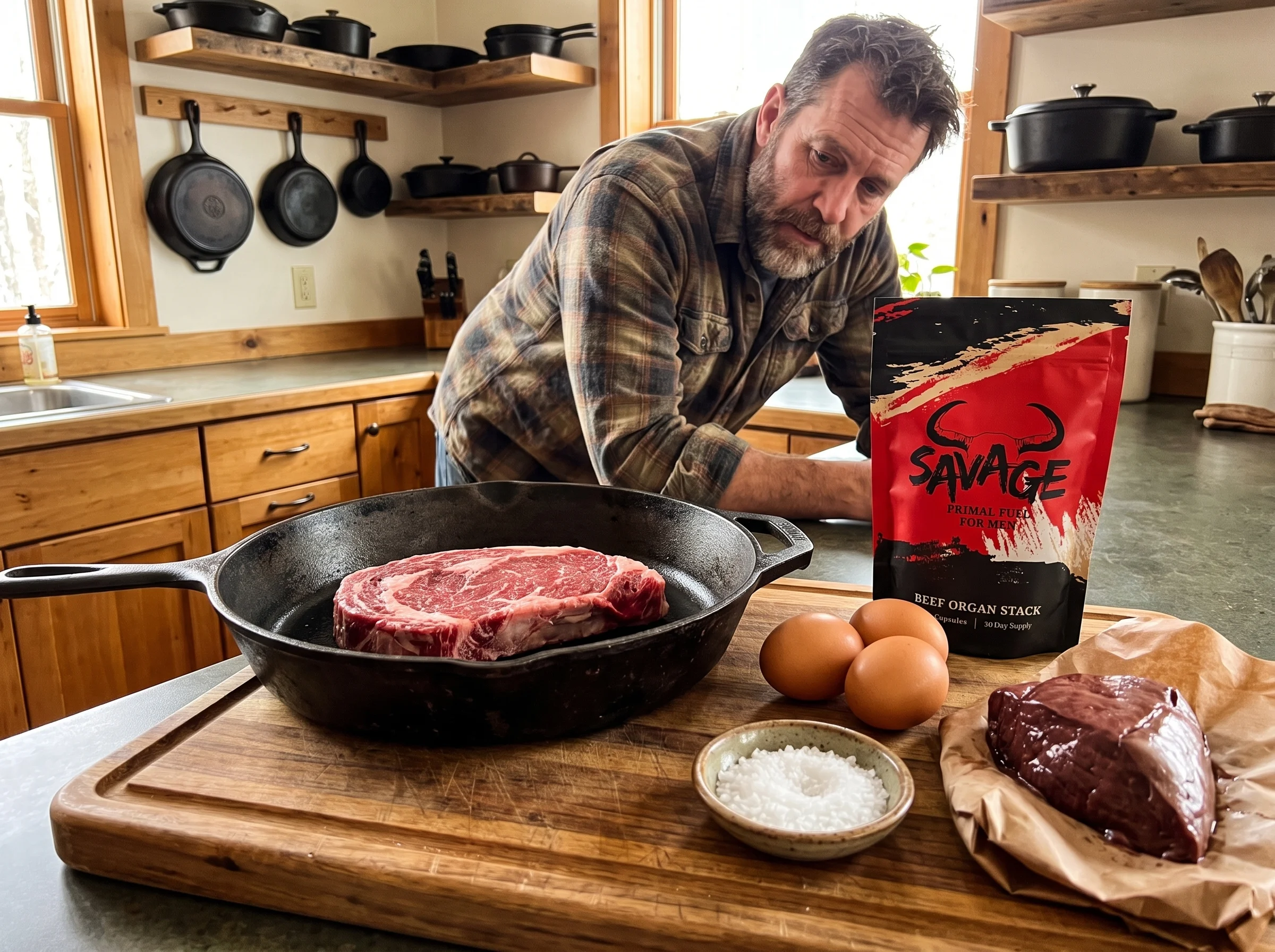
The 50-Year-Old's Version Of The Cut
Three points. That is the whole triangle.
1. Sleep first, not last
Seven hours minimum. Even in young healthy men, one week of sleep restricted to about five hours a night dropped daytime testosterone by 10 to 15 percent [9]. You cannot out-train that. You cannot out-supplement it either. Sleep is the foundation, and everything else you do is scaffolding on top of it.
2. Lift, do not just run
Resistance training is where a midlife man protects muscle in a calorie deficit. Testosterone is acutely elevated in men right after heavy resistance work [10], and protein plus training keeps producing benefit up to around 1.6 grams per kilogram per day before it plateaus [11]. Running alone at 50, in a deficit, on bad sleep, is a great way to lose muscle and end up softer at a lower weight.
3. Eat what your body recognizes
Whole animal, whole food. A 2024 analysis of raw US beef offal confirmed what our grandfathers already knew: liver, heart, and kidney carry concentrated, complementary micronutrient loads, with liver especially high in preformed vitamin A, B12, riboflavin, copper, and iron [12]. USDA data backs the same picture across the organs [13].
Here is the honest problem. Nobody I coach can eat liver every morning. Neither can I. I bought grass fed liver from a farm store once, thawed it, cooked it in butter with onions, and stood over the sink unable to swallow it. Liver is some of the most nutrient-dense food on earth. It also tastes like it lost a fight.
That gap between "great for you" and "impossible to actually eat" is exactly why the Savage Beef Organ Stack sits on my counter. Three capsules with food. All six organs, freeze-dried raw. No frying pan, no gag reflex, no ketchup involved.
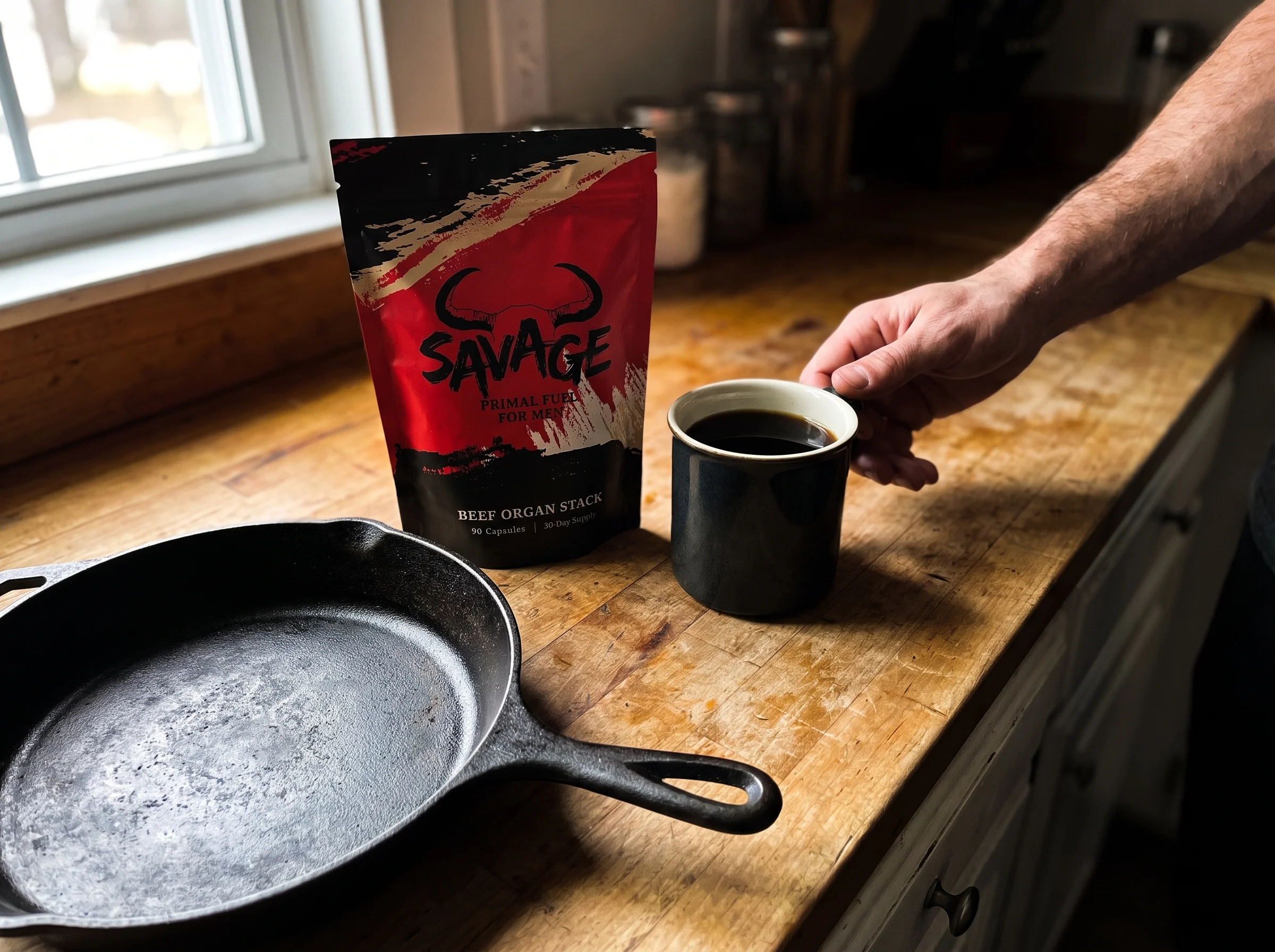
The Real Number You Should Be Chasing After 50
Not 100 pounds in three months.
The man I coach usually needs 30 to 50 pounds off. He needs his energy back at 3pm. He needs sleep that holds. He needs to pick his kid up off the driveway without his back barking at him for the rest of the night. He needs to walk into a meeting at 52 with the same presence the 35 year olds have, because his machinery is fed, not because he outran his age.
Six months of doing the boring right things beats three months of theatrical suffering that lands you in an MRI.
I coached a guy who tried the Goggins method flat. Ran himself into a stress fracture in six weeks. Gained back the 12 pounds he lost, plus four more, and quit for a year. He came back, did it the boring way, and lost 40 pounds over eight months. Kept it off. Still has both knees.
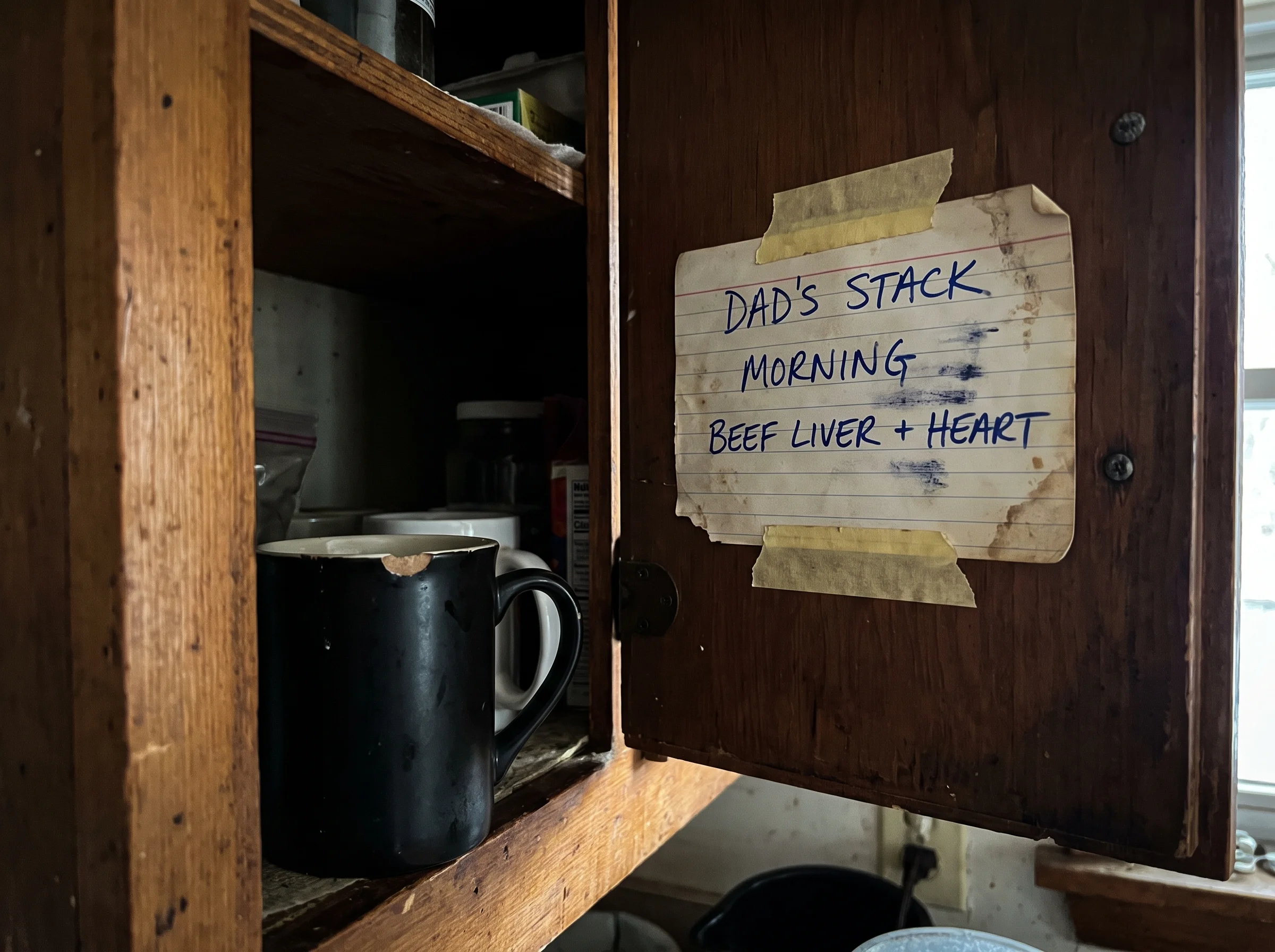
The One-Page Plan
Print this. Tape it inside a cabinet where only you see it.
- Sleep 7 hours. Non-negotiable, before anything else on this list.
- Lift heavy three times a week. Compound movements. Squat, hinge, press, pull.
- Walk every day. Boring and undefeated.
- Eat protein first. Aim near 1 gram per pound of your goal body weight.
- Cut processed carbs before you cut calories, at least for the first 30 days.
- Feed the machine what it recognizes: red meat, eggs, organs, fruit, salt, honest fats.
- Give it 90 days before you judge it.
The organ stack is how I close the nutrient gap without pretending I am going to fry kidneys on a Tuesday. That is all it is. Fuel that stops the deficit from wrecking you while you do the actual work.
The Question Under The Question
You did not really search "how did David Goggins lose 100lbs in 3 months." You searched, "am I too far gone." You are not. But the answer is not to copy a 24 year old Navy recruit with a deadline. The answer is to borrow his decision, respect your own machinery, and feed it what it recognizes so it can actually respond to the work you put in.
Write your three rules on the back of a receipt. Sleep seven. Lift three times. Eat what your grandfather would recognize. Defend those for 90 days.
References
[1] Short KR, et al. Decline in skeletal muscle mitochondrial function with aging in humans. PNAS. 2005;102(15):5618-5623. https://pubmed.ncbi.nlm.nih.gov/15800038/
[2] Harman SM, et al. Longitudinal Effects of Aging on Serum Total and Free Testosterone Levels in Healthy Men (Baltimore Longitudinal Study of Aging). J Clin Endocrinol Metab. 2001;86(2):724-731. https://academic.oup.com/jcem/article/86/2/724/2841070
[3] Minkel J, et al. Sleep deprivation and stressor exposure interact to produce a cortisol response. Health Psychol. 2014;33(11):1430-1434. https://pubmed.ncbi.nlm.nih.gov/24818608/
[4] NIH Office of Dietary Supplements, Vitamin B12 Fact Sheet for Health Professionals. https://ods.od.nih.gov/factsheets/VitaminB12-HealthProfessional/
[5] Houston BL, et al. Efficacy of iron supplementation on fatigue and physical capacity in non-anaemic iron-deficient adults. BMJ Open. 2018;8:e019240. https://pubmed.ncbi.nlm.nih.gov/29626044/
[6] Fischer LM, et al. Sex and menopausal status influence human dietary requirements for the nutrient choline. Am J Clin Nutr. 2007;85(5):1275-1285. https://pubmed.ncbi.nlm.nih.gov/17490963/
[7] Tang G. Bioconversion of dietary provitamin A carotenoids to vitamin A in humans. Am J Clin Nutr. 2010;91(5):1468S-1473S. https://pubmed.ncbi.nlm.nih.gov/20200262/
[8] Bauer J, et al. Evidence-based recommendations for optimal dietary protein intake in older people (PROT-AGE). J Am Med Dir Assoc. 2013;14(8):542-559. https://pubmed.ncbi.nlm.nih.gov/23867520/
[9] Leproult R, Van Cauter E. Effect of 1 Week of Sleep Restriction on Testosterone Levels in Young Healthy Men. JAMA. 2011;305(21):2173-2174. https://jamanetwork.com/journals/jama/fullarticle/1029127
[10] Vingren JL, et al. Testosterone Physiology in Resistance Exercise and Training. Sports Med. 2010;40(12):1037-1053. https://link.springer.com/article/10.2165/11536910-000000000-00000
[11] Morton RW, et al. A systematic review, meta-analysis and meta-regression of the effect of protein supplementation on resistance training-induced gains in muscle mass and strength. Br J Sports Med. 2018;52(6):376-384. https://pubmed.ncbi.nlm.nih.gov/28698222/
[12] Fuerniss HF, et al. Nutrient Analysis of Raw United States Beef Offal Items. Nutrients. 2024;16(18):3104. https://pubmed.ncbi.nlm.nih.gov/39339704/
[13] USDA FoodData Central SR Legacy, beef liver 169451 / heart 168625 / kidney 169449. https://fdc.nal.usda.gov/food-details/169451/nutrients