Are 90% of Americans Nutrient Deficient? A Man's Honest Look
Are 90% of Americans nutrient deficient? Yes, and here's why the 'clean' plate isn't saving you at 3pm. The shortfall nutrients most men miss, and the fix.


It's 3pm on a Wednesday. You had the "clean" lunch. Grilled chicken, spinach, a little olive oil. You're at your desk and your eyes feel like they're being pulled down by fishhooks. You think, is this just what 50 feels like now?
Then some headline scrolls past your phone. 90% of Americans are nutrient deficient. And a quiet voice in the back of your skull says, well, that would explain a lot.
I want to talk to that voice for a minute.
So Are 90% of Americans Nutrient Deficient For Real?
Short answer: real enough to take seriously.
The stat comes from dietary intake surveys, mostly USDA and NHANES data, where researchers compare what Americans actually eat against the recommended daily amount of the "shortfall nutrients," things like vitamin D, magnesium, choline, fiber, potassium, and a few others. When you stack the plates against the target, most of us come up short on at least one, and a lot of us come up short on several.
Whether the exact number is 90 percent, 80 percent, or 75 percent is a technical fight for dieticians. The direction is not in dispute.
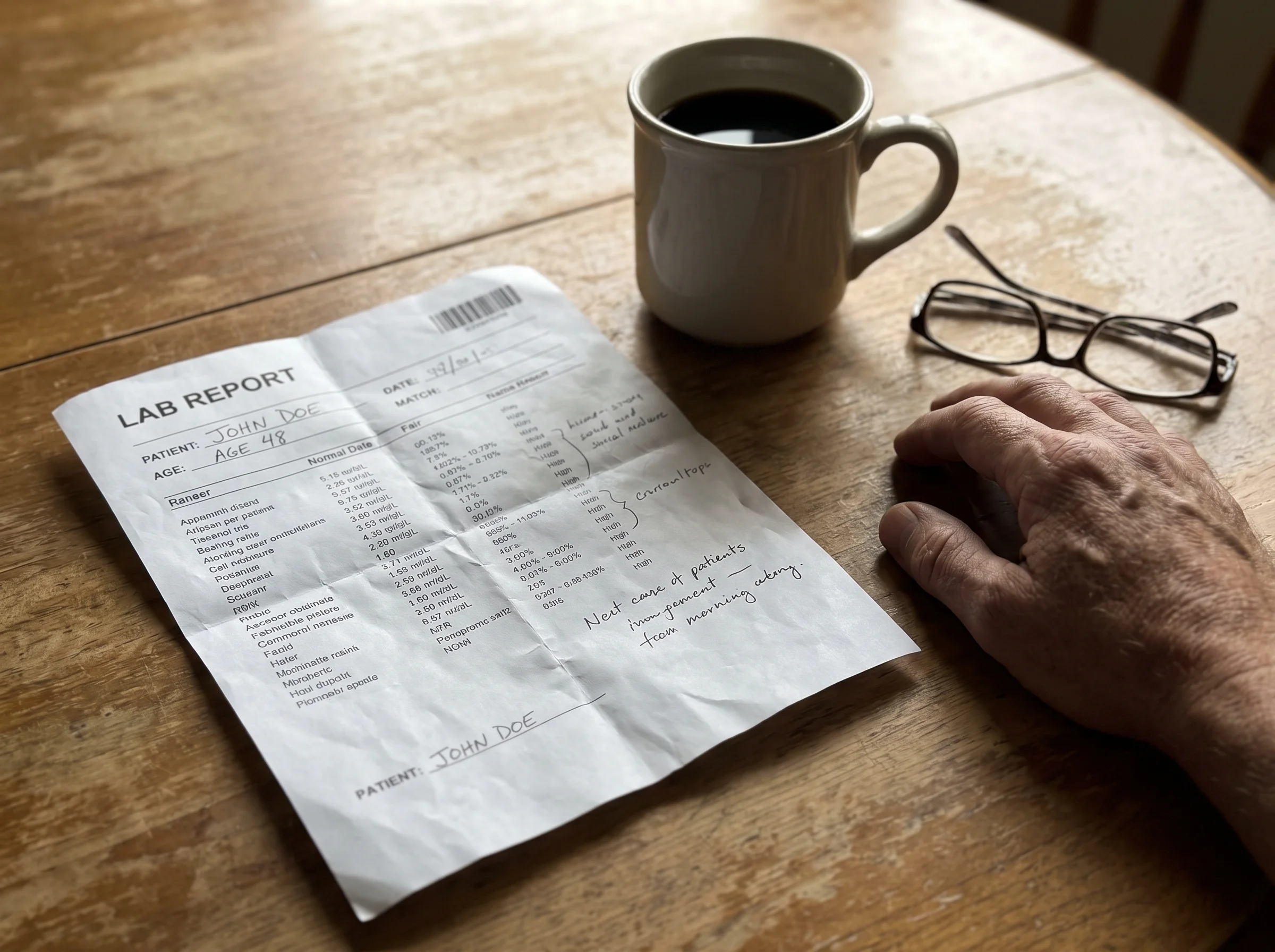
Here's the head-nod moment: dietary shortfall is not the same as clinical deficiency. Your labs can look "fine" and you can still be running on fumes. A standard blood panel is built to catch disease, not to tell you why you can't focus at 3pm. That's why the doctor slides the paper across the desk and says "everything looks great," while you sit there thinking, then why do I feel like this.
I sat in that exact chair at 49. "Normal for a 49-year-old American man" turned out to be a bar so low I was tripping over it.
The Nutrients Most Men Are Actually Short On
The usual suspects on the shortfall list matter to a middle-aged man for specific reasons.
Choline is the one almost nobody talks about. It's essential, meaning your body cannot make enough on its own. When researchers put men on a severely choline-restricted diet, 77 percent developed reversible signs of liver or muscle dysfunction [1]. Men are especially prone to under-eating it because the richest sources, egg yolks and liver, have been villainized or thrown out.
Preformed vitamin A (retinol) is involved in immune function, cellular communication, and male reproduction [2]. You can eat carrots all day, but converting plant beta-carotene into actual retinol is inefficient and varies wildly from person to person, roughly 4:1 to 28:1 by weight [3]. A salad is not a liver.
Zinc is essential for male reproductive function [4]. CoQ10 is the compound that sits in your mitochondria helping your cells actually make ATP, and levels decline in some tissues with age [5]. The heart holds among the highest concentrations in the body, which should tell you something.
Think of your body like a diesel truck. You can run the wrong fuel for a while. Eventually you knock, then you smoke, then you don't start on Monday.
Why "Eating Healthy" Doesn't Save You From Being Nutrient Deficient
Here's where the guy who switched to salads and chicken breast a year ago gets confused.
Modern food is bred and grown for yield, shelf life, and lean profile. That's an engineering trade-off, and nutrient density took the hit. The "clean" plate we've been sold, boneless-skinless chicken, spinach, oatmeal, protein shakes, is the nutritionally lightest slice of what our great-grandfathers ate.
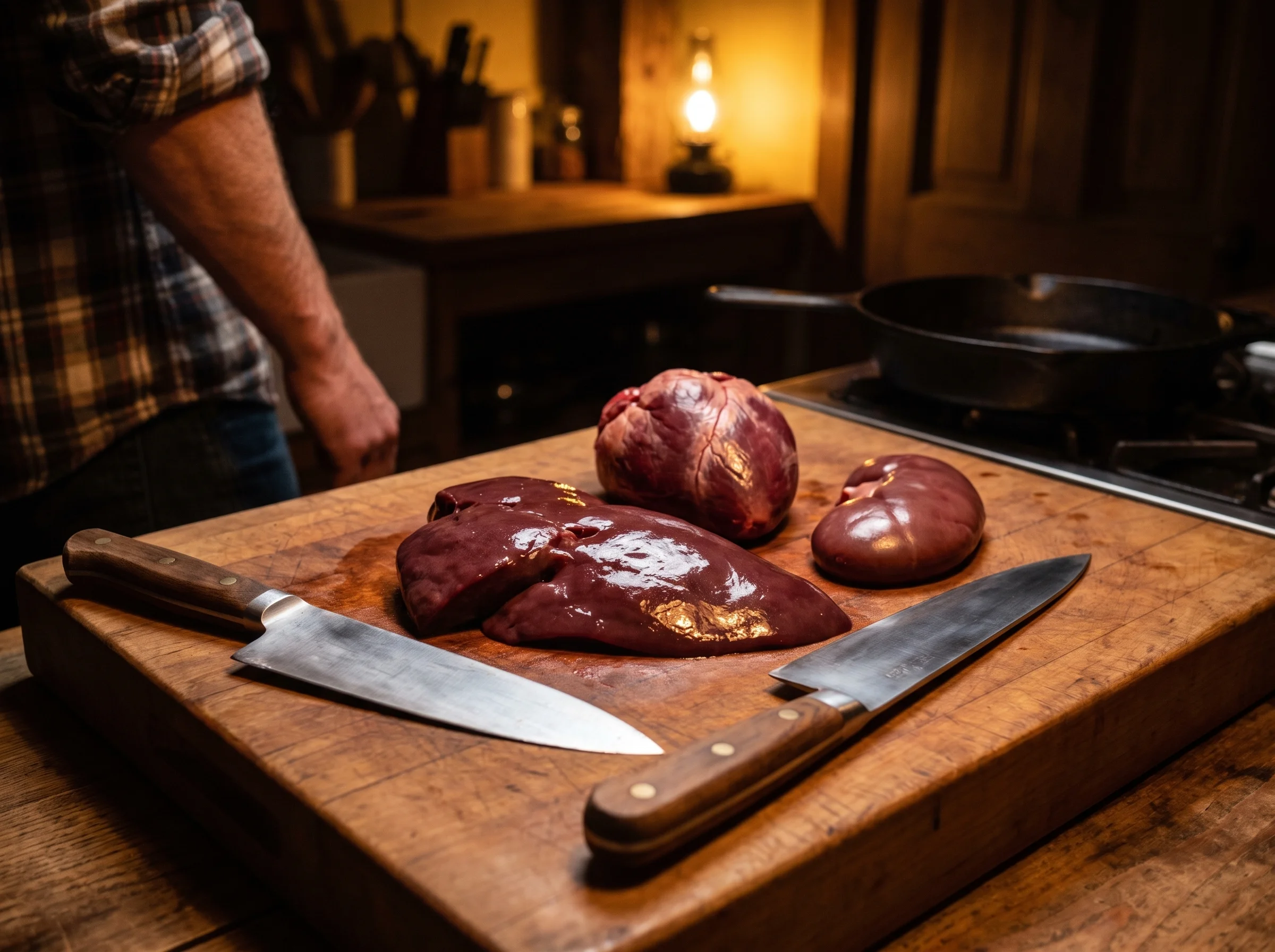
A modern analysis of raw U.S. beef offal confirmed what old cultures knew by instinct: liver, heart, and kidney carry distinct, concentrated nutrient loads that muscle meat just does not [6]. USDA's own database backs it up. Liver is especially high in preformed vitamin A, B12, folate, copper, and choline. Kidney runs high in selenium. Heart carries CoQ10 [7].
Muscle meat is a great protein source. It is not a complete nutritional strategy. We kept the boring part and threw away the rich part.
This is the braingasm I want you to sit with: "I eat healthy" for most men now means "I eat lean." Lean and nutrient-dense are two different things. That's why the shortfall shows up in the guy who ordered the salad.
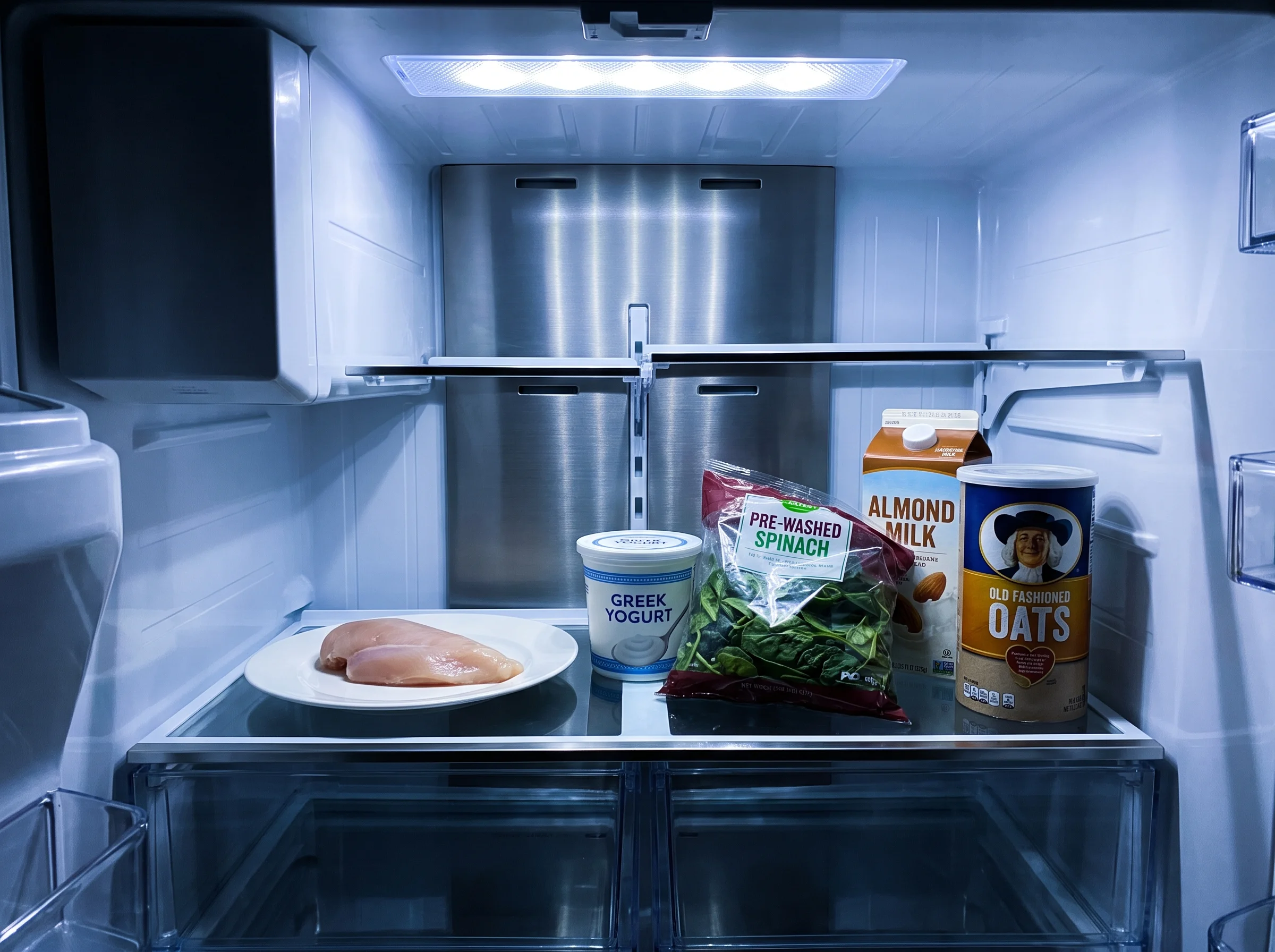
I did my own fridge audit at 47. Chicken breast, spinach, Greek yogurt, oatmeal, almond milk. Everything in there had been optimized to be cheap, shelf-stable, and lean. Nothing in it was what a lion would eat first.
Your Body Is Whispering. Learn to Read It.
That 3pm wall you hit? It's real. The post-lunch dip is a measurable circadian event that shows up even on days you skip lunch [8]. Not a personal failing. Not laziness. Your clock does it on purpose.
The problem is when the dip stops being a dip and becomes the whole afternoon.
The cellular machinery that makes your energy changes with age. In adults between 18 and 89, skeletal-muscle mitochondrial ATP production dropped about 8 percent per decade [9]. Read that again. The engine doesn't blow up, it just gets less efficient. Which means fuel quality matters more at 51, not less.

And the sleep piece is brutal. In healthy young men, restricting sleep to about 5 hours a night for a week dropped daytime testosterone 10 to 15 percent [10]. If it hits young men that hard, sit with what six months of 5-hour nights is doing to you.
Your body isn't broken. It's whispering. Ignore the whisper long enough and it starts yelling.
What Actually Moves the Needle
A synthetic 23-in-1 multivitamin is not the same as food. Your body reads whole food differently than it reads isolated compounds jammed into a tablet. That's not woo, that's the honest limit of what a pressed pill can do.
The ancestral answer is embarrassingly simple: eat the whole animal. Liver, heart, kidney. The organs every strong culture ate on purpose and we throw in the trash.
Two things happen when you cook these foods, though. Beef heart is naturally rich in CoQ10, and frying knocks recoverable CoQ10 down to about 69 percent [11]. Cooking beef liver loses 41 to 50 percent of its folate [12]. Freeze-drying, which removes water at low temperature under vacuum, preserves heat-sensitive attributes better than hot-air drying and avoids the sustained heat entirely [13].
Now the honest confession. Liver is one of the most nutrient-dense foods on earth, and it tastes like it lost a fight. I tried real liver once a week for three Tuesdays and quit. The food was right. The delivery was the problem.
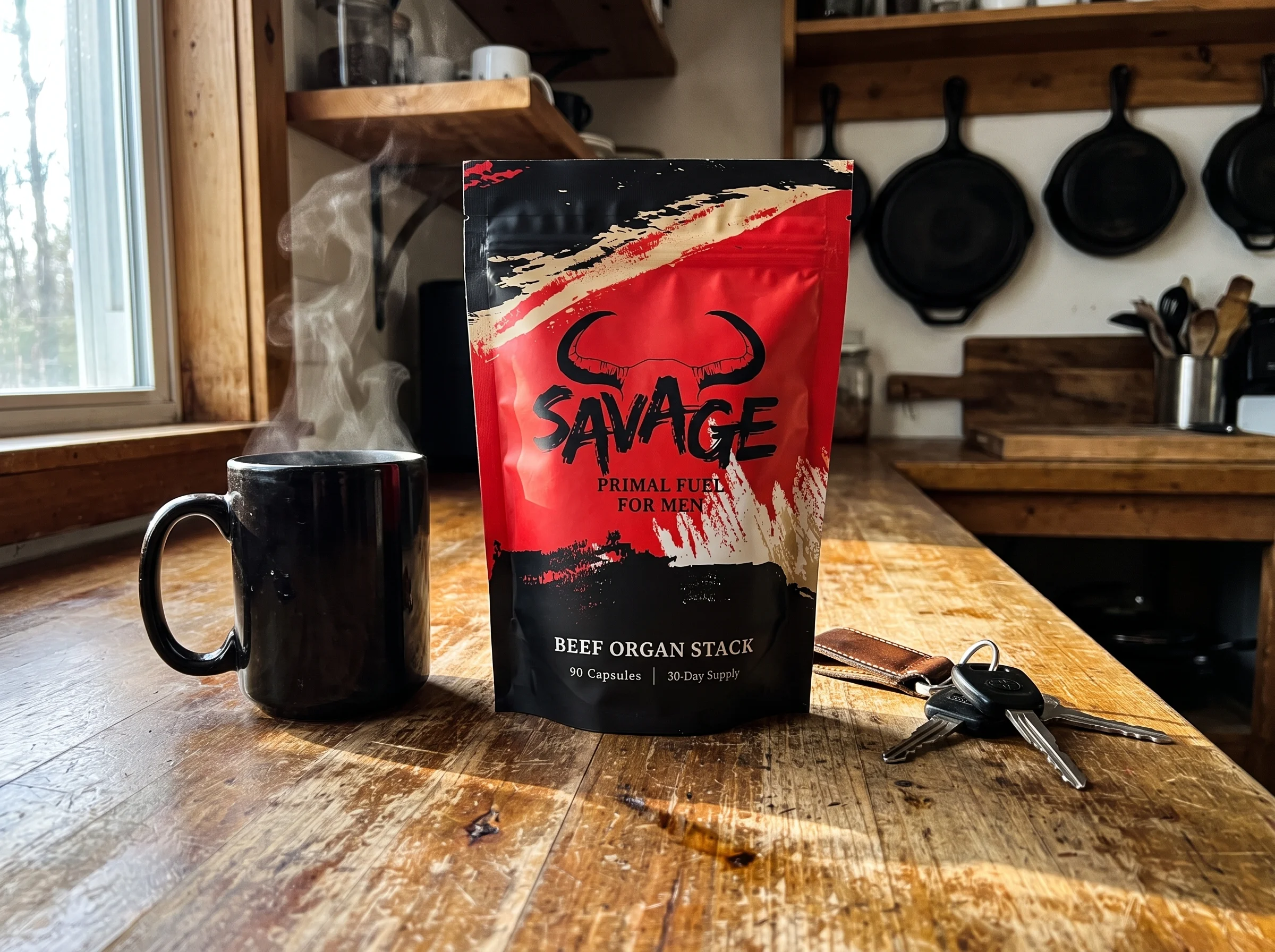
That's why I take the Savage Beef Organ Stack. Three capsules with breakfast, all six organs, freeze-dried raw, no gag reflex. It's not magic. It's the food category I deleted, put back on the plate in a form I'll actually take every day.
The Three Moves That Close the Gap
Tight triangle. Three points, not thirty.
1. Fix the fuel. Add organ meat back. Real liver once a week if you can stomach it. A daily organ stack if you can't. Muscle meat plus organs is closer to what your body was built to run on.
2. Fix the sleep. No nutrient compensates for 5 hours. Sleep-deprived adults show higher baseline cortisol and a bigger cortisol response to stress [14]. You can't out-supplement a broken foundation.
3. Fix the training. Lift heavy things twice a week. Protein at 1.0 to 1.2 g/kg of bodyweight, minimum, closer to 1.6 if you're training hard [15][16]. Organ capsules are micronutrient support, not a protein source. They complement the plate, they don't replace it.
The takeaway I want you to walk away with: you can't supplement your way out of a broken foundation, and you can't foundation your way out of a nutrient-empty plate. You need both.
The Man at the 6am Alarm
Back to that 3pm kitchen scene from the top.

The vision on the other side of it isn't heroic. It's just normal. The guy who walks into the office at 8am with his eyes actually open. Who plays with his kids after dinner instead of surrendering to the couch. Who sets a 6am alarm on Saturday because he wants to lift, not because he has to.
The shark between you and that guy is the lie that this is "just aging" and there's nothing to do. Aging is real. Running on empty is a choice.
The 90% stat isn't a scare tactic. It's a mirror. Most American men are not starving. They're running short on the specific compounds that keep the engine turning over. The modern plate is engineered to miss them. And the fix is not another prescription you never get off, or another synthetic pill. It's a food category we deleted.
Pick one of the three moves and do it this week. If you want the organ piece handled without the taste, the Savage Beef Organ Stack is three capsules with breakfast and it's how I close that loop every day. If you want to go cook liver yourself, God bless, more power to you.
Either way, you have the wheel back. That's the whole point.
References
[1] Fischer LM, et al. Sex and menopausal status influence human dietary requirements for the nutrient choline. Am J Clin Nutr. 2007;85(5):1275-1285. https://pubmed.ncbi.nlm.nih.gov/17490963/
[2] NIH Office of Dietary Supplements. Vitamin A and Carotenoids Fact Sheet for Health Professionals. https://ods.od.nih.gov/factsheets/VitaminA-HealthProfessional/
[3] Tang G. Bioconversion of dietary provitamin A carotenoids to vitamin A in humans. Am J Clin Nutr. 2010;91(5):1468S-1473S. https://pubmed.ncbi.nlm.nih.gov/20200262/
[4] NIH Office of Dietary Supplements. Zinc Fact Sheet for Health Professionals. https://ods.od.nih.gov/factsheets/Zinc-HealthProfessional/
[5] Diaz-Casado ME, et al. The Paradox of Coenzyme Q10 in Aging. Nutrients. 2019;11(9):2221. https://pmc.ncbi.nlm.nih.gov/articles/PMC6770889/
[6] Fuerniss HF, et al. Nutrient Analysis of Raw United States Beef Offal Items. Nutrients. 2024;16(18):3104. https://pubmed.ncbi.nlm.nih.gov/39339704/
[7] USDA FoodData Central SR Legacy. Beef liver 169451 / heart 168625 / kidney 169449. https://fdc.nal.usda.gov/food-details/169451/nutrients
[8] Monk TH. The Post-Lunch Dip in Performance. Clin Sports Med. 2005;24(2):e15-e23. https://pubmed.ncbi.nlm.nih.gov/15892914/
[9] Short KR, et al. Decline in skeletal muscle mitochondrial function with aging in humans. PNAS. 2005;102(15):5618-5623. https://pubmed.ncbi.nlm.nih.gov/15800038/
[10] Leproult R, Van Cauter E. Effect of 1 Week of Sleep Restriction on Testosterone Levels in Young Healthy Men. JAMA. 2011;305(21):2173-2174. https://jamanetwork.com/journals/jama/fullarticle/1029127
[11] Ercan P, El SN. Changes in content of coenzyme Q10 in beef muscle, beef liver and beef heart with cooking and in vitro digestion. J Food Compost Anal. 2011;24(8):1136-1140. https://www.sciencedirect.com/science/article/pii/S0889157511001517
[12] Aramouni FM, Godber JS. Folate losses in beef liver due to cooking and frozen storage. J Food Qual. 1991;14(5):357-365. https://onlinelibrary.wiley.com/doi/10.1111/j.1745-4557.1991.tb00077.x
[13] Ratti C. Hot air and freeze-drying of high-value foods: a review. J Food Eng. 2001;49(4):311-319. https://www.sciencedirect.com/science/article/pii/S0260877400002284
[14] Minkel J, et al. Sleep deprivation and stressors: Evidence for elevated negative affect in response to mild stressors when sleep deprived. Health Psychol. 2014;33(11):1430-1434. https://pubmed.ncbi.nlm.nih.gov/24818608/
[15] Morton RW, et al. A systematic review, meta-analysis and meta-regression of the effect of protein supplementation on resistance training-induced gains in muscle mass and strength in healthy adults. Br J Sports Med. 2018;52(6):376-384. https://pubmed.ncbi.nlm.nih.gov/28698222/
[16] Bauer J, et al. Evidence-based recommendations for optimal dietary protein intake in older people: a position paper from the PROT-AGE Study Group. J Am Med Dir Assoc. 2013;14(8):542-559. https://pubmed.ncbi.nlm.nih.gov/23867520/